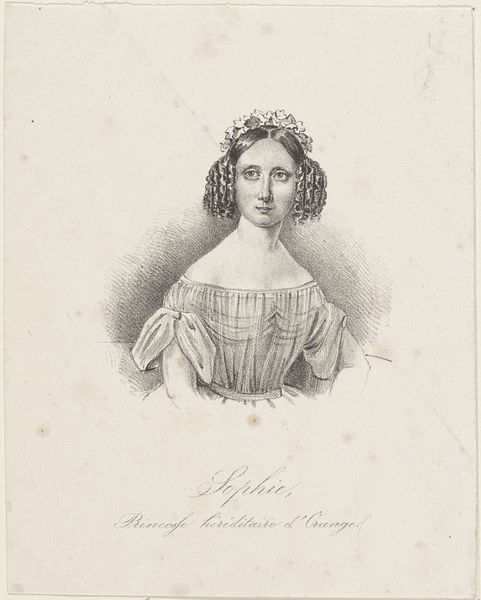
print, engraving
#
portrait
# print
#
old engraving style
#
romanticism
#
line
#
history-painting
#
engraving
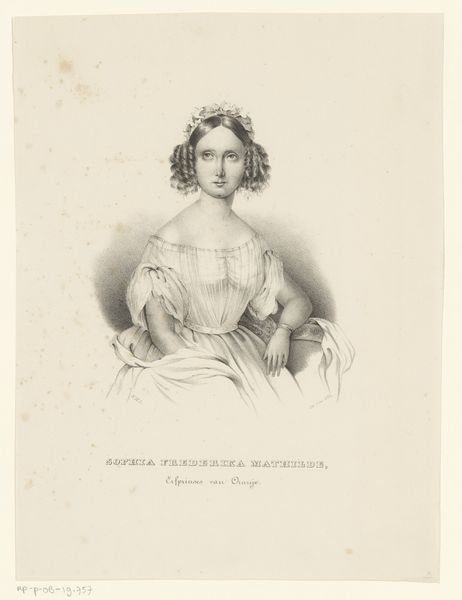
Dimensions: height 216 mm, width 146 mm
Copyright: Rijks Museum: Open Domain
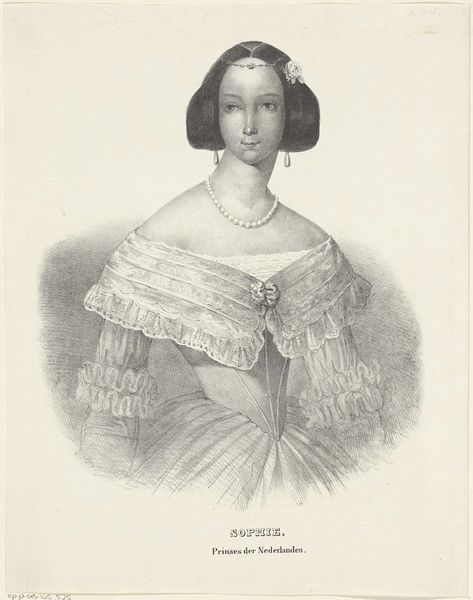
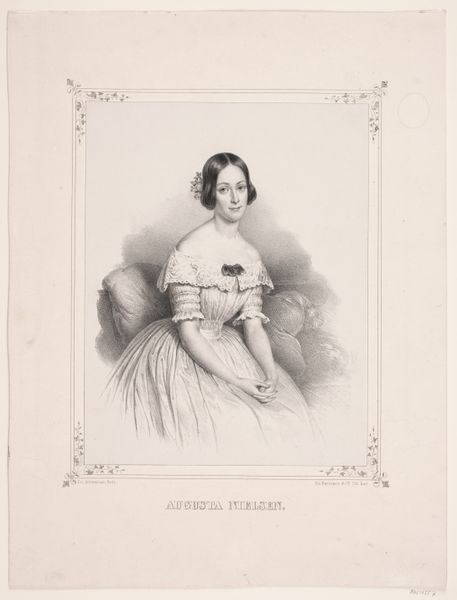
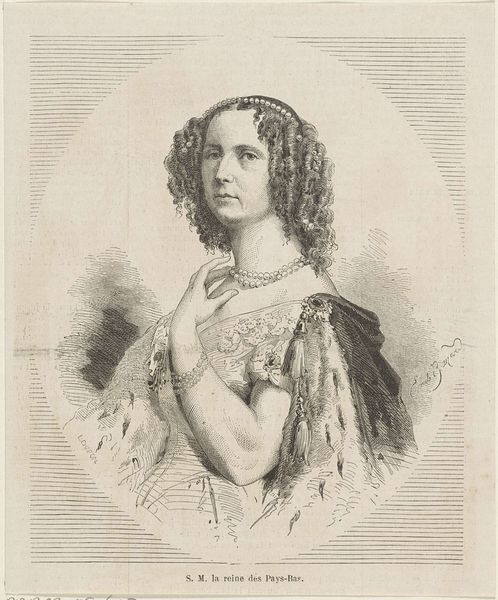
Curator: At first glance, I find this portrait overwhelmingly… subdued. Almost melancholic. There's a distinct lack of vibrancy. Editor: Indeed. This engraving, dating from around 1834 to 1840, portrays Sophie, Princess of the Netherlands. It resides here in the Rijksmuseum and gives us a window into royal portraiture of that era, particularly how printmaking democratized access to imagery of the elite. Curator: Democratized, perhaps, but also idealized? She's presented with a very conventional, almost doll-like beauty. Those ringlets, that gently sloping décolletage...it's all very calculated to project a specific image of femininity and grace. What do you make of her expression? Editor: There's a subtle knowingness in her eyes, don’t you think? A hint of defiance maybe. Despite the conventions of the era insisting she appears meek, I sense a glimmer of steel beneath the surface. I also appreciate the delicacy of the engraving. The artist captures so much with so few lines. It’s almost like a whispered secret revealed in grayscale. Curator: That’s an interesting point. Line engravings like this served not just as portraits but also as social documents, disseminating images and values. It suggests this isn’t just a representation of Sophie but an endorsement of her role. How she conducts herself, who she marries—her entire life becomes a symbol of national identity. It makes you wonder what it was like to have all this pressure on your shoulders? Editor: Absolutely. I imagine it to be stifling. Looking at her here, it's as if a fragment of someone else's dream world had broken through. One can even detect a playful sense of longing despite all the societal pressure to conform to her role. The artistry lies in conveying so much nuance in what seems a standard representation. Curator: Precisely. By understanding how it was conceived, circulated, and consumed, we gain profound insights into Dutch society. Editor: It makes this seemingly conventional portrait so much more interesting. A ghost image hinting at more depth and maybe the faintest sign of rebellion under those lovely, soft ringlets.
Comments
No comments
Be the first to comment and join the conversation on the ultimate creative platform.
 Collect
 React
React Comment
More like this