


Curatorial notes
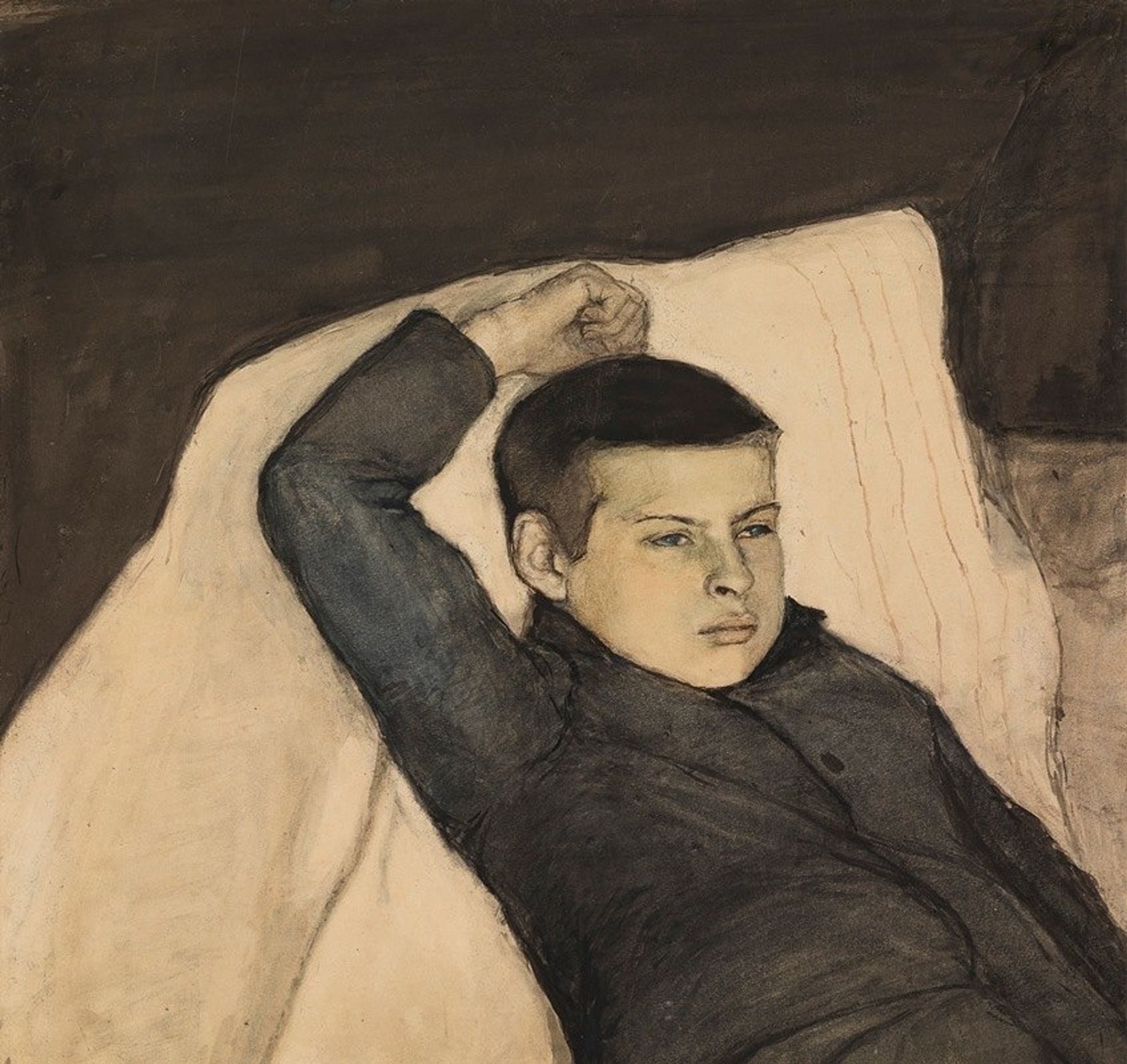
Curator: Here we see Magnus Enckell’s 1892 charcoal drawing, “Reclining Boy.” It's quite a striking piece, isn't it? Editor: Yes, it has an air of youthful defiance, or perhaps quiet contemplation. I’m immediately drawn to the boy’s gaze – it's intense, almost confrontational. Curator: It's interesting you say that. The drawing emerged during a time of shifting societal views on gender and sexuality. Looking through a contemporary lens, the boy's posture – relaxed yet assertive – and the ambiguous context evoke questions around adolescent identity and challenging traditional masculinity. Editor: I agree, the ambiguity is key. Was Enckell making a conscious statement, or simply capturing a fleeting moment? Knowing his connections to Symbolist circles, one wonders if there's a deeper allegorical meaning embedded within this seemingly simple portrait. Symbolism was often challenging established norms of representation. Curator: Precisely. The piece reflects those turn-of-the-century anxieties and artistic explorations around representation, and in doing so, offers avenues to disrupt conventions regarding both gender roles and the academic portraiture tradition. It brings into focus intersectional perspectives concerning representation. Editor: Thinking about Enckell’s career trajectory, this charcoal piece seems almost like a study, a way of exploring form and emotion through a seemingly classical style while quietly subverting it. I wonder how audiences at the time perceived the subject's androgynous features combined with this casual, yet assured pose. Curator: That’s where reception history becomes so fascinating. Perhaps initial viewers were focused on the aesthetic qualities, the skilled rendering of light and shadow in charcoal, while subtly being influenced by its suggestion of changing mores. Today, of course, the intersection of representation, gender and identity are foregrounded in any art-historical evaluation of portraiture like this. Editor: Exactly, it forces us to re-evaluate. What initially appears to be just a beautiful, delicate charcoal portrait of a boy transforms into a complex statement about social expectations and nascent self-awareness. It shows how art reflects broader socio-political currents. Curator: Ultimately, the work stands as a subtle yet poignant study, sparking ongoing dialogues about its subject and those of us examining it, separated across time and culture. Editor: Indeed. This seemingly simple piece continues to encourage new layers of looking.