About this artwork
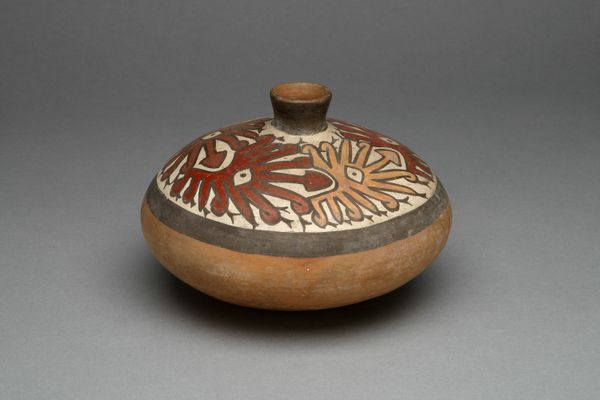
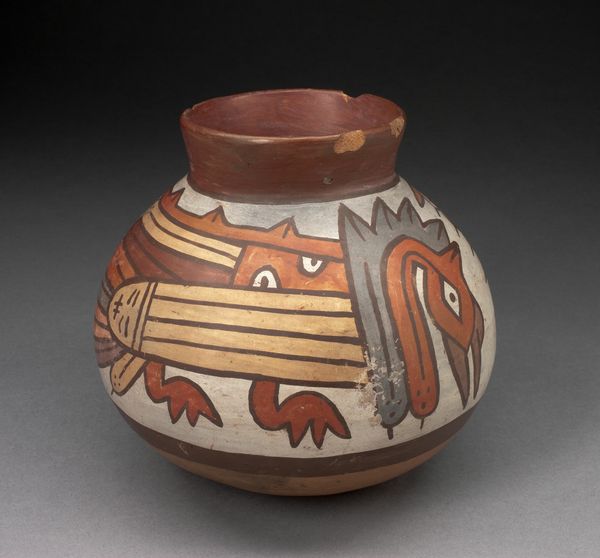
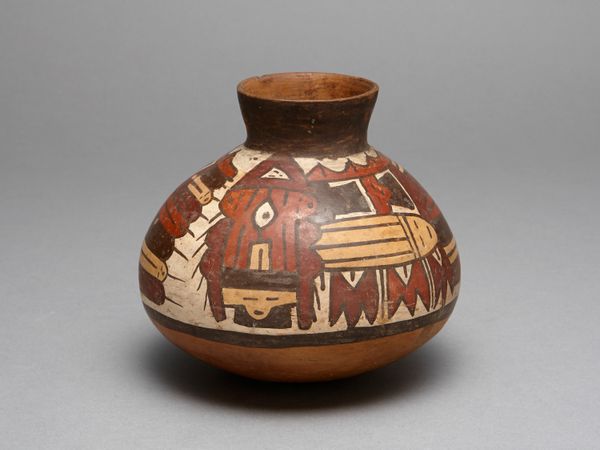
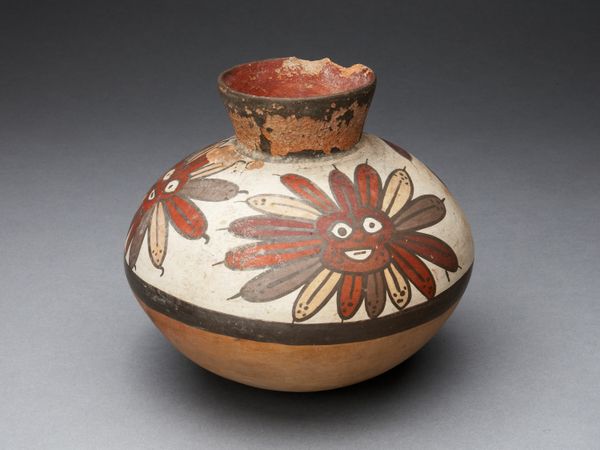
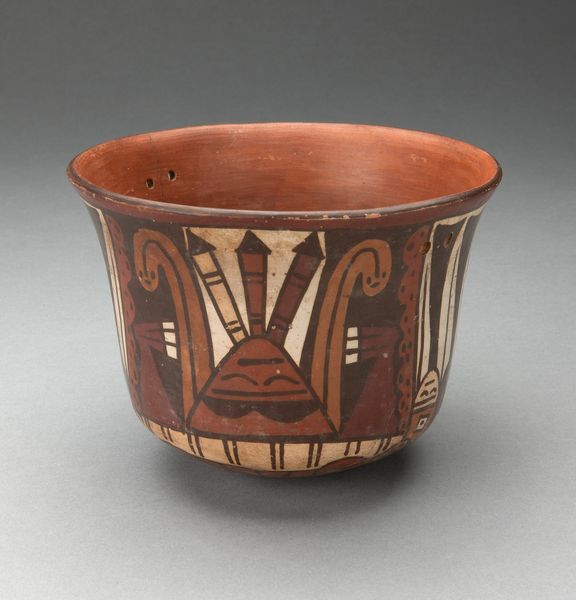
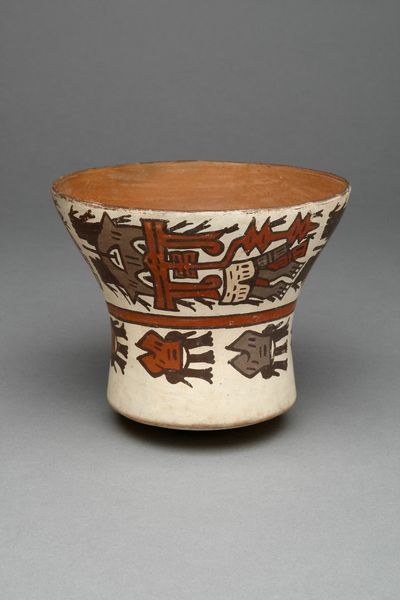
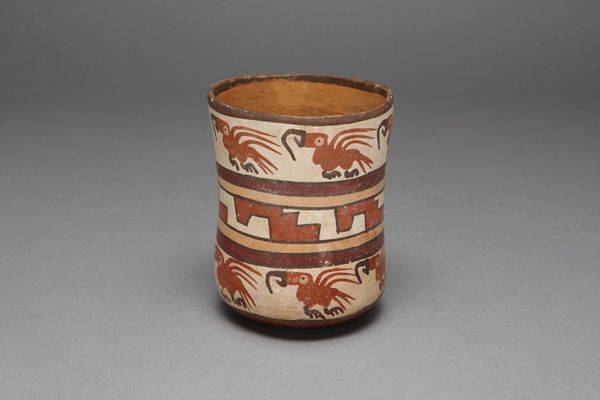
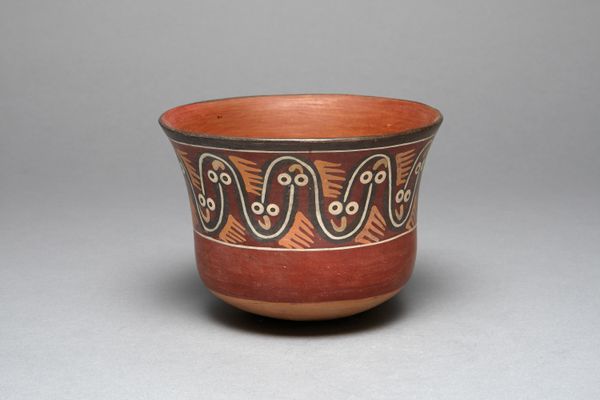
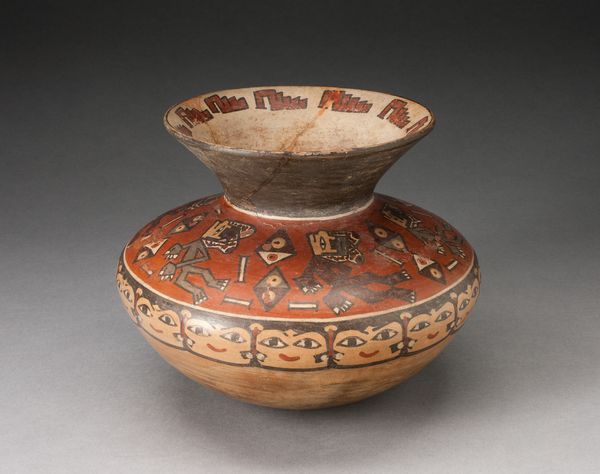
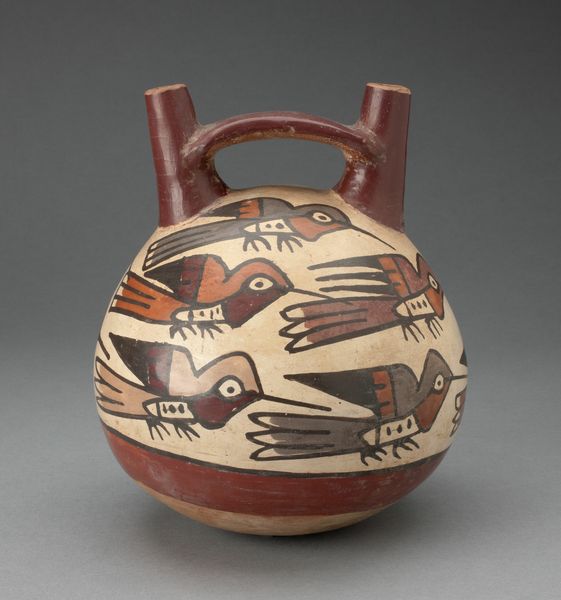
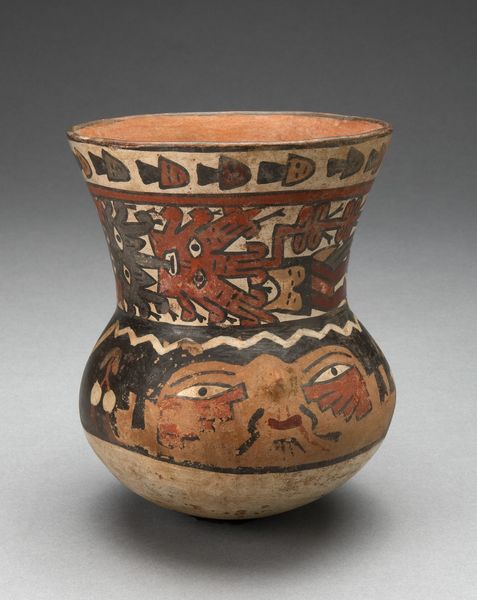
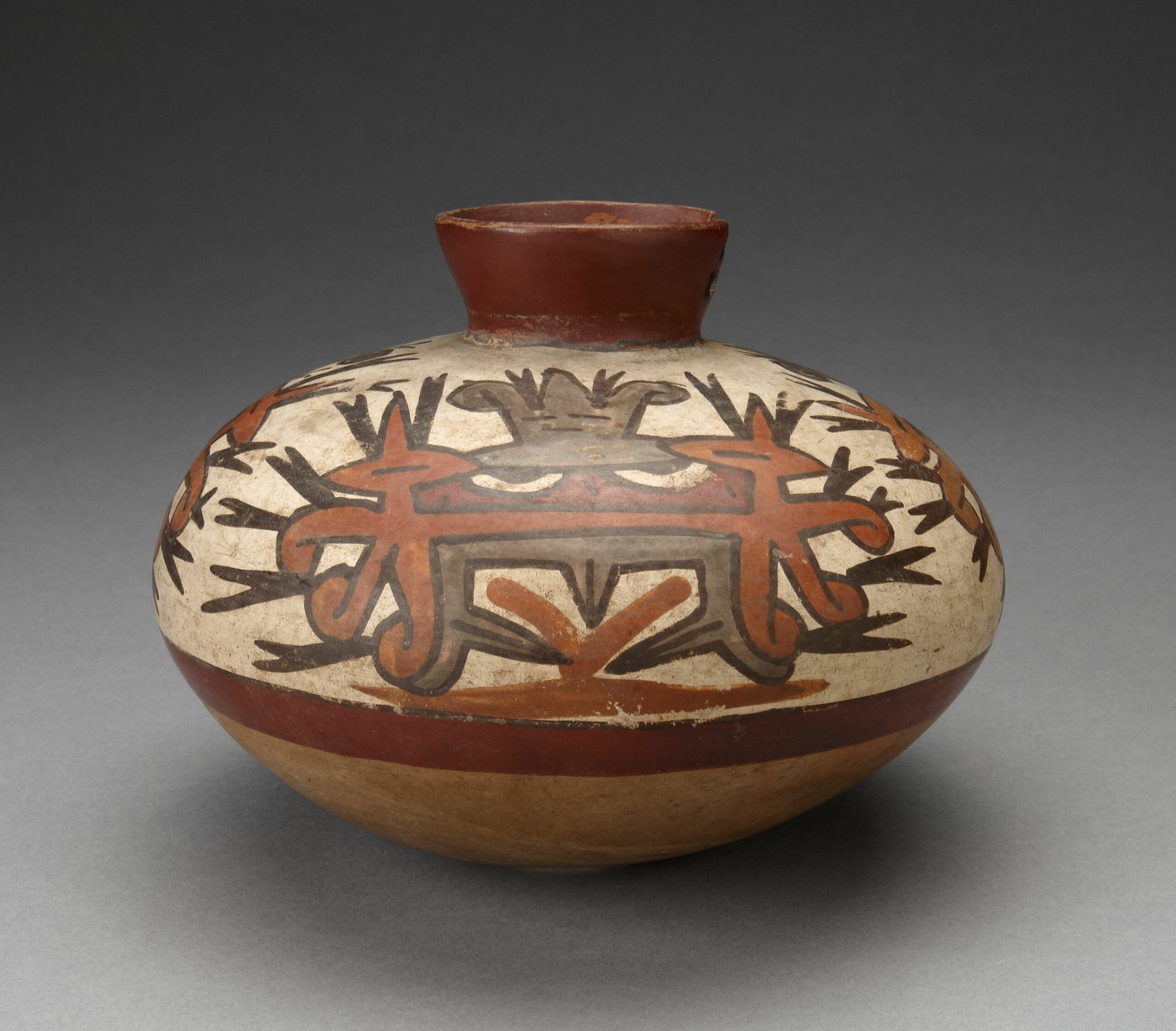
This jar, depicting an abstract face of a masked figure, was created by the Nazca people using ceramic materials. The surface of the jar is carefully painted, showcasing a masked figure in red and brown hues against a light background. Notice how the design is skillfully applied, demonstrating a command of the brush and pigment. The symmetry and repetition of the motifs evoke a sense of order and balance, yet the abstract nature of the imagery hints at deeper symbolic meanings. Given the time-intensive nature of ceramic production, from sourcing the clay to firing the vessel, it's reasonable to assume that specialist makers dedicated their time to craft production. As such, this vessel is also evidence of a complex social structure, in which some individuals could become masters of their medium. By considering the materials, the making, and the cultural context, we gain a richer appreciation for this remarkable object, and blur the line between art, craft, and social history.
Jar with Small Neck Depicting Abstract Face of Masked Figure
c. 180 - 500


Artwork details
- Medium
- ceramic, inorganic-material
- Dimensions
- 12.7 × 16.7 cm (5 × 6 9/16 in.)
- Location
- The Art Institute of Chicago
- Copyright
- Public Domain
Tags
Comments
Share your thoughts
About this artwork
This jar, depicting an abstract face of a masked figure, was created by the Nazca people using ceramic materials. The surface of the jar is carefully painted, showcasing a masked figure in red and brown hues against a light background. Notice how the design is skillfully applied, demonstrating a command of the brush and pigment. The symmetry and repetition of the motifs evoke a sense of order and balance, yet the abstract nature of the imagery hints at deeper symbolic meanings. Given the time-intensive nature of ceramic production, from sourcing the clay to firing the vessel, it's reasonable to assume that specialist makers dedicated their time to craft production. As such, this vessel is also evidence of a complex social structure, in which some individuals could become masters of their medium. By considering the materials, the making, and the cultural context, we gain a richer appreciation for this remarkable object, and blur the line between art, craft, and social history.
Comments
Share your thoughts