1784
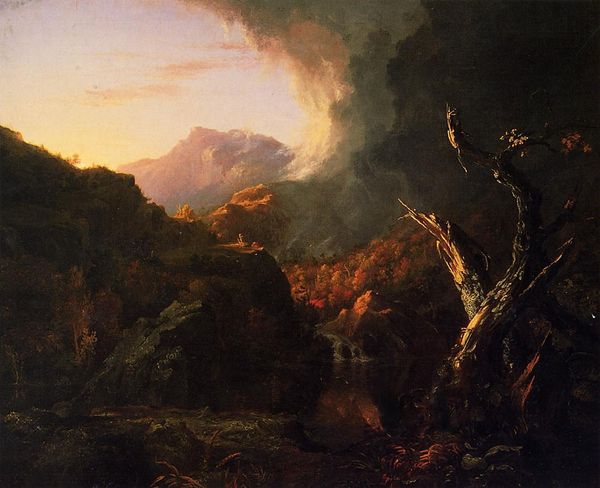
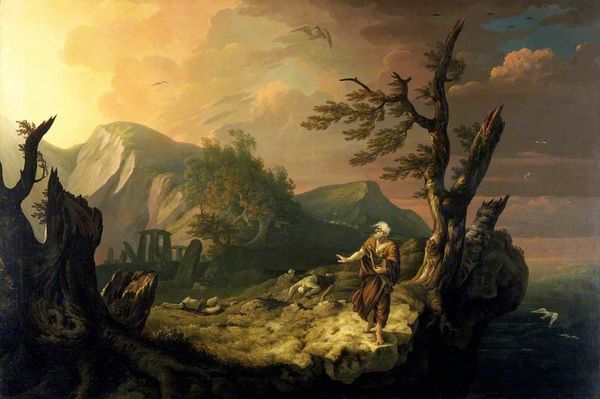
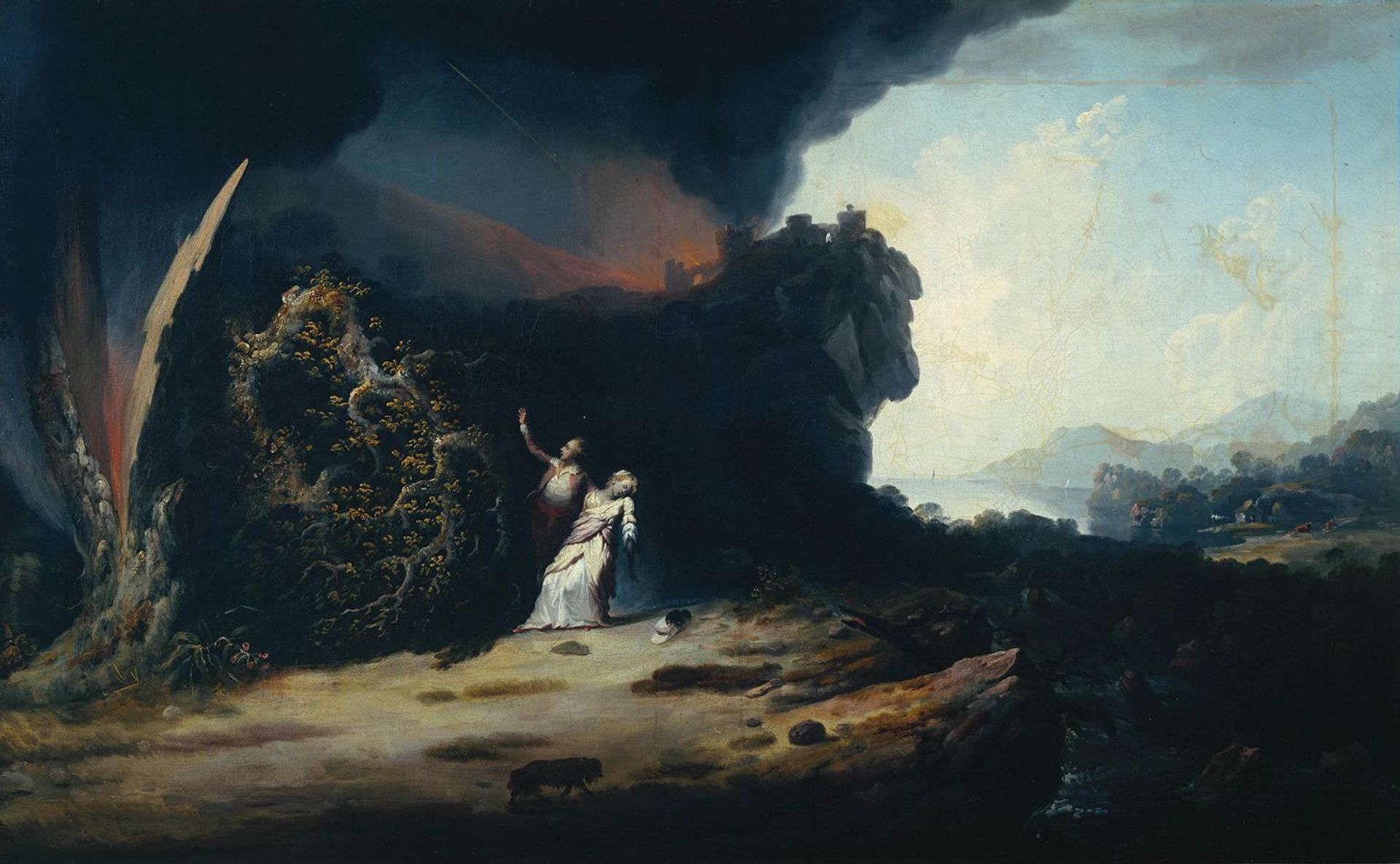
Thunderstorm with the Death of Amelia

Listen to curator's interpretation
Curatorial notes
Curator: The drama in William Williams’ "Thunderstorm with the Death of Amelia" is immediately captivating. What strikes you first? Editor: The sheer terror conveyed. The juxtaposition of the dark, chaotic storm with the figures huddled in apparent distress evokes a sense of helplessness against powerful forces. Curator: Absolutely. Williams, who lived from 1758 to 1797, employs the thunderstorm as a potent symbol, perhaps of divine wrath or the precariousness of life itself, don't you think? Editor: Or perhaps the violence inherent in the human condition, mirrored in the landscape. The burning structure atop the cliff suggests societal collapse or violence, amplifying Amelia's death as not just a personal tragedy, but a symptom of wider unrest. Curator: It's a compelling reading. The lightning, often associated with enlightenment, here seems destructive, a perversion of its symbolic potential. Editor: Indeed, it's a stark reminder that symbols are not fixed, but are actively shaped and reshaped by social and historical forces. This piece speaks volumes about the anxieties of its time. Curator: It leaves us contemplating the weight of those anxieties, and the timeless power of art to reflect them. Editor: Leaving me to think about who Amelia was and what her death meant for the people who knew her.