
Curatorial notes
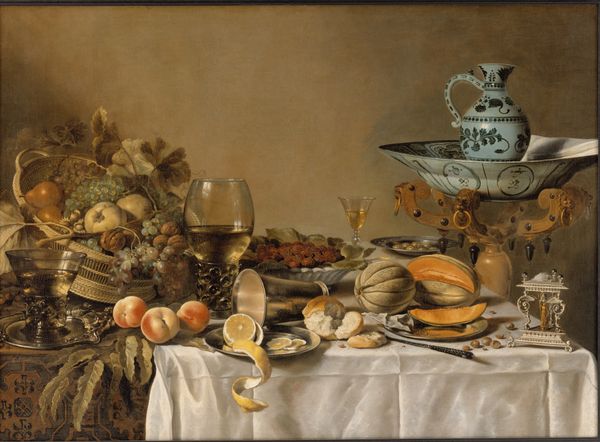
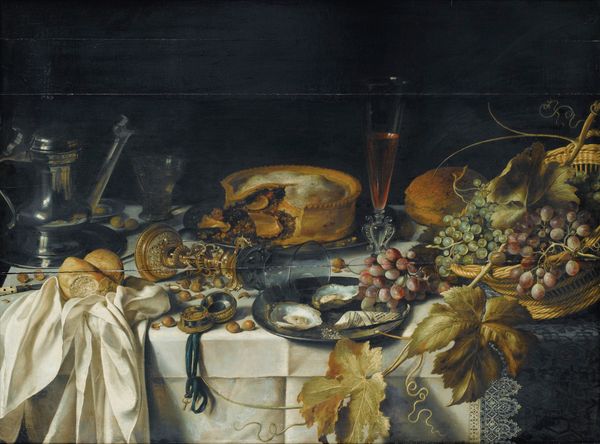
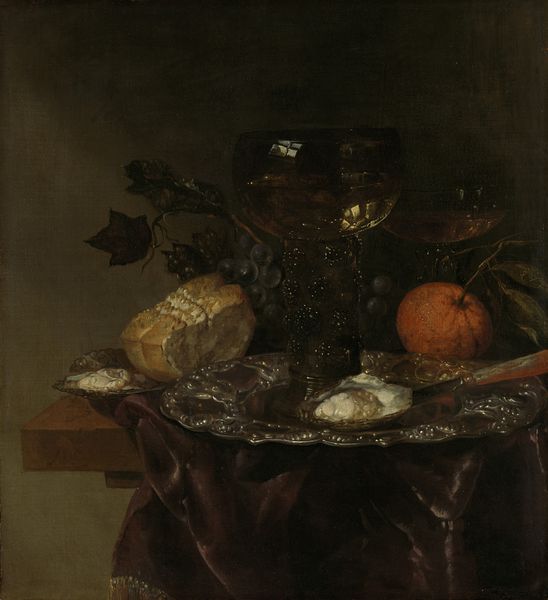
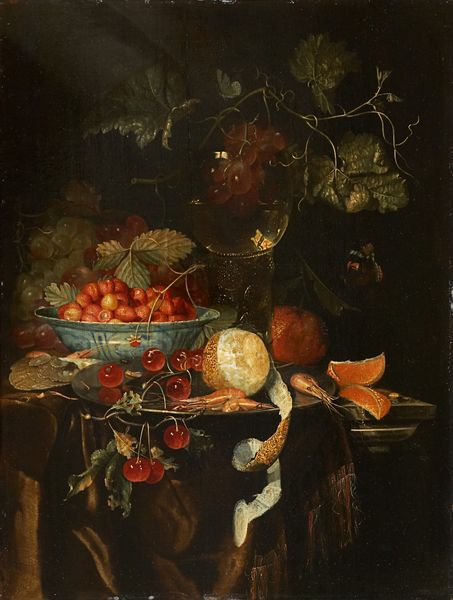
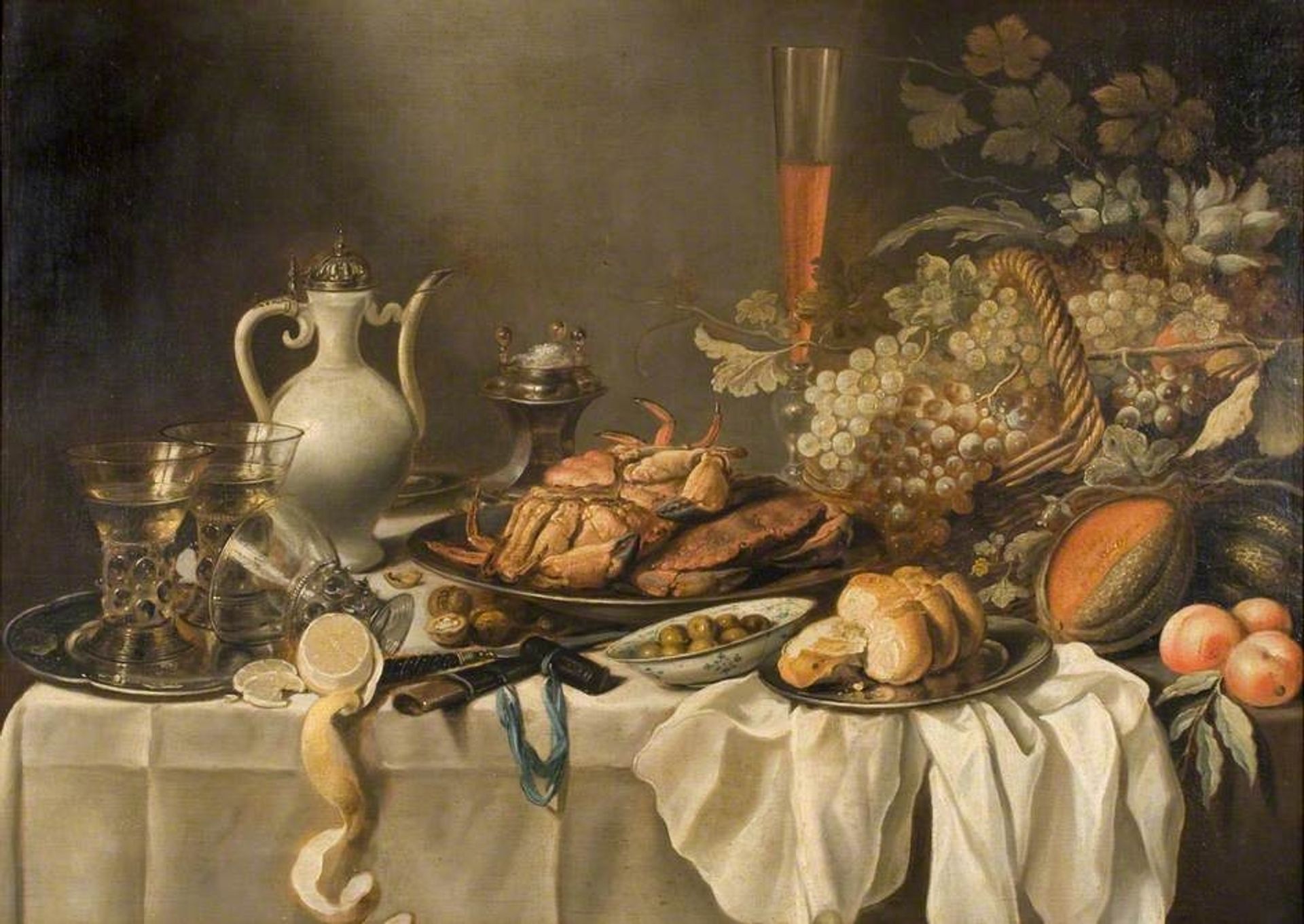
Curator: This captivating "Still Life" was masterfully rendered by Pieter Claesz around 1652, employing oil paint. What catches your eye initially about this composition? Editor: It’s a feast for the eyes, visually decadent, though something about it also feels a bit melancholic. The scale feels grand, opulent even. Is that crab staring back at me? Curator: Precisely. Observe how Claesz constructs the scene—the deliberate arrangement of objects creates a visual syntax. The textures, from the gleaming metalwork to the delicate grape skins, contribute to a complex semiotic interplay. The canvas presents an interplay of varied components united in the same plan. Editor: The imagery feels laden with symbolism. I see abundance, sure, with the overflowing fruit basket and that formidable crab, but there’s also that toppled glass, the peeled lemon...it whispers of something more fleeting. Curator: The tipped glass, for instance, destabilizes the visual order, while the lemon peel elegantly unfurls, introducing a dynamic element that disrupts the static nature of still life painting. It directs the eye across the objects on display and across the painting. Editor: A disruption that seems almost…deliberate. The vanitas theme springs to mind; reminders of mortality amid such extravagance. The crab itself has always been a powerful symbol. One moves side to side; these themes have connections that go beyond the Christian or European, across all the seven seas. Curator: Yes, these objects work as more than themselves; they symbolize the ephemeral nature of existence. Consider, too, how Claesz’s masterful realism reinforces this: the meticulous rendering makes these symbols all the more present, creating a sense of immanence but then quickly becoming a sense of imminent fading. Editor: It's that contrast that holds me—the tension between tangible indulgence and the looming shadow of mortality. Claesz reminds us of the ephemerality that lies beyond a moment's sensory pleasures. Curator: Indeed. A powerful illustration of how masterful composition, technique, and the conscious construction of visual motifs coalesce to communicate a deeply philosophical statement. Editor: Agreed. Looking closely, I'm struck by how timeless the themes explored here still feel. Pieter Claesz captured an enduring tension in this single moment.