EBISU AND DAIKOKU IN MANZAI ATTIRE


Listen to curator's interpretation
Curatorial notes
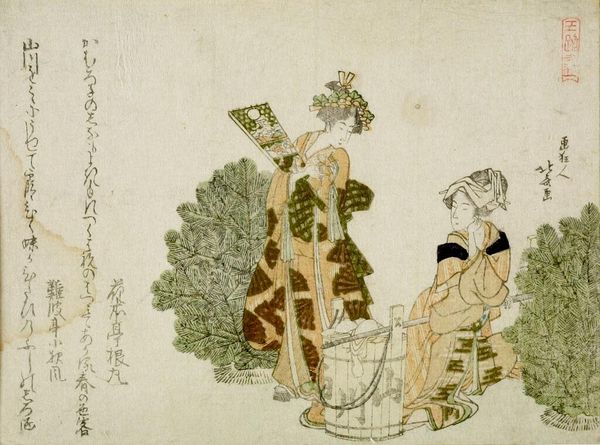
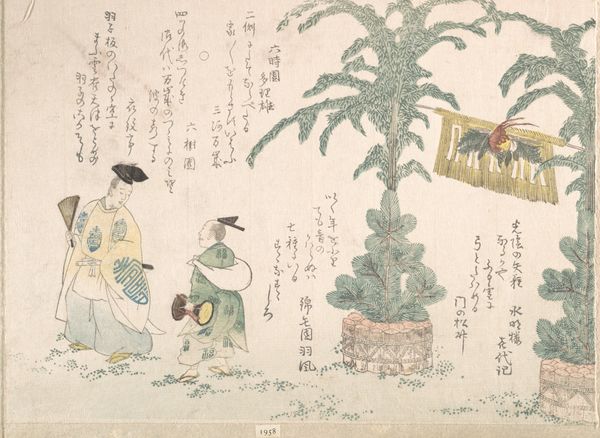
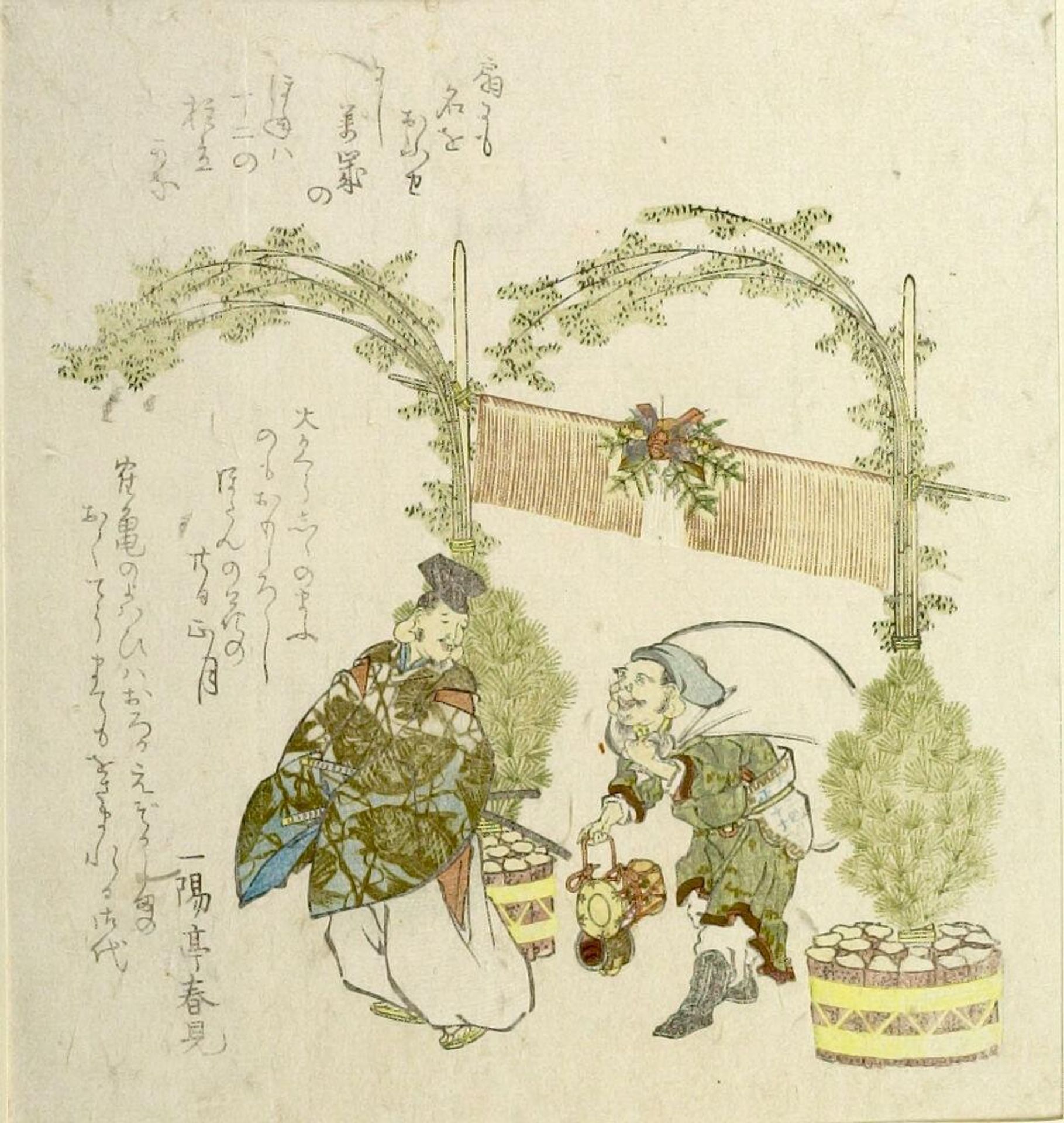
Curator: Looking at this print, "Ebisu and Daikoku in Manzai Attire" by Teisai Hokuba, I'm struck by the lighthearted feel of this piece. Editor: Yes, there's a playful quality to the figures and the overall composition; it's charming how Hokuba rendered these deities. But what are they doing? Curator: Hokuba is placing them within the context of manzai, a traditional Japanese performance form associated with the New Year. It suggests a commentary on the commodification and performance of cultural identity. Editor: I'm drawn to the careful construction of the scene. Notice the materials used: the woodblock printing, the choice of pigments, the way they contribute to a festive, almost artisanal aesthetic. Curator: Absolutely! The way Hokuba appropriates religious figures and sets them within this performative setting gives us insight into the evolving social dynamics of 19th-century Japan. Editor: I see it as a celebration of craftsmanship and material culture intertwined with social rituals. It makes you consider the labor involved in the production of both the art and the performances it depicts. Curator: It makes me think about how power is negotiated and represented through cultural expressions. Editor: And for me, it brings up the importance of appreciating the tangible elements that shape our understanding of art and its role in society.