About this artwork
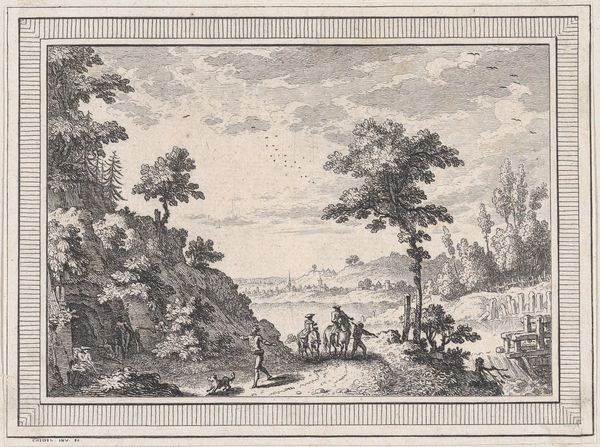
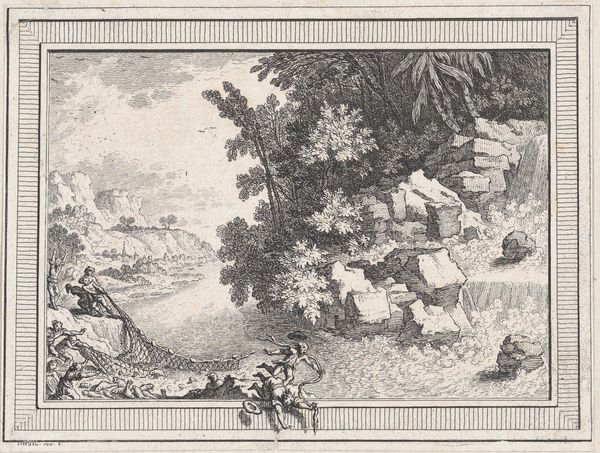
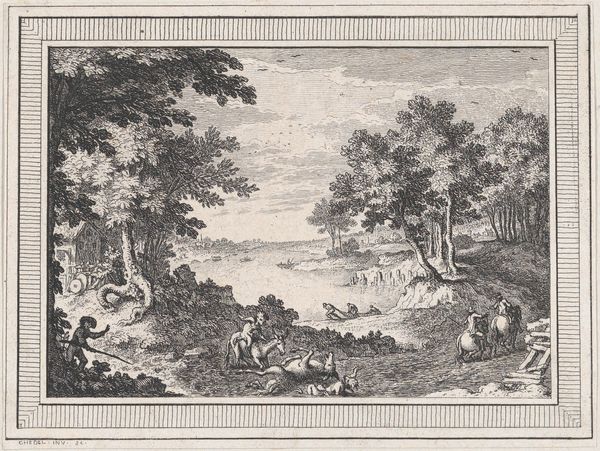
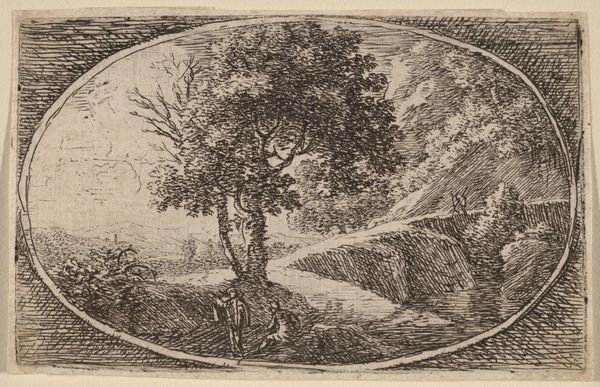
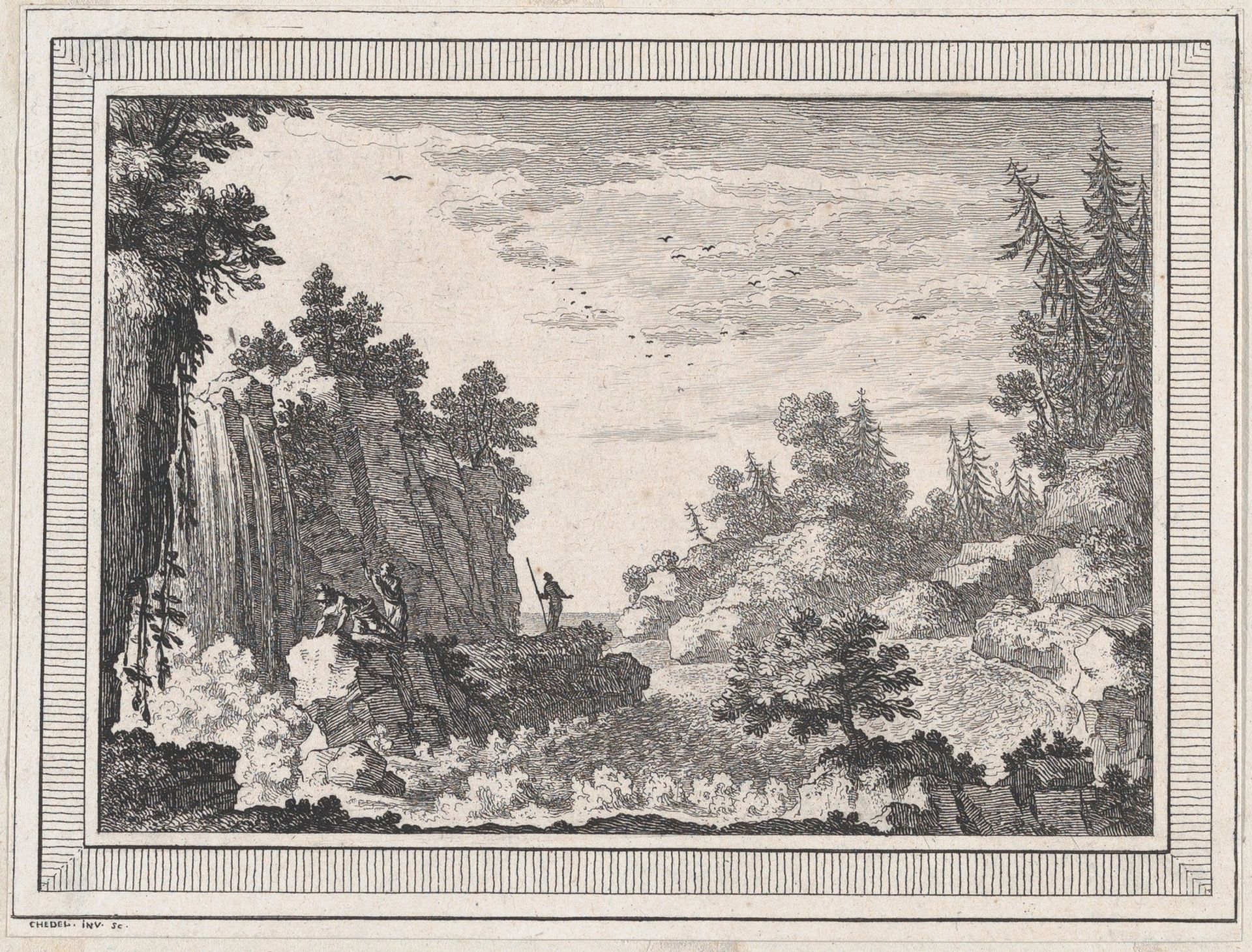
This landscape is from a series of six engravings dedicated to Madame la Marquise de Pompadour, made by Quentin Pierre Chedel in 18th-century France. Aristocratic patronage in this period was crucial for artists, and here we see an example of landscape art being directly tied to the French court. The image presents an idealised version of nature, a picturesque scene designed to please the eye. Waterfalls, craggy rocks and distant mountains give the viewer a sense of nature's grandeur, while the figures add a touch of human presence without disrupting the overall harmony. It’s interesting to note that this image was created during the reign of Louis XV, a time of increasing social inequality and political tension in France. Was this artistic focus on the beauty of nature a way of distracting from the problems of the time, or perhaps a more subtle commentary on society? To understand this image better, one could delve into the history of French landscape art, the role of royal patronage, and the social and political context of the time. Art is always shaped by its social and institutional context, and it's up to us to uncover those connections.
Landscape, from a series of six landscapes dedicated to Madame La Marquise de Pompadour
1720 - 1762

Quentin Pierre Chedel
1705 - 1763
The Metropolitan Museum of Art
Metropolitan Museum of Art, New York, NYArtwork details
- Medium
- drawing, print, etching, engraving
- Dimensions
- Sheet (trimmed): 4 3/16 × 5 9/16 in. (10.7 × 14.2 cm)
- Location
- Metropolitan Museum of Art, New York, NY
- Copyright
- Public Domain
Tags
drawing
etching
landscape
engraving
rococo
Comments
Be the first to share your thoughts about this work.
About this artwork
This landscape is from a series of six engravings dedicated to Madame la Marquise de Pompadour, made by Quentin Pierre Chedel in 18th-century France. Aristocratic patronage in this period was crucial for artists, and here we see an example of landscape art being directly tied to the French court. The image presents an idealised version of nature, a picturesque scene designed to please the eye. Waterfalls, craggy rocks and distant mountains give the viewer a sense of nature's grandeur, while the figures add a touch of human presence without disrupting the overall harmony. It’s interesting to note that this image was created during the reign of Louis XV, a time of increasing social inequality and political tension in France. Was this artistic focus on the beauty of nature a way of distracting from the problems of the time, or perhaps a more subtle commentary on society? To understand this image better, one could delve into the history of French landscape art, the role of royal patronage, and the social and political context of the time. Art is always shaped by its social and institutional context, and it's up to us to uncover those connections.
Comments
Be the first to share your thoughts about this work.