1652 - 1725
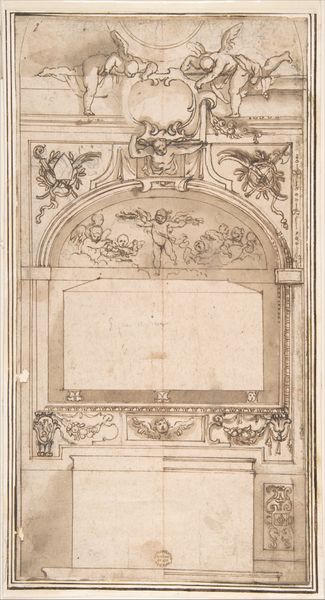
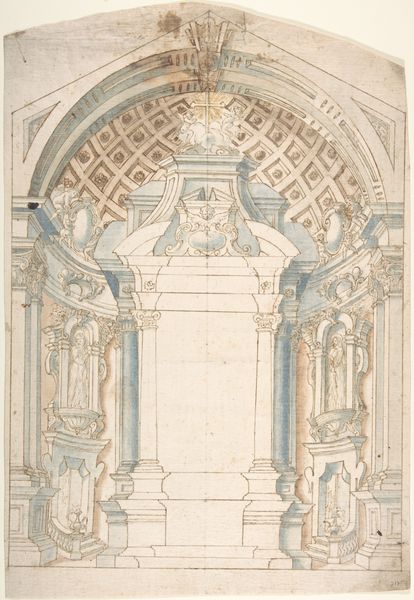
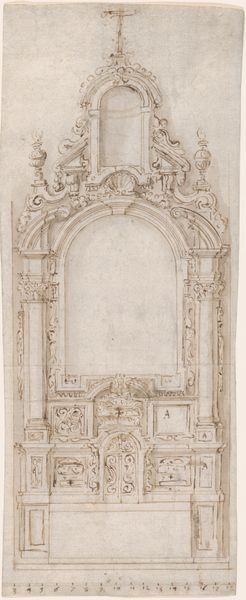
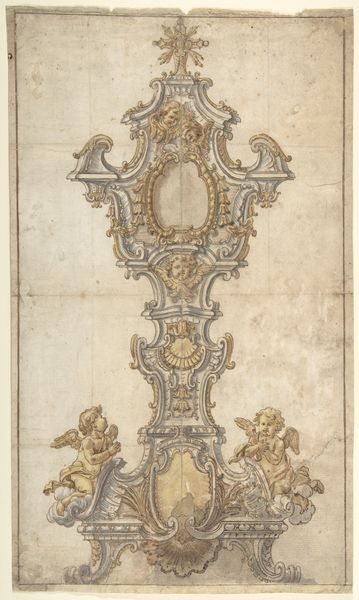
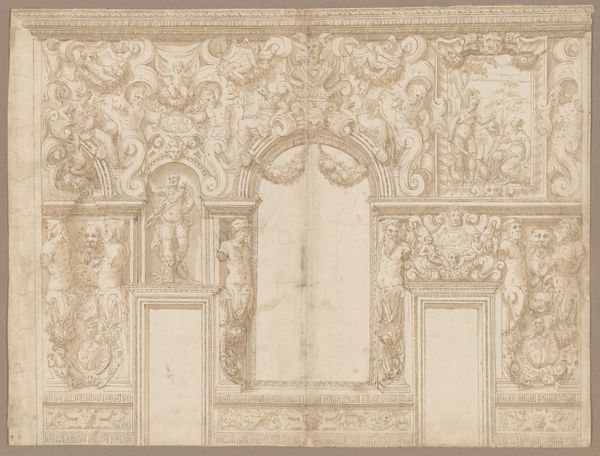
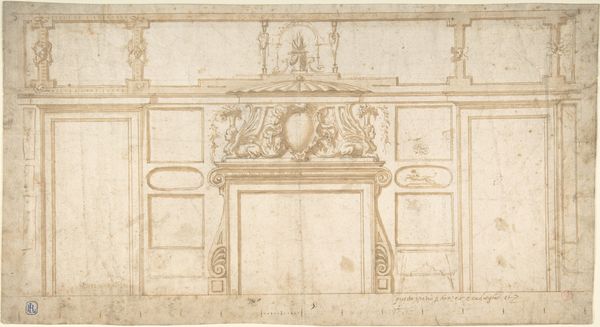
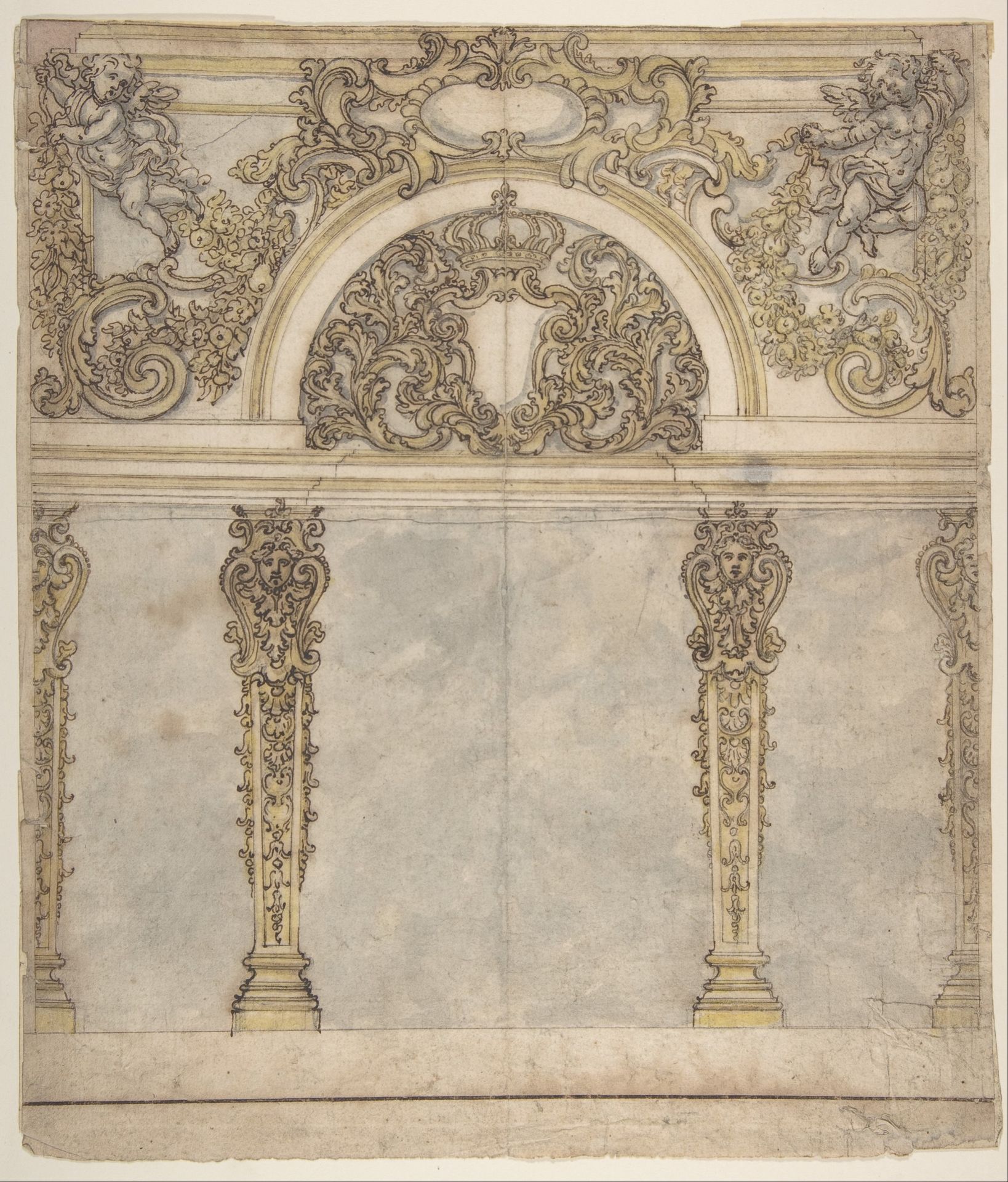
Design for an Alcove with a Coat of Arms Flanked by Putti Bearing a Crown, Supported by Pilasters with Human Heads in Capitals

Giovanni Battista Foggini
1652 - 1725
The Metropolitan Museum of Art
Metropolitan Museum of Art, New York, NYListen to curator's interpretation
Curatorial notes
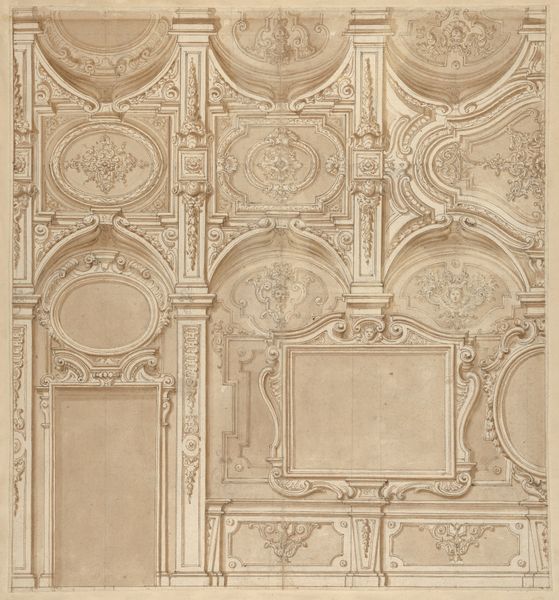
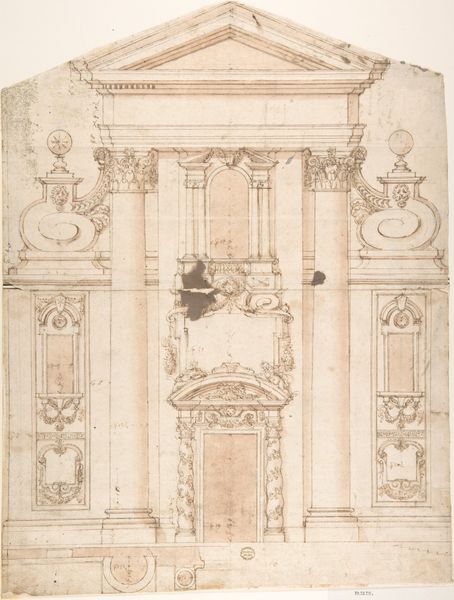
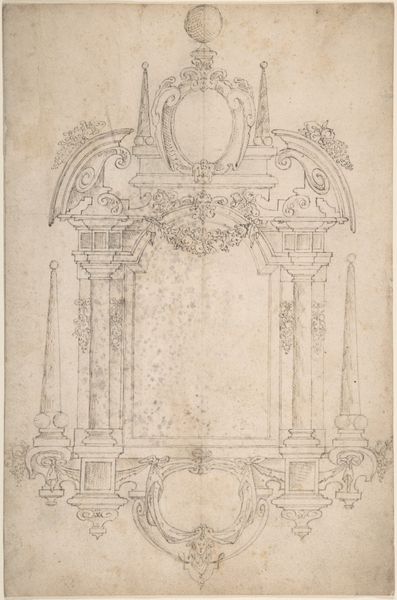
Giovanni Battista Foggini rendered this design for an alcove using pen and brown ink, with brown and yellow wash. The putti bearing a crown atop a coat of arms immediately command attention, symbols laden with cultural weight. These putti, reminiscent of ancient Cupids, are not merely decorative; they are carriers of power. The crown, universally understood as a symbol of authority, finds its roots in ancient headdresses, evolving from simple laurel wreaths to ornate metalwork. The pilasters with human heads recall the ancient Roman practice of incorporating masks and faces into architectural elements. This motif, seen in various forms throughout history, speaks to our primal fascination with the human form and its connection to the divine. The subconscious effect is powerful – a reminder of ancestral presence, of the spirits that watch over us. Notice how these symbols resurface, transformed, in later contexts – the crown in modern heraldry, the putti in Renaissance paintings. This cyclical progression reveals how cultural memory shapes and reshapes our visual language, endlessly evolving.