drawing, pencil
#
portrait
#
drawing
#
pencil sketch
#
landscape
#
figuration
#
romanticism
#
pencil
#
sketchbook drawing
#
realism
Copyright: Public Domain: Artvee
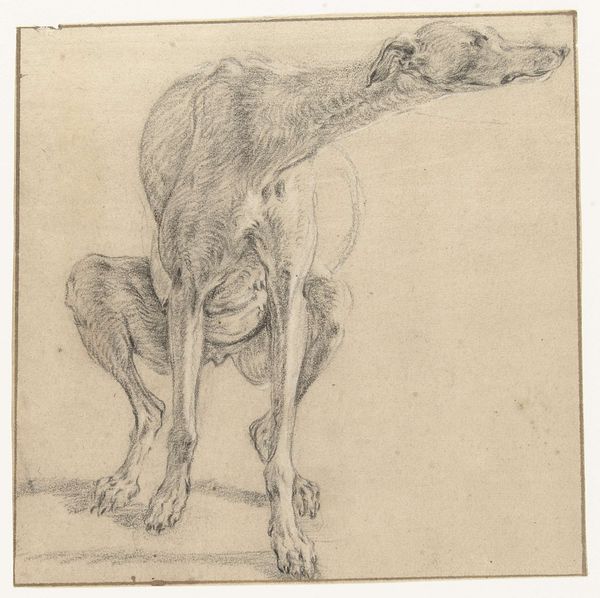
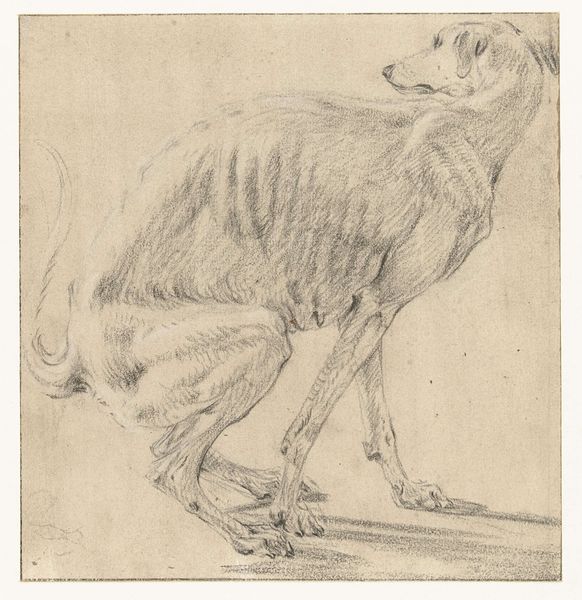
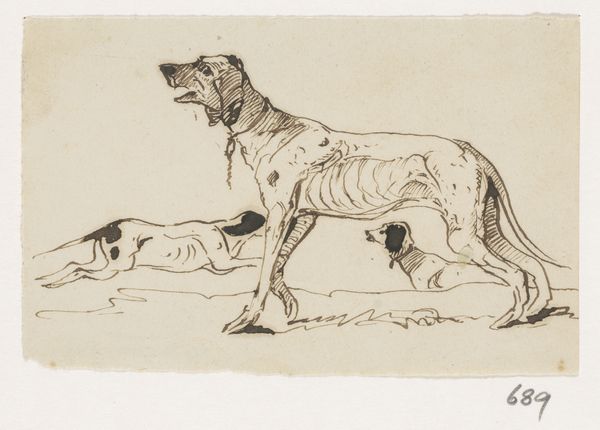
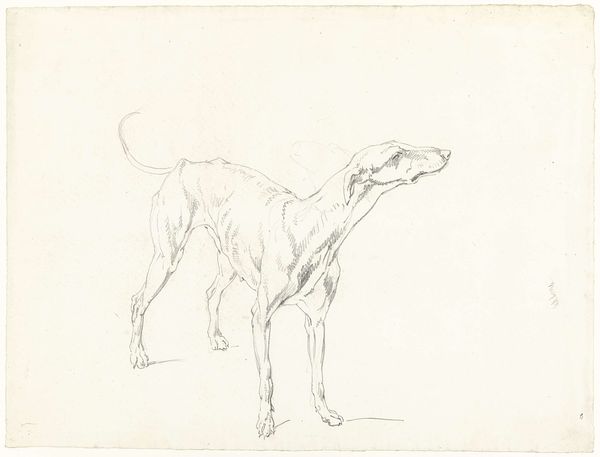
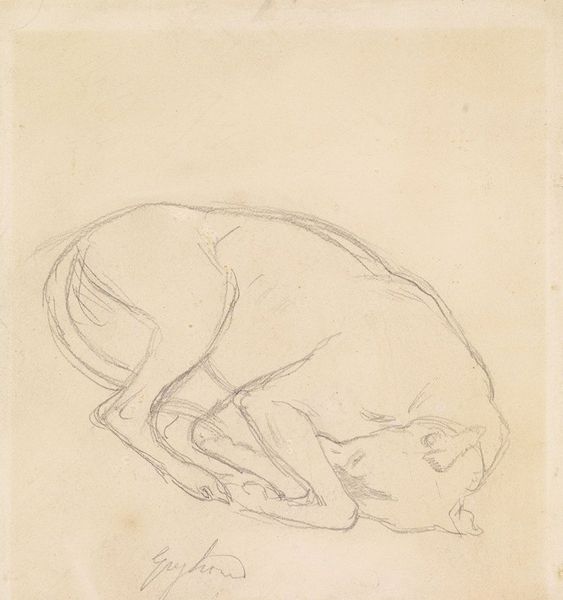
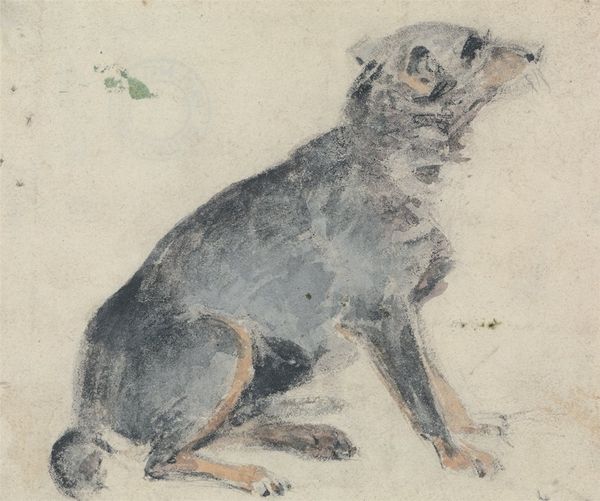
Editor: This pencil drawing, "A Starved Greyhound," artist unknown but speculated to be John Sell Cotman, really strikes me with its starkness. It's almost painful to look at. What are your thoughts on it? Curator: Considering its creation, possibly around the early 19th century, let’s look at the societal position of the artist and the aristocratic consumption habits of that time. Pencil drawings like this were often commissioned, reproduced or sold, placing the artist in a complex position of dependence and possible critique. The raw, almost brutal, depiction of the dog’s emaciated state; what might that say about Cotman’s labor for an aristocratic consumer who perhaps owned dogs like these for purposes that don’t involve proper care? Editor: That's a compelling idea. It connects the artistic process to potential social commentary about the lives of these dogs in wealthy English homes. But it's just a sketch... why make this sociopolitical reach? Curator: Precisely! That it’s 'just a sketch' makes it potent! Think about the deliberate choice of medium, readily accessible yet capable of such stark representation, and perhaps rapidly deployed by a critic. The act of sketching itself, the speed, the relative inexpensiveness compared to painting… it allowed for a quicker response, perhaps even subversive critique embedded within what seems like a simple depiction. Is the rapid consumption of an artist's sketch echoing something of the dog's underfed life? Editor: So you're saying the *means* of production, a simple sketch, can be as important as the *subject* in understanding the artwork's message? Curator: Absolutely. And beyond 'message,' we look to understand its position. The cheapness of materials underscores the accessibility to the masses which would give pause to its bourgeois target. Editor: I'm seeing this piece in a whole new light. It is much more than an image of a sad animal. It's like, a statement about the system! Thank you. Curator: Indeed! Examining art through the lens of material conditions reveals hidden dimensions within seemingly simple artworks. The artist's means become our clues to interpreting context.
Comments
No comments
Be the first to comment and join the conversation on the ultimate creative platform.
 Collect
 React
React Comment
More like this