

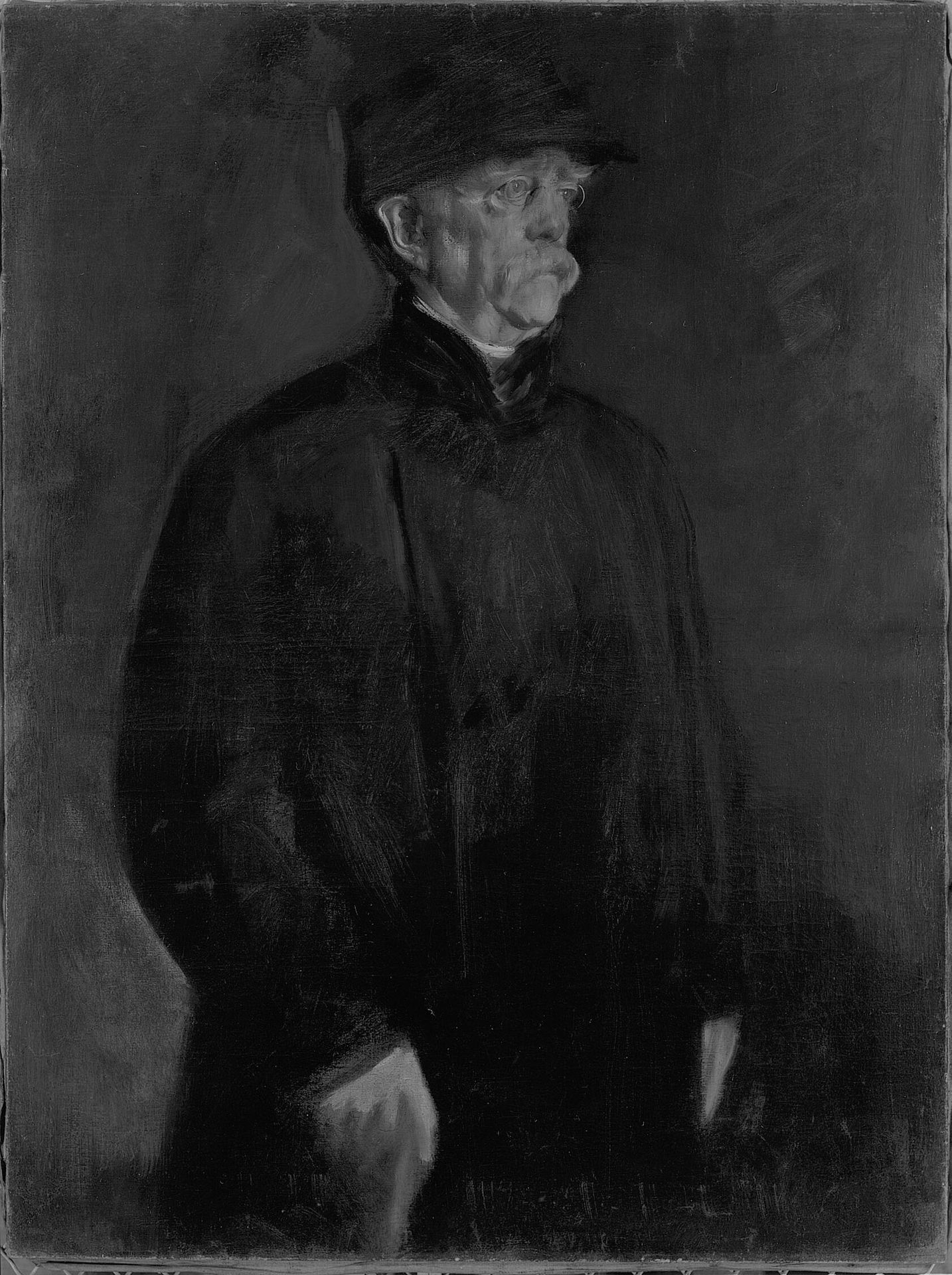
1896
Prince Otto von Bismarck


Listen to curator's interpretation
Curatorial notes
Editor: This is Franz von Lenbach’s “Prince Otto von Bismarck,” painted in 1896, using oil on canvas. The muted, almost monochrome palette creates a somber mood. What do you see in this piece? Curator: Well, the portrait’s symbolism speaks volumes. Bismarck, the "Iron Chancellor," is cloaked in shadow, his form almost dissolving into the background. What feelings does the limited palette evoke for you? Editor: It feels almost like a memory, fading with time. It’s stark, almost like a historical document rather than a celebration. Is the monochrome a deliberate choice? Curator: Indeed. It directs our focus. Observe how the face is rendered with meticulous detail. It's a map of a life lived, etched with experience, highlighting resilience and authority even in the twilight years. Notice anything particular in the visual emphasis? Editor: The detail around his mouth and eyes suggests a strong personality, but his eyes seem a little softer than I imagined Bismarck to be. Perhaps suggesting vulnerability even? Curator: Exactly! His steely gaze hints at the inner strength necessary to unify a nation, but those softer eyes – as you observed – betray a weariness, perhaps the cost of wielding power. What continuities do you see with representations of leadership figures over time? Editor: That’s interesting. The interplay of strength and vulnerability feels very modern even today, like seeing a chink in the armor of a powerful figure. Thanks, this has really changed how I initially viewed it. Curator: My pleasure. Remembering that symbols carry emotional, cultural, and psychological weight over time is fundamental in grasping our connection to cultural memory and continuity.