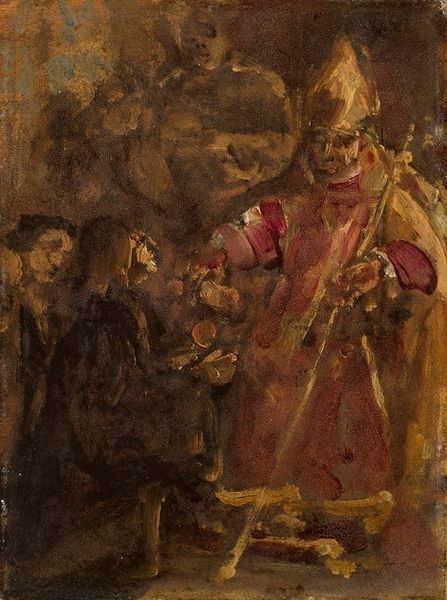
c. 1902s
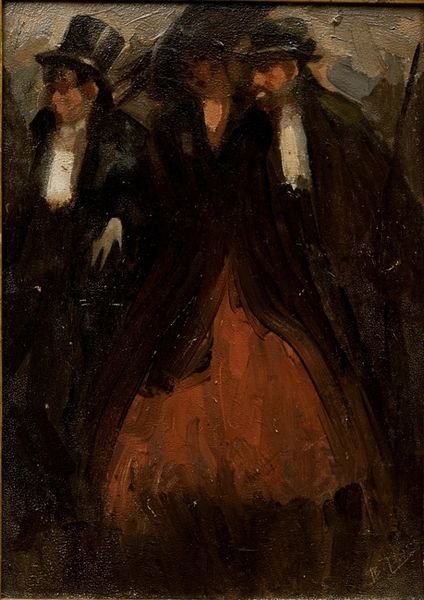
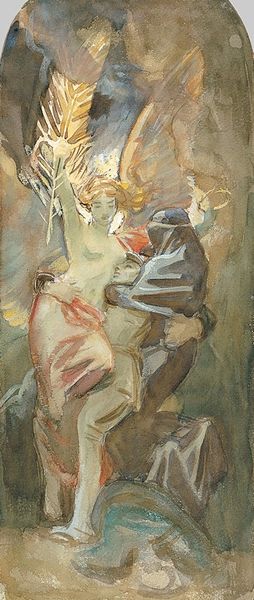
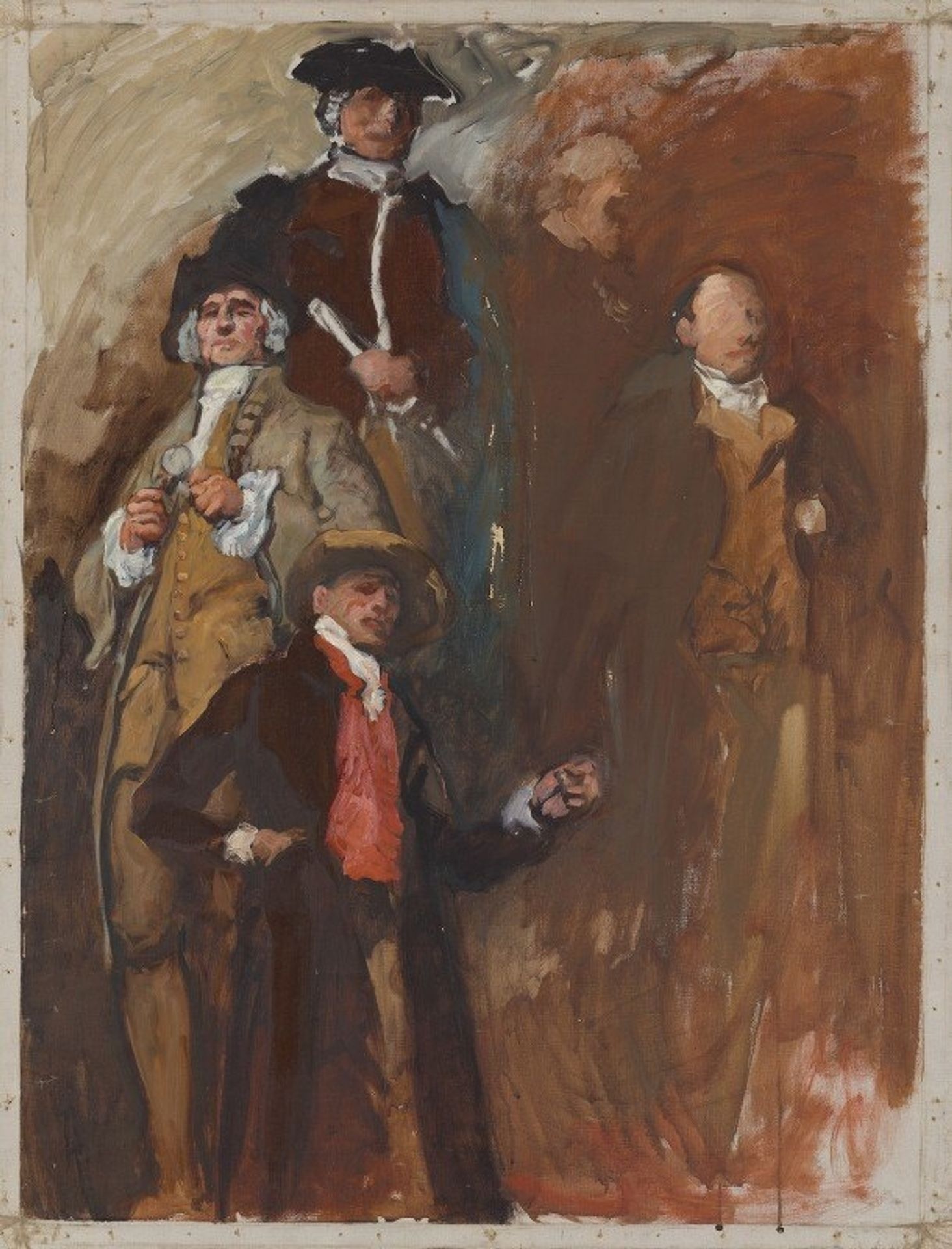
Figure Study, for The Apotheosis of Pennsylvania, House of Representatives Chamber, Pennsylvania State Capitol, Harrisburg

Listen to curator's interpretation
Curatorial notes
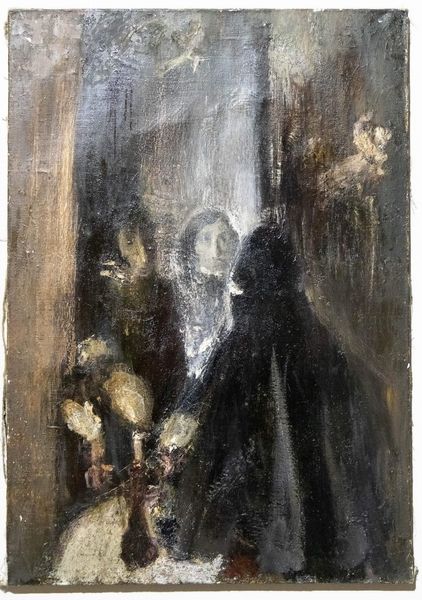
Editor: This is "Figure Study, for The Apotheosis of Pennsylvania" by Edwin Austin Abbey, likely created around 1902. It’s an oil painting, a preparatory sketch really. What strikes me is the... incomplete nature, the ghostly figures in the background. What do you see in this piece? Curator: Beyond its preparatory nature, I see a visual argument about power and representation. This wasn’t just about painting historical figures; it was about constructing a specific narrative of Pennsylvania’s history for the House of Representatives Chamber. Editor: So, not just decoration, but...propaganda? Curator: The word "propaganda" feels a bit harsh, but it certainly was designed to instill particular values. Consider the figures chosen – who are they and, perhaps more importantly, who *isn’t* represented? Are women or minorities visible, for example? What impression of the state's history would a visitor receive, gazing up at this mural? Editor: Good point. It does seem like a very specific vision, a powerful group of men in positions of authority. Almost like an exclusive club. Curator: Exactly. And understanding *that*—the intended audience, the political climate, the commission itself—that's how we really understand the piece. Abbey wasn’t just an artist; he was a participant in a larger cultural and political process. Editor: So even this study shows how carefully crafted these public artworks are. Thanks, I will think of the context of public role every time. Curator: Precisely, every artistic expression plays its own role on the historical stage. It was insightful to talk with you!