

1636 - 1694
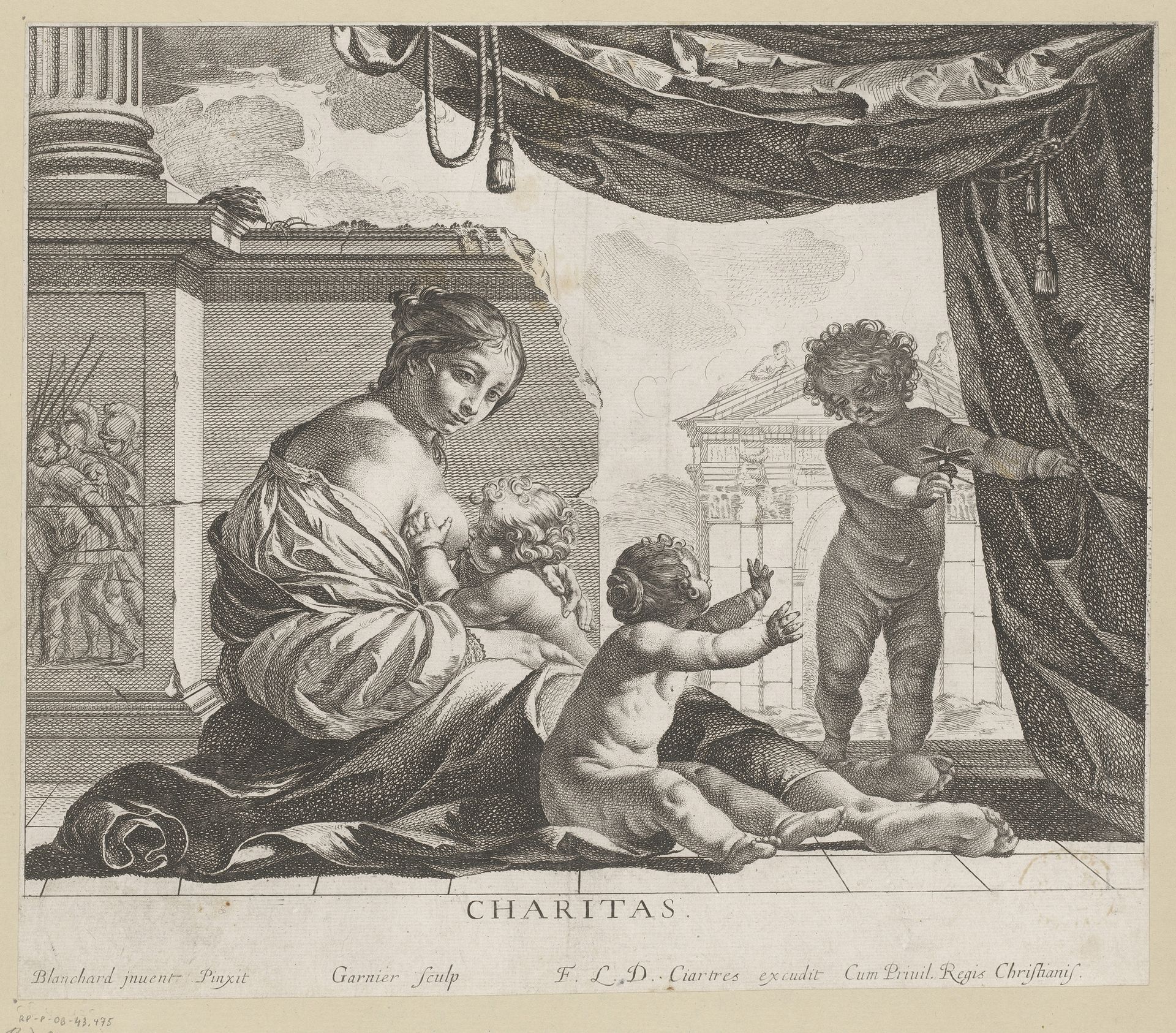
Caritas met kind aan de borst

Antoine Garnier
1611 - 1694Location
RijksmuseumListen to curator's interpretation
Curatorial notes
Curator: Let’s turn our attention to Antoine Garnier's "Caritas met kind aan de borst," an engraving dating back to the late 17th century. It’s currently held in the Rijksmuseum collection. Editor: My immediate reaction is to the contrast in this print between light and shadow and also stillness and playfulness. There's a deep, maternal peace radiating from the central figure, but she's surrounded by lively, energetic children. Curator: The work is titled Caritas which in Latin translates to Charity and love, often allegorically depicted as a woman breastfeeding one or more children. It speaks to a very specific, yet widespread idea: a society's measure can be seen through their expression of charitable work. During that period the definition of "charitable works" included caring for children. Garnier’s placement of Caritas is deliberate – amidst ruins but still strong and vital, embodying resilience. Editor: I read this placement, also, as more than just that though: the ruin on the left includes a frieze or some architectural relief where we see a procession of soldiers. This imagery is immediately complicated by the artist. There's almost a statement on whose responsibility it is to build up a society – through state violence or interpersonal care? What does it mean to build anything, in the long run? This image doesn't shy from challenging contemporary thinking on "civilized society". Curator: Interesting you pointed out the male figures versus a singular woman being in charge of rebuilding anything: there’s also the element of religious iconography that shouldn’t be missed. Baroque art used allegory, very frequently biblical, to get at a variety of political meanings or create propaganda. Looking at a more simplified message, a commentary could very well be about society building by faith or religion by helping the most vulnerable. Editor: And how can we extract faith away from social responsibility? To provide support through resources to children at risk could and should still remain very radical and pressing today, though there’s been tremendous societal evolution. We continue to face very real issues around this discussion still! Curator: Precisely. So, while Garnier’s piece clearly aligns with Baroque sensibilities, steeped in allegory and religious symbolism, its underlying message remains incredibly resonant. Editor: Yes, Garnier has offered more than just pretty lines; there's still power for social engagement when we revisit it with today’s eyes.