c. 1927 - 1964
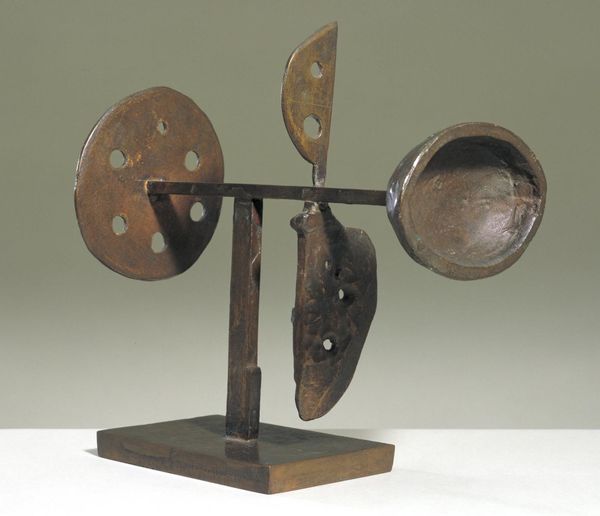
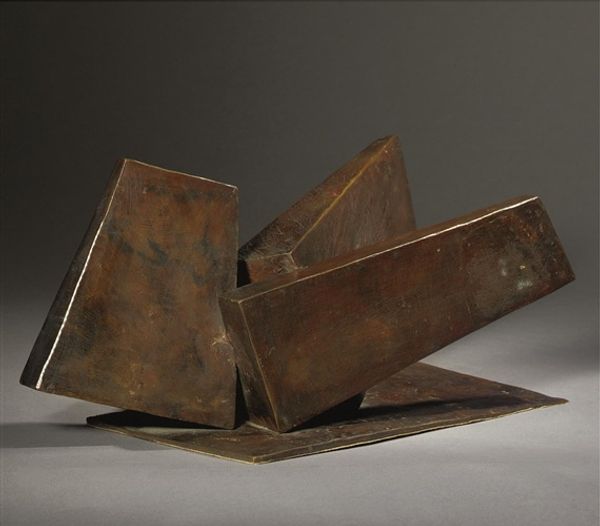
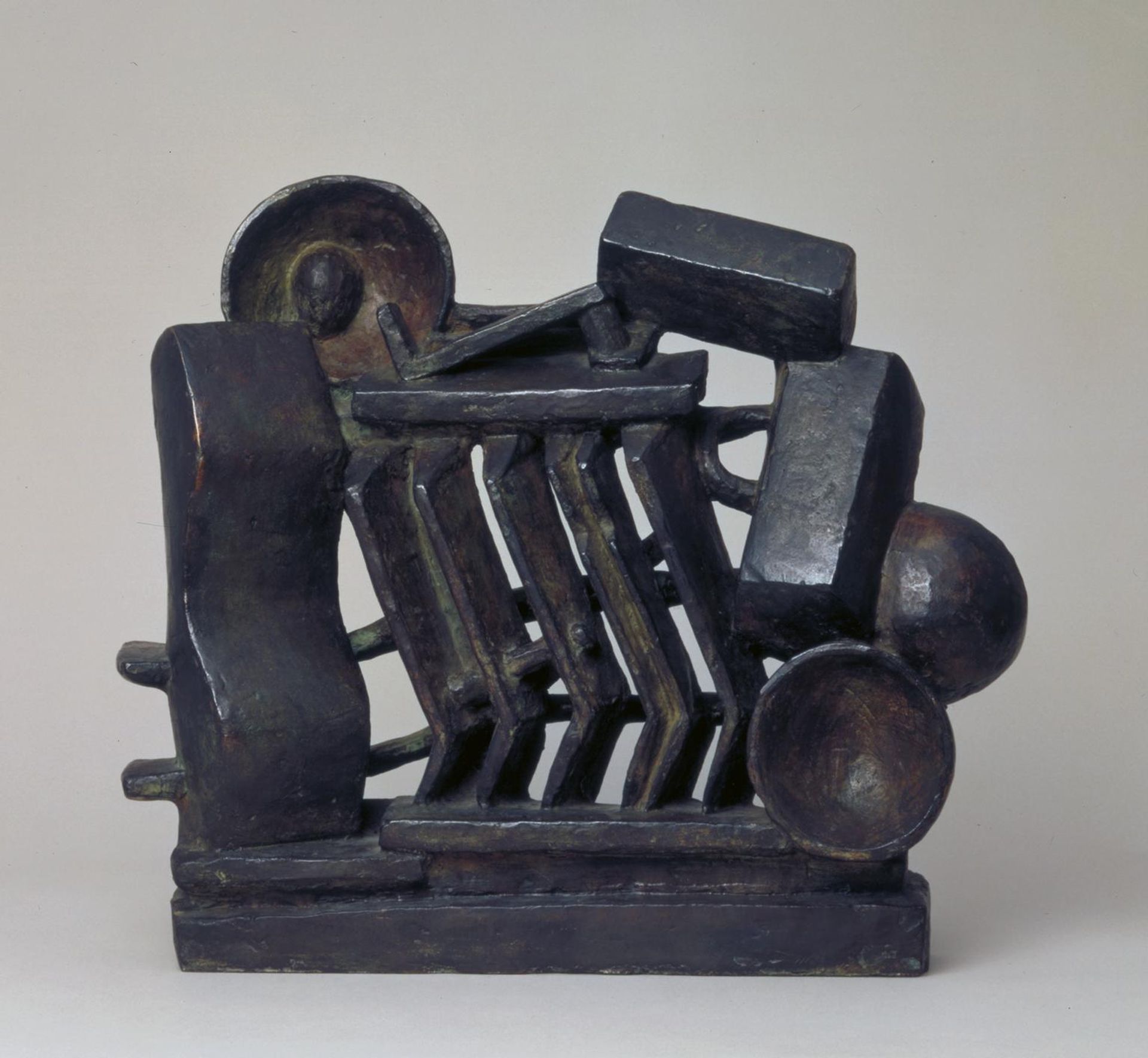
Composition (Man and Woman)


Listen to curator's interpretation
Curatorial notes
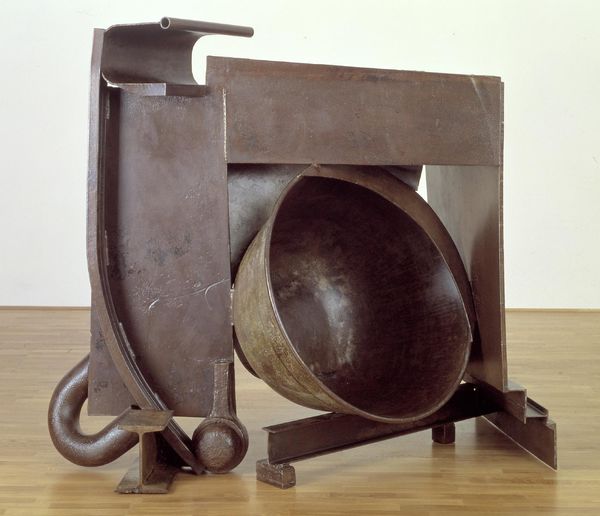
Curator: Alberto Giacometti’s "Composition (Man and Woman)" at the Tate offers a fascinating case study in early modernist exploration of form and the human condition. Editor: It's so strange, isn't it? Like a deconstructed stage set, or maybe a really dark playground for very serious philosophical toys. Curator: Absolutely. Giacometti often grappled with representing figures stripped of their traditional attributes, questioning societal constructs of identity. This work challenges our preconceived notions of gendered representation. Editor: I love that you say that. I can't help seeing it as a kind of puzzle. All these geometric shapes barely held together; it evokes a feeling of fragility. Curator: It certainly is open to interpretation, which is precisely its power. Editor: Right. It really invites you to feel into something, instead of just passively looking at it. It's raw, like a dream. Curator: The sculpture stands as a testament to the fluidity of interpretation and the ever-evolving dialogue between art and its sociopolitical contexts. Editor: Yes, and it reminds us that even in abstraction, there is a deep connection to the human experience.