drawing, paper, ink
#
drawing
#
paper
#
ink
#
calligraphy
Copyright: Rijks Museum: Open Domain
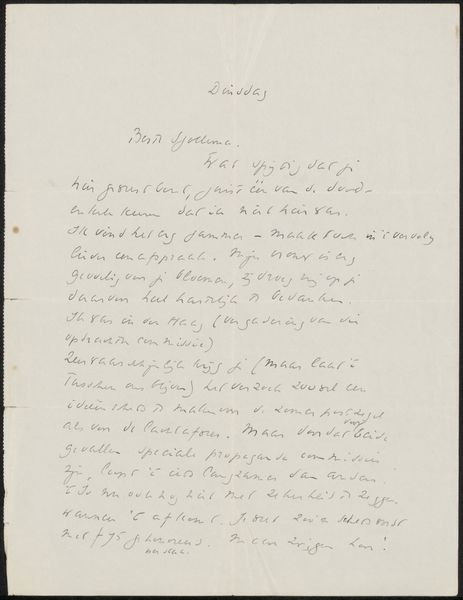
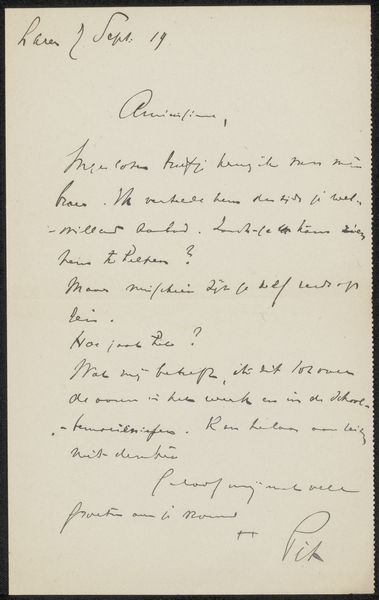
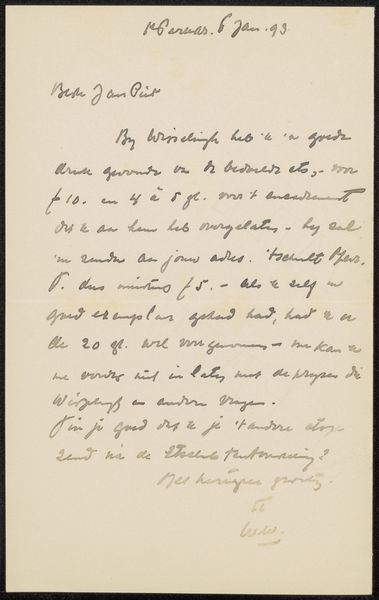
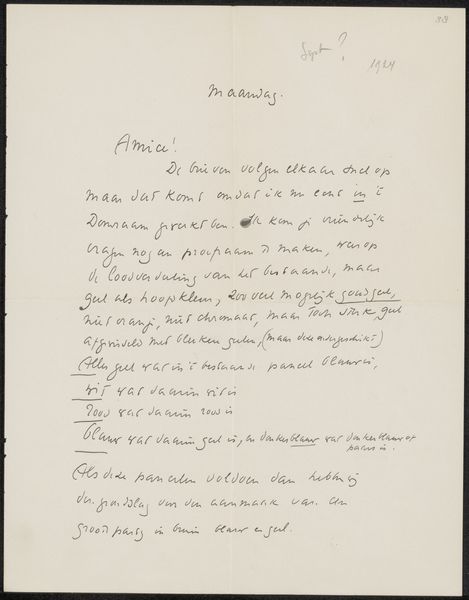
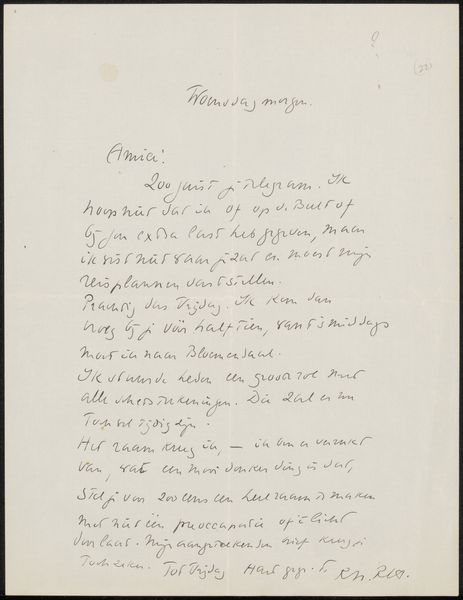
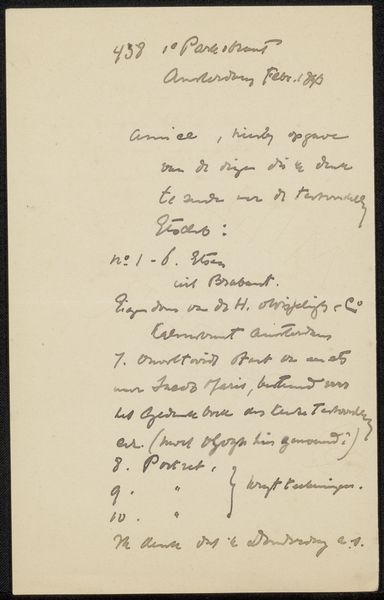
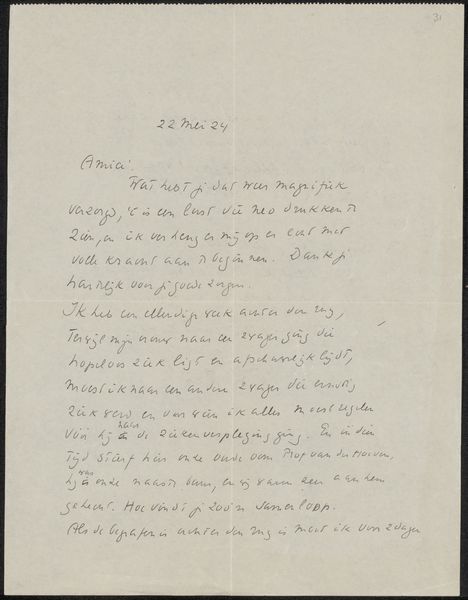
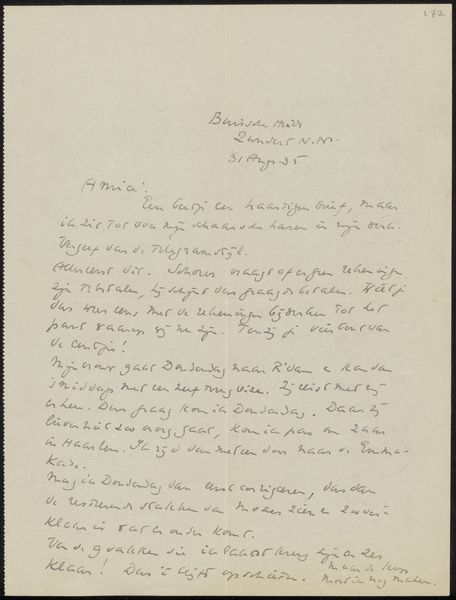
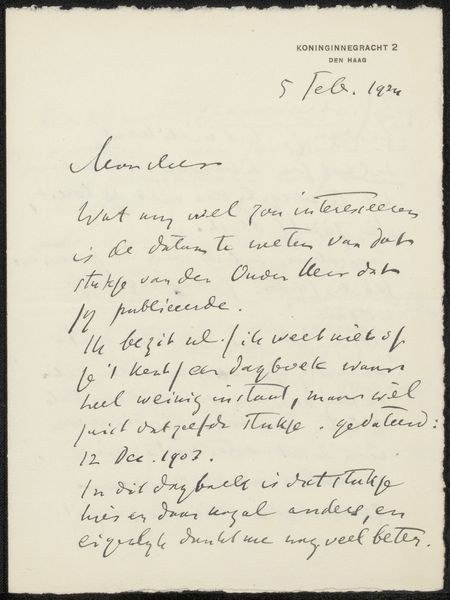
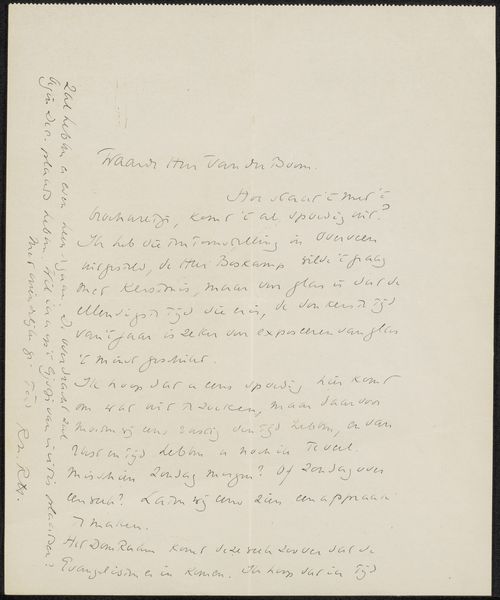
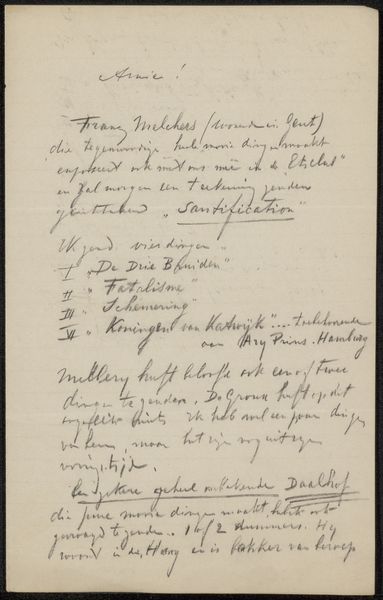
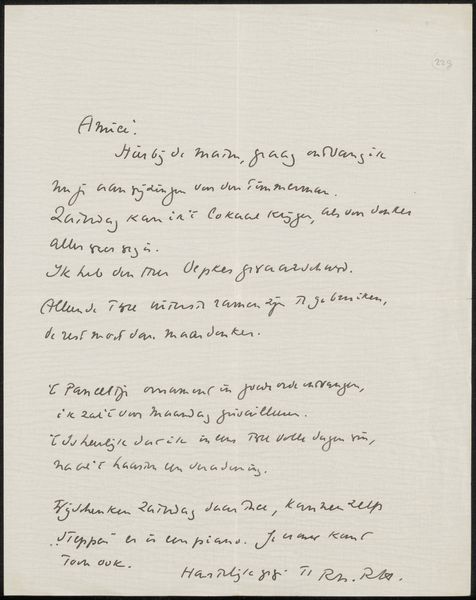
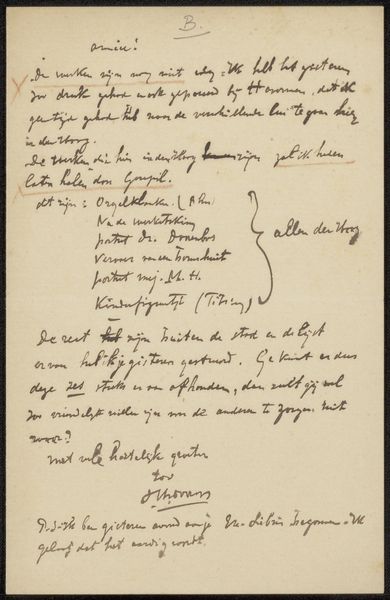
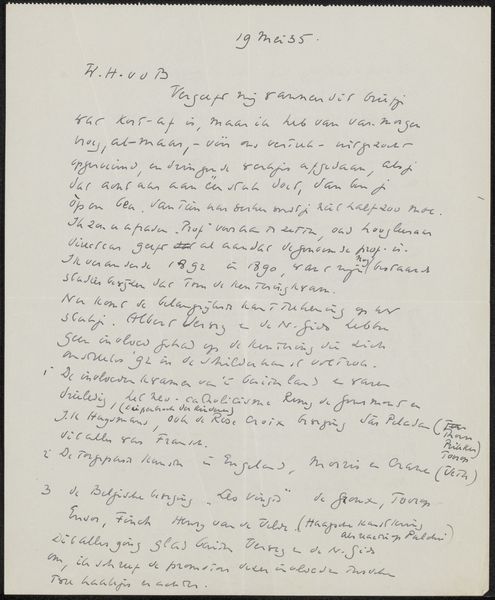
Curator: This is "Brief aan Willem Bogtman," a letter by Richard Nicolaüs Roland Holst, dating from around 1930 to 1937, created with ink on paper. It resides in the Rijksmuseum collection. The personal touch, the handwritten quality... it's striking, isn't it? What captures your attention first? Editor: The handwriting itself. It feels both intimate and somehow… coded. I’m curious, what symbols or hidden meanings do you see in the simple form of a letter? Curator: Ah, an excellent question! Think about the act of letter-writing itself. Before instant communication, a letter was a vital link. The paper becomes a symbolic bridge across distance, the ink, a deliberate expression of self. Roland Holst uses calligraphy to weave his thoughts. Even the slant of the letters and weight of the lines can suggest the writer’s mood and the era in which the message was crafted, and its context. Do you see anything particularly noteworthy in the shapes of certain letters? Editor: I notice how some letters almost seem to merge, and others are very distinct. Curator: Precisely! This variance gives rhythm and visual texture, an aesthetic experience beyond the informational content. Also, consider the cultural significance of receiving a letter in that period, particularly one penned by such a significant artistic figure. That anticipation, that tangible connection... these all carry meaning beyond the literal words. Editor: So the value lies not only in the message, but the medium as well. Is this the link between sender and receiver that creates meaning in the image itself? Curator: Absolutely. This intersection creates something unique. Considering the psychology of handwriting combined with the specific social context, do we view letter-writing as an antiquated relic of communication? Editor: It’s fascinating to think about how much intention and cultural weight can be carried even in a seemingly simple letter.
Comments
No comments
Be the first to comment and join the conversation on the ultimate creative platform.
 Collect
 React
React Comment
More like this