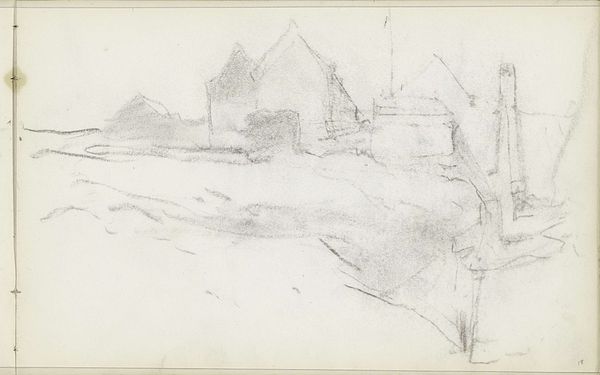
drawing, pencil
drawing
impressionism
landscape
road
pencil
realism
Copyright: Rijks Museum: Open Domain
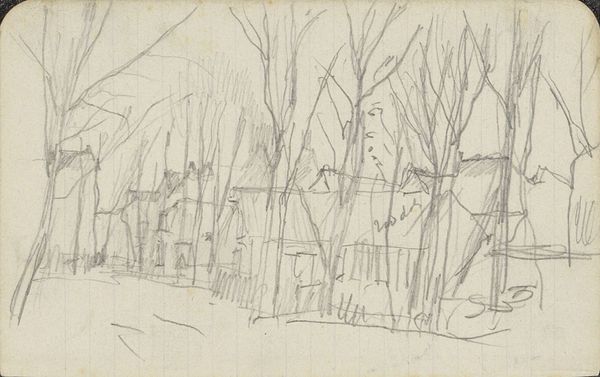
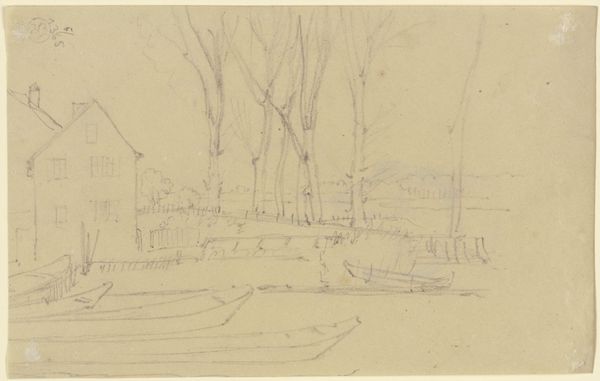
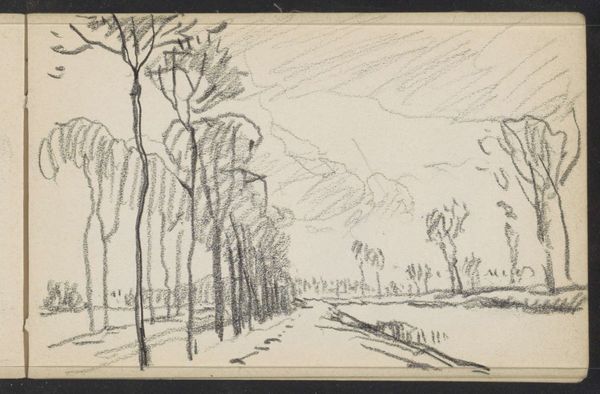
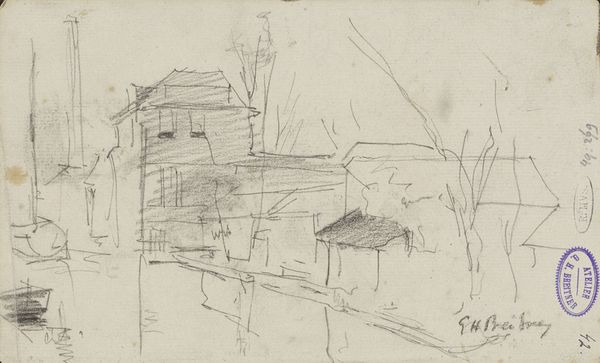
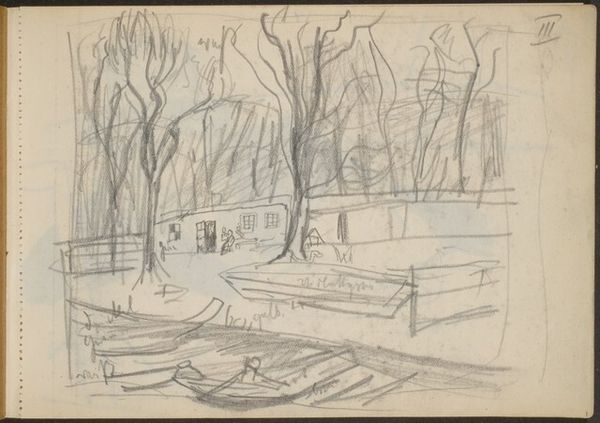
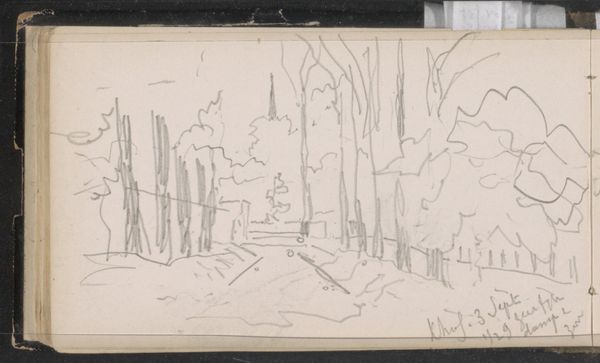
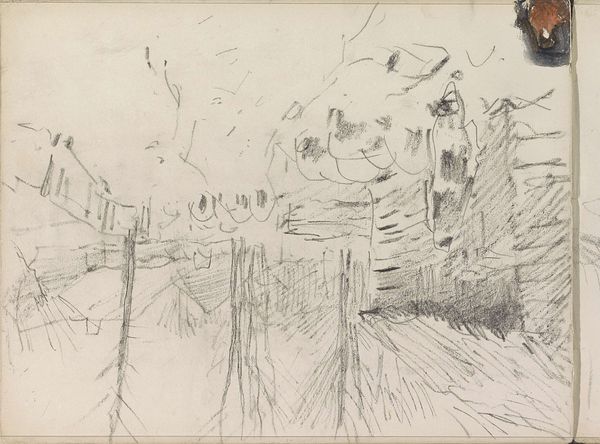
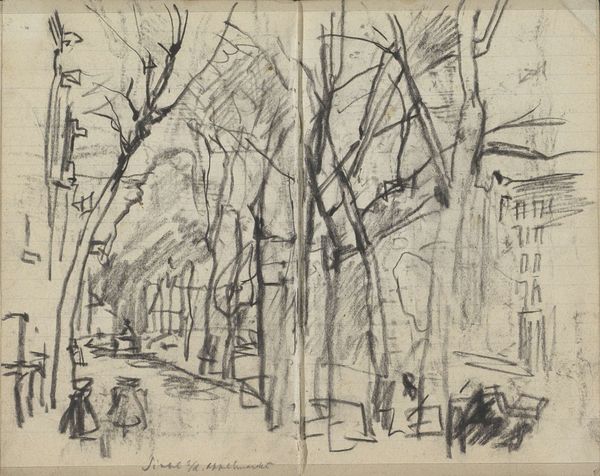
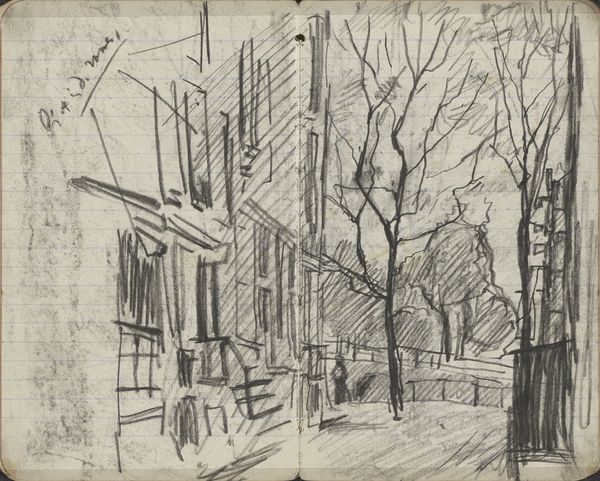
Editor: This is "Huis langs een weg bij Voorburg" by Louis Apol, created in 1880. It’s a pencil drawing, and there’s a quiet, almost melancholic feeling to it. What do you see in this piece beyond just a simple landscape? Curator: Beyond the immediate representation of a house along a road, I see an artist engaging with the changing landscape of the Netherlands. Apol, known for his winter scenes, here captures a more ambiguous season. Consider the social context: industrialization was rapidly transforming Dutch society, and artists like Apol grappled with depicting these changes. Does this scene portray a longing for a simpler, perhaps idealized, past? Editor: That's a compelling point about industrialization. The sparseness of the drawing does lend itself to that interpretation. Were artists actively choosing these kinds of subjects to reflect societal anxieties? Curator: Precisely! Landscape painting wasn't just about pretty pictures. It became a site where anxieties about modernity were negotiated. The road, usually a symbol of progress, here appears almost desolate, doesn’t it? Note the solitary lamppost, an early sign of urban encroachment on the rural landscape. Apol’s choices – his emphasis, or lack thereof – shape the narrative. How do you see this drawing fitting into the broader history of Dutch landscape art? Editor: I never really thought of landscape art as being that political. Thinking about it now, though, it makes perfect sense, especially during periods of rapid change. Thanks! Curator: Indeed! And this drawing offers a poignant window into how artists both reflected and shaped the cultural anxieties of their time. Food for thought!
Comments
No comments
Be the first to comment and join the conversation on the ultimate creative platform.
 React
React Comment