About this artwork
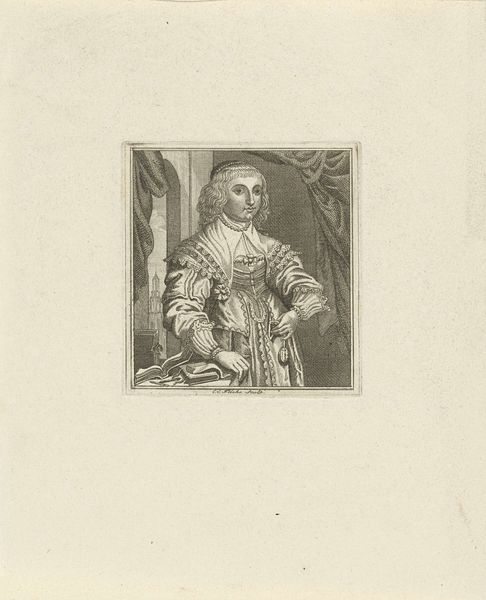
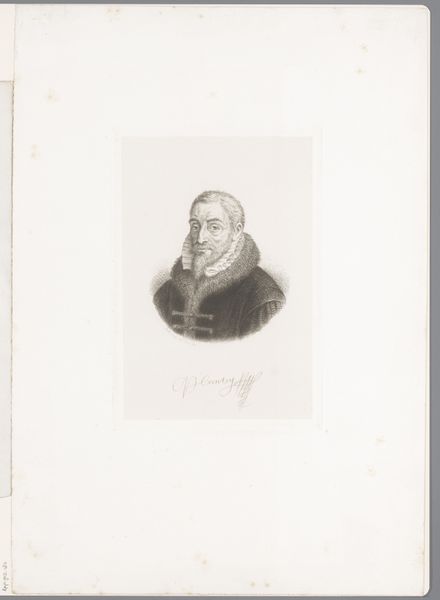
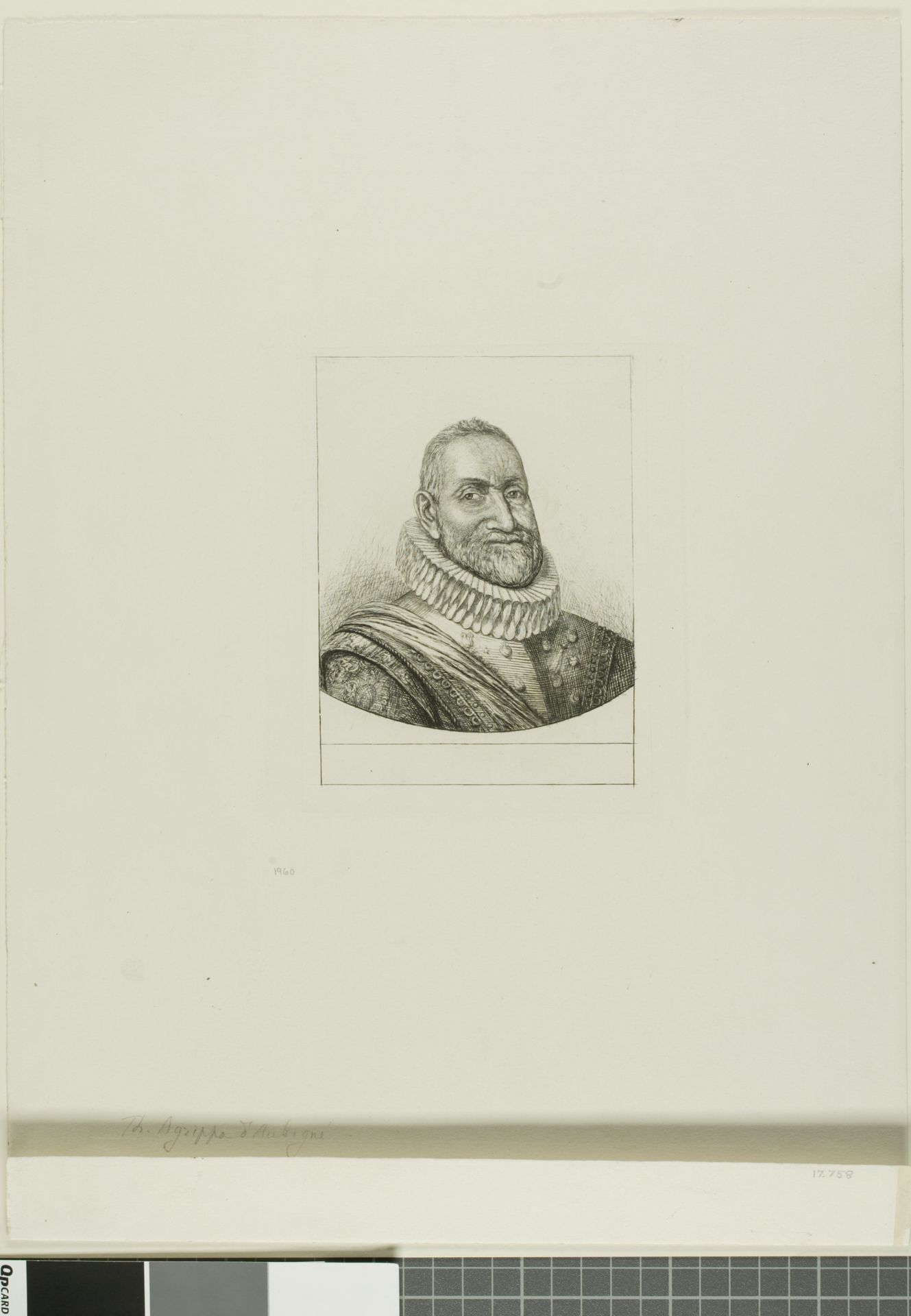
Charles Meryon made this etching, "Portrait of Th. Agrippa d'Aubigné," in the 19th century, a period marked by significant social and political upheaval in France. Meryon, known for his detailed renderings of urban landscapes, here turns his attention to portraiture, depicting a figure from the French Renaissance. The choice to portray Agrippa d'Aubigné, a soldier and writer during the French Wars of Religion, is telling. D'Aubigné was a staunch Huguenot, a member of the Protestant minority facing persecution. This reference to religious conflict resonates with the 19th-century context, shaped by debates about secularism and religious freedom. The fine lines of the etching capture not only the physical likeness of d'Aubigné but also hint at the complexities of identity during times of religious strife. Meryon’s attention to historical figures reflects a desire to engage with France's multifaceted past, revealing enduring questions about power, faith, and individual conviction.
Portrait of Th. Agrippa d'Aubigné
1861 - 1862


Artwork details
- Medium
- drawing, print, etching, paper
- Dimensions
- 144 × 110 (image); 158 × 142 mm (plate); 156 × 118 mm (primary support); 442 × 303 mm (secondary support)
- Location
- The Art Institute of Chicago
- Copyright
- Public Domain
Tags
Comments
Share your thoughts
About this artwork
Charles Meryon made this etching, "Portrait of Th. Agrippa d'Aubigné," in the 19th century, a period marked by significant social and political upheaval in France. Meryon, known for his detailed renderings of urban landscapes, here turns his attention to portraiture, depicting a figure from the French Renaissance. The choice to portray Agrippa d'Aubigné, a soldier and writer during the French Wars of Religion, is telling. D'Aubigné was a staunch Huguenot, a member of the Protestant minority facing persecution. This reference to religious conflict resonates with the 19th-century context, shaped by debates about secularism and religious freedom. The fine lines of the etching capture not only the physical likeness of d'Aubigné but also hint at the complexities of identity during times of religious strife. Meryon’s attention to historical figures reflects a desire to engage with France's multifaceted past, revealing enduring questions about power, faith, and individual conviction.
Comments
Share your thoughts