drawing
#
pencil drawn
#
photo of handprinted image
#
drawing
#
toned paper
#
light pencil work
#
pencil sketch
#
old engraving style
#
pencil drawing
#
coloured pencil
#
watercolour illustration
#
watercolor
Dimensions: overall: 32.5 x 24.8 cm (12 13/16 x 9 3/4 in.) Original IAD Object: 5 5/8" in diameter
Copyright: National Gallery of Art: CC0 1.0
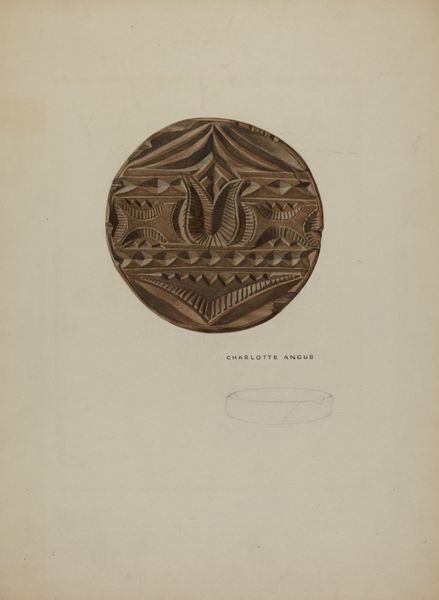
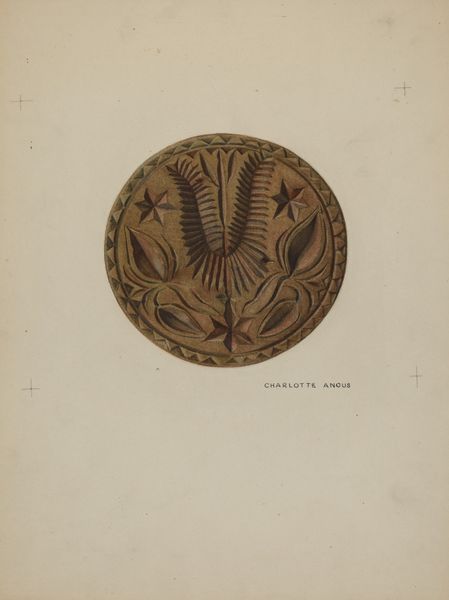
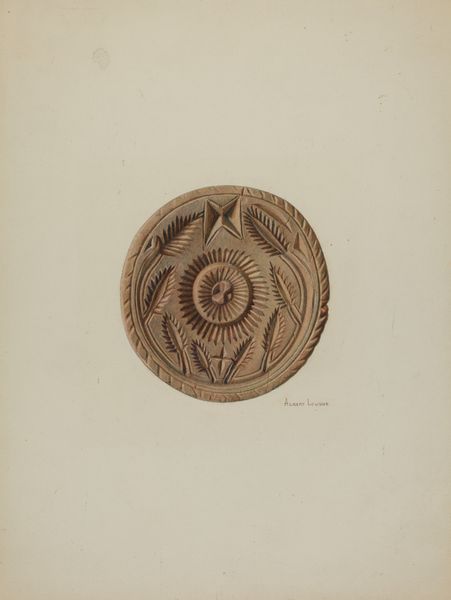
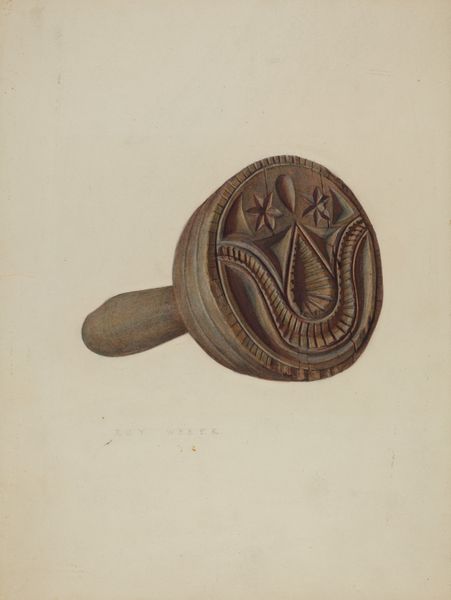
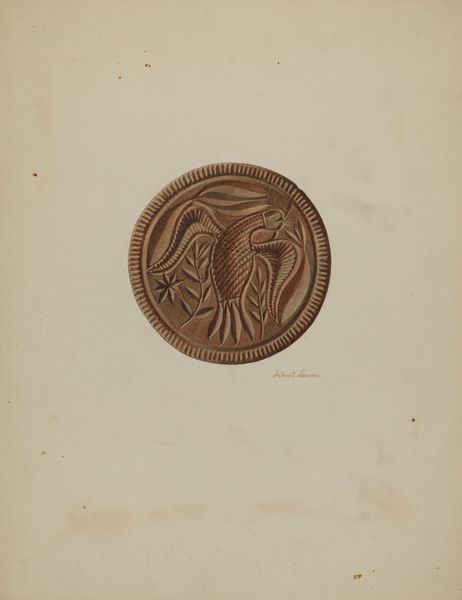
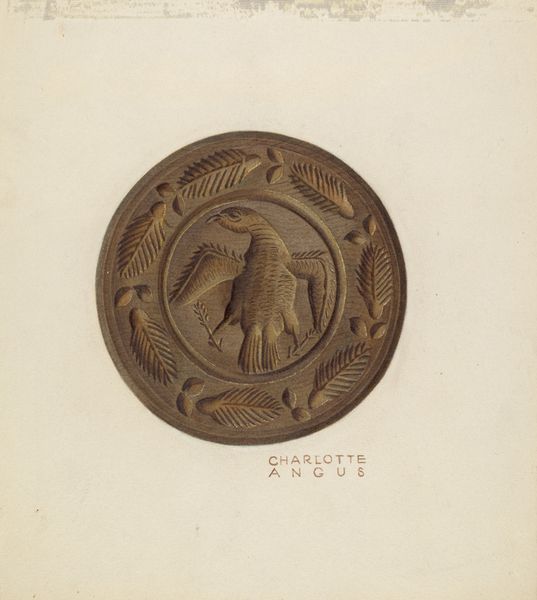
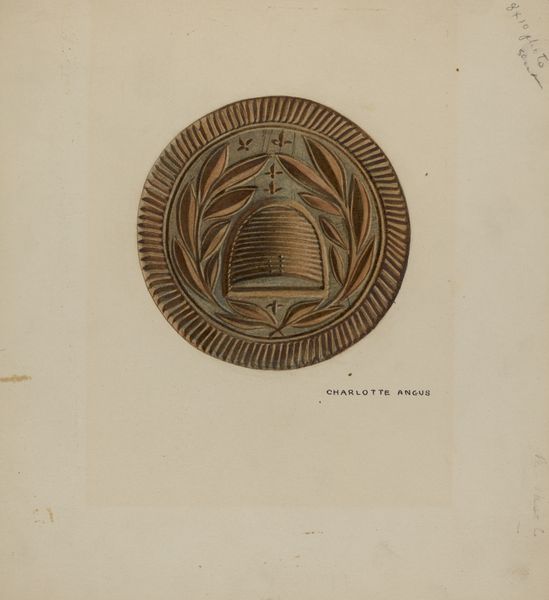
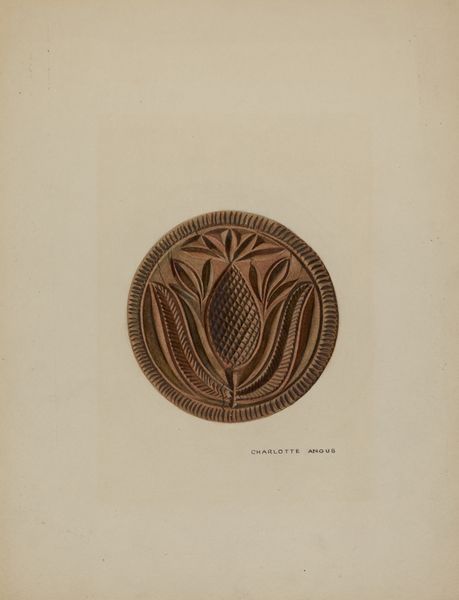
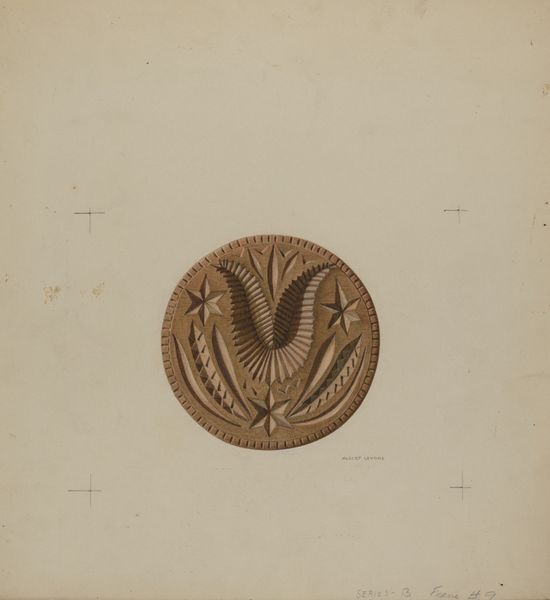
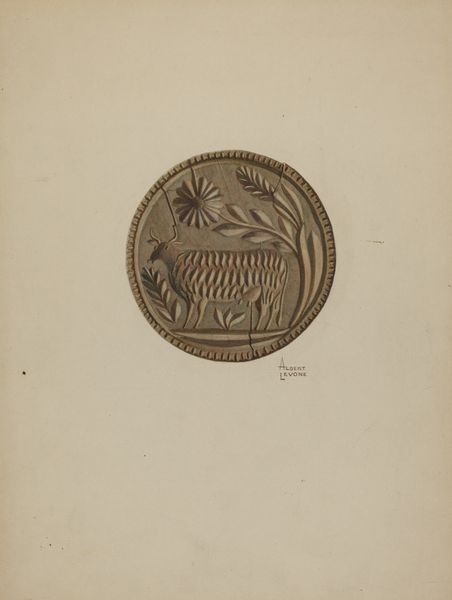
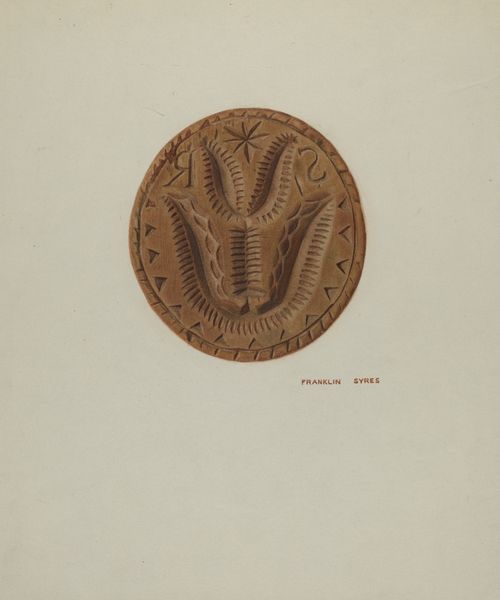
Curator: Here we have a drawing titled "Pa. German Butter Mold," created around 1938 by Albert Levone. It appears to be a pencil and watercolor rendering. Editor: My first impression is one of rustic charm. The circular composition is compelling. There is a beautiful sense of depth. Curator: Indeed. Butter molds in Pennsylvania German culture were more than just utilitarian objects; they served as important visual expressions of cultural identity. The motifs—birds, hearts, flowers—aren't just decorative. They're symbolic emblems tied to notions of fertility, prosperity, and belonging within the community. Editor: The circular design is so prominent. What does it suggest for us? Curator: Well, the shape itself can be interpreted as a symbol of continuity, of life's cyclical nature, and, in this context, the seasonal rhythms of farm life. This artist focuses on these ideas through what I would assume would have been found in his day to day. Editor: There's a stylized quality to how the elements are rendered, though. The artist uses repeated forms, notably the triangles, in almost a geometric dance around the circle. What implications does this abstraction hold? Curator: The design choices point to an understanding, and perhaps, elevation of the everyday, and connecting his art with a movement that appreciates these traditional pieces, a desire to hold onto tradition amidst rapid social change. How might these types of items influence movements today? Editor: Looking closer, I'm also drawn to how the textures play against one another. The smooth expanse of the central emblem versus the feathered effect created by the surrounding leaf. Curator: I agree, seeing this depiction pushes the boundaries, opening conversations about the historical portrayal of this important aspect within certain societies. Editor: This work offers a fascinating window into folk art traditions and artistic interpretation of objects of this kind. Curator: It really highlights how art and social meaning converge, inviting reflection on issues of culture and belonging then, and their implications for art now.
Comments
No comments
Be the first to comment and join the conversation on the ultimate creative platform.
 Collect
 React
React Comment
More like this