c. 1863 - 1870
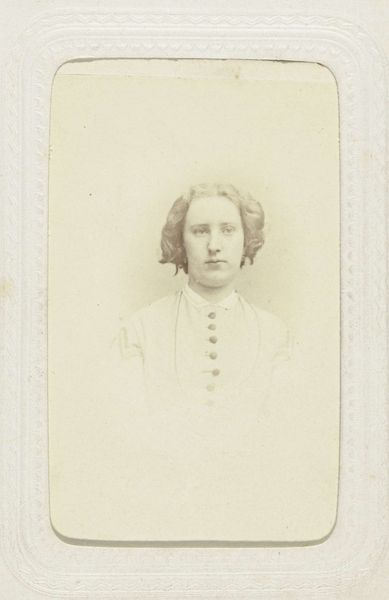
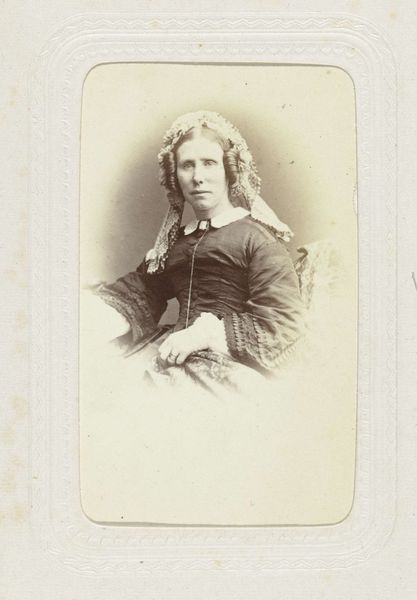
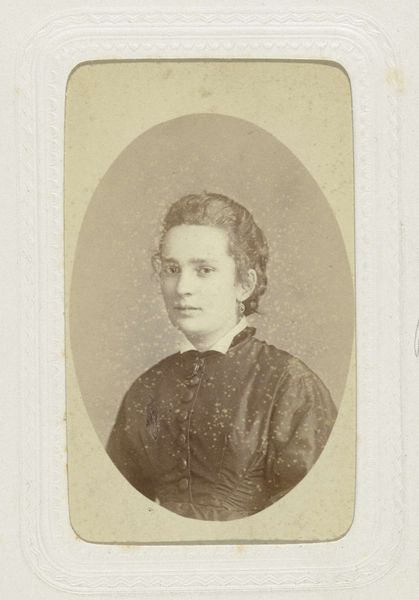
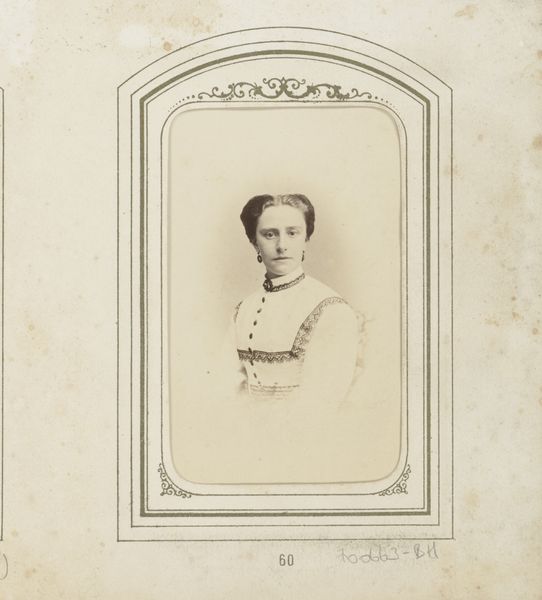
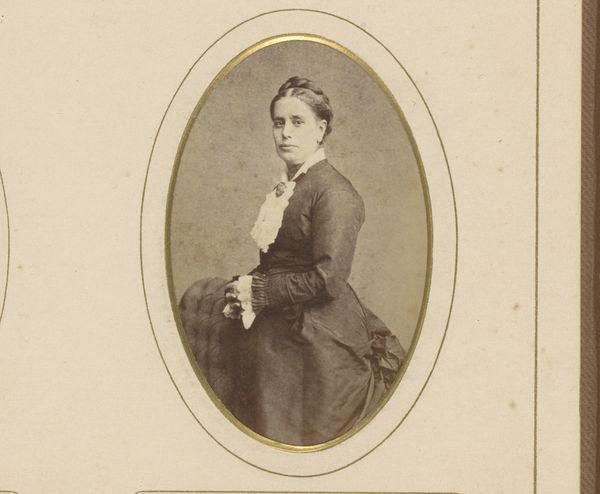
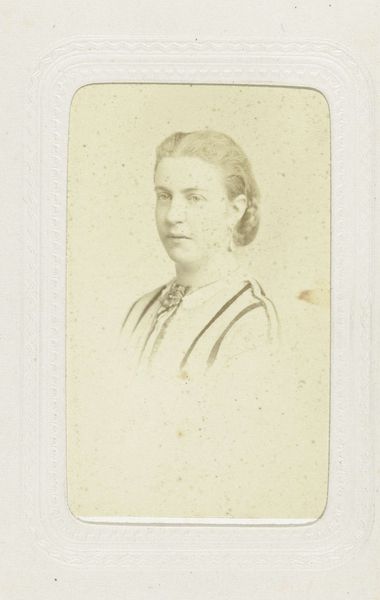
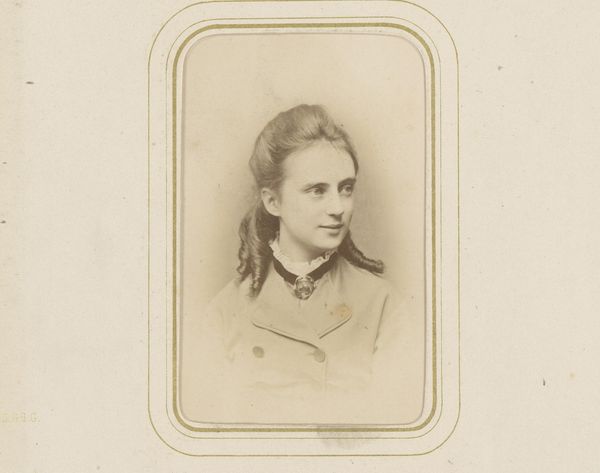
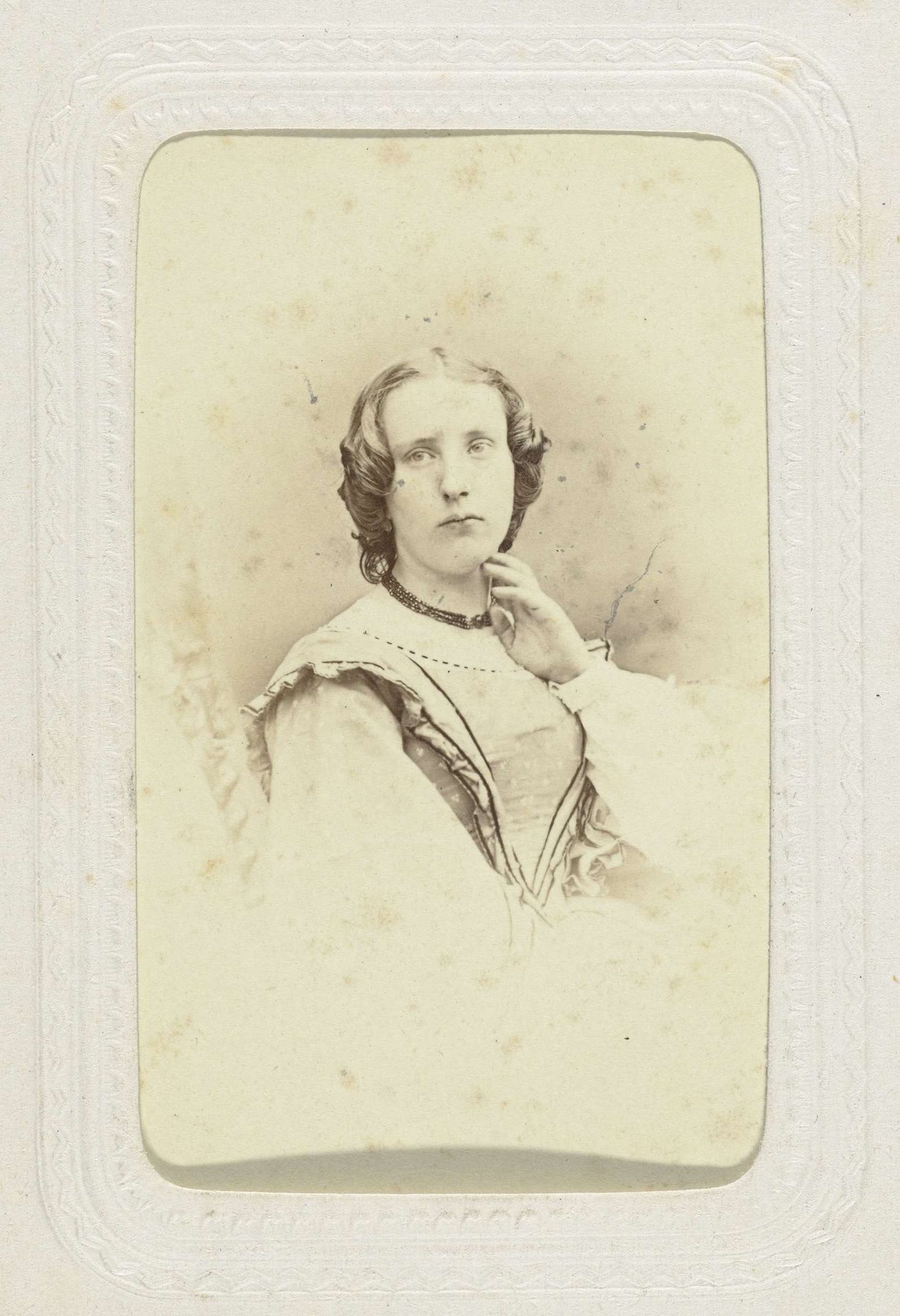
Studioportret van een jonge vrouw met pijpenkrullen

Wegner & Mottu
@wegnermottuLocation
RijksmuseumListen to curator's interpretation
Curatorial notes
Editor: Here we have "Studio Portrait of a Young Woman with Ringlets" made between 1863 and 1870 by Wegner & Mottu. It’s a photographic portrait, and something about the woman's pensive gaze and the way she touches her neck makes me feel a sense of vulnerability. How do you interpret this work? Curator: Indeed. The vulnerability you sense speaks to a fascinating tension. This portrait, a cultural artifact, reflects a very specific performance of femininity dictated by societal expectations. Notice the ringlets framing her face – potent symbols of beauty and control. Editor: Control? I wouldn’t have thought of it that way. Curator: Consider the effort required to achieve those ringlets, the deliberate styling. This hints at a negotiation between individual expression and the prescribed visual language of womanhood in that era. The act of photographing, itself, froze the subject, holding her fixed as a symbol of idealised beauty, or virtue. Where do you see the sense of individualism? Editor: I think I see what you mean. Although posed, her direct gaze seems to push back slightly, like she's challenging the viewer somehow. Do you think her clothing had a specific symbolic meaning? Curator: Absolutely. Everything, from the neckline of her dress to the barely visible ornamentation, communicates status and belonging. The absence of ostentatious display suggests modesty, another key virtue. These photographs offered a curated snapshot into the sitter's identity and place in society. What does it mean to *see* her today, knowing what we do about the past? Editor: That’s true! Considering her dress as communicating status adds another layer of complexity to the idea of vulnerability and performance that I initially saw. It makes you wonder what stories lay behind the controlled image. Curator: Exactly! Understanding the symbolism inherent in visual language lets us see so much more than the surface level portrait.