About this artwork
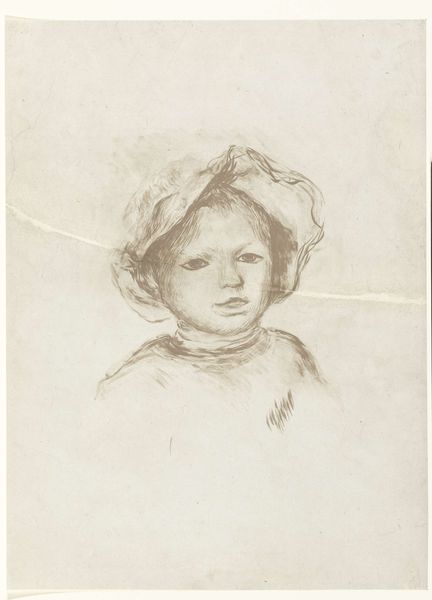
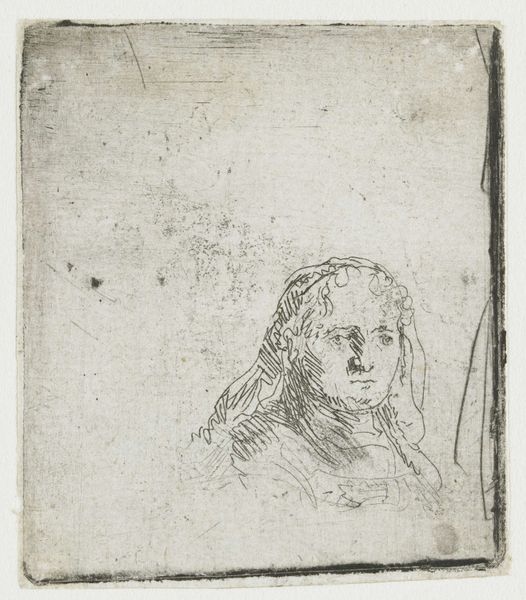
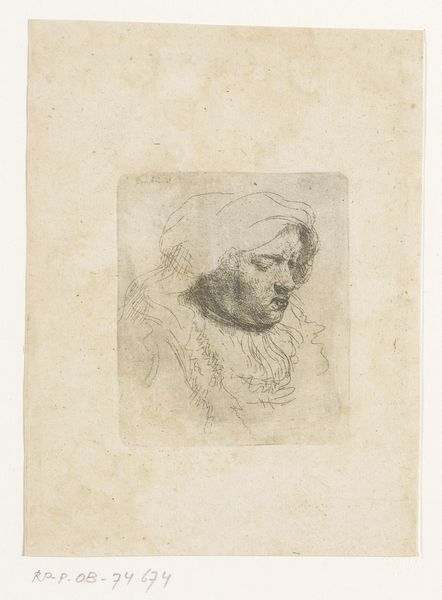
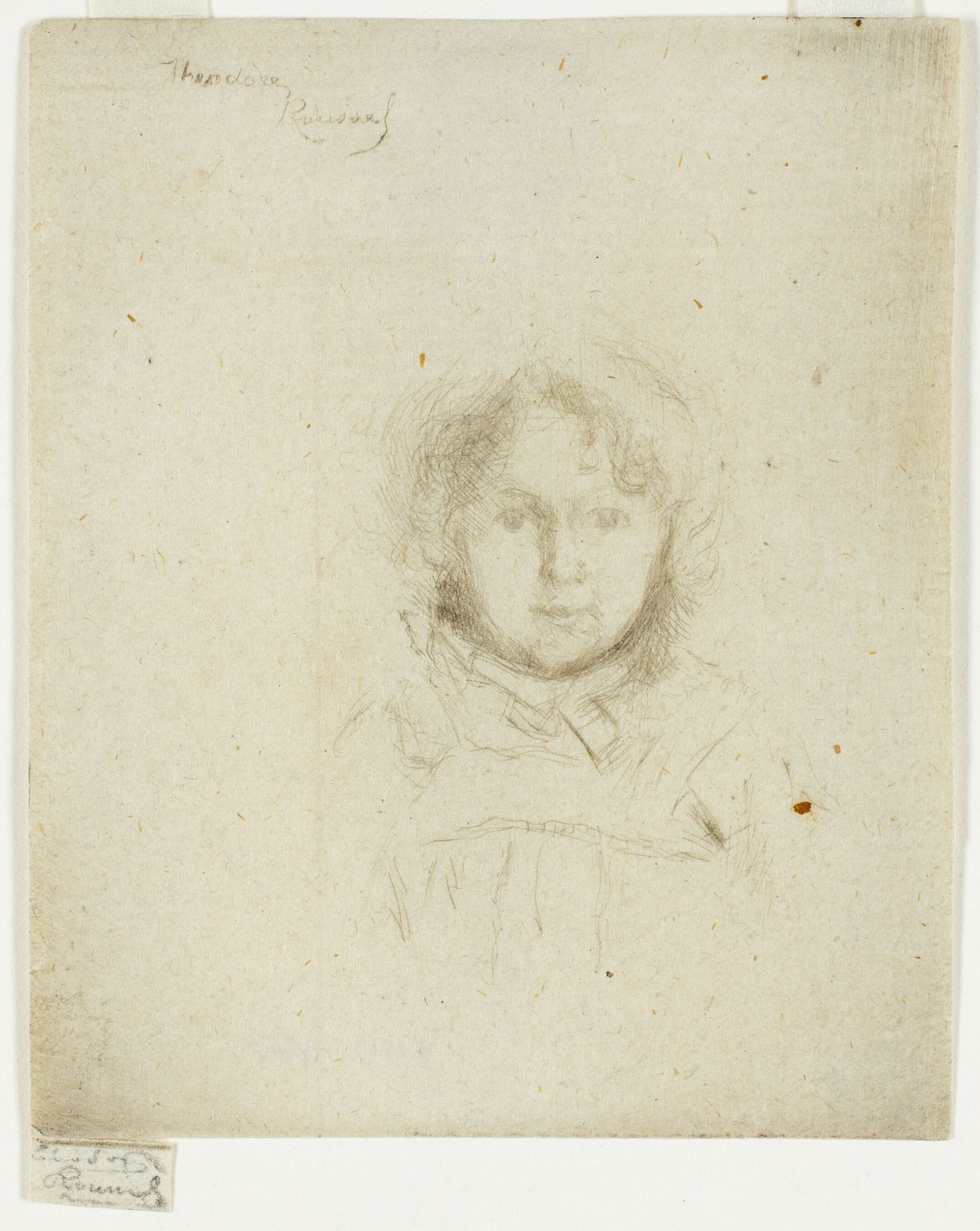
Theodore Roussel made this etching, Little Paul, in 1889 using a metal plate, acid, and paper. He would have drawn the image of the boy into a waxy, acid-resistant ground, then submerged the plate in acid, which bit into the exposed lines. The magic of etching lies in the artist's hand and the mordant's bite. Notice the delicate network of lines that form the boy's face and hair; areas of light and shadow are created by the density and direction of these lines. This finely controlled process has a directness and intimacy. You can sense Roussel’s hand as he captures the ephemeral presence of his sitter. Compared to other reproductive printmaking methods like engraving, etching has always had a special association with originality. You can see how Roussel used the inherent qualities of the medium to create something both immediate and enduring. It's a testament to the fact that even the most familiar materials can yield surprising results in the hands of a skilled maker.
Little Paul (February 6th, 1889)
1889


Artwork details
- Medium
- drawing, print, paper, pencil
- Dimensions
- 47 × 35 mm (image); 79 × 66 mm (plate); 83 × 66 mm (sheet)
- Location
- The Art Institute of Chicago
- Copyright
- Public Domain
Tags
Comments
Share your thoughts
About this artwork
Theodore Roussel made this etching, Little Paul, in 1889 using a metal plate, acid, and paper. He would have drawn the image of the boy into a waxy, acid-resistant ground, then submerged the plate in acid, which bit into the exposed lines. The magic of etching lies in the artist's hand and the mordant's bite. Notice the delicate network of lines that form the boy's face and hair; areas of light and shadow are created by the density and direction of these lines. This finely controlled process has a directness and intimacy. You can sense Roussel’s hand as he captures the ephemeral presence of his sitter. Compared to other reproductive printmaking methods like engraving, etching has always had a special association with originality. You can see how Roussel used the inherent qualities of the medium to create something both immediate and enduring. It's a testament to the fact that even the most familiar materials can yield surprising results in the hands of a skilled maker.
Comments
Share your thoughts