About this artwork
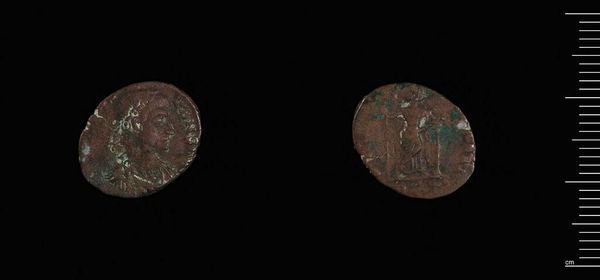
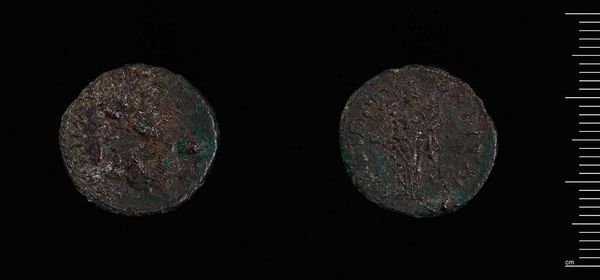
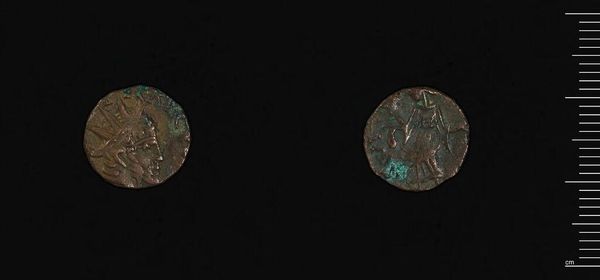
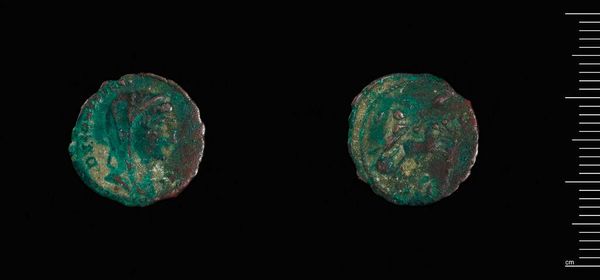
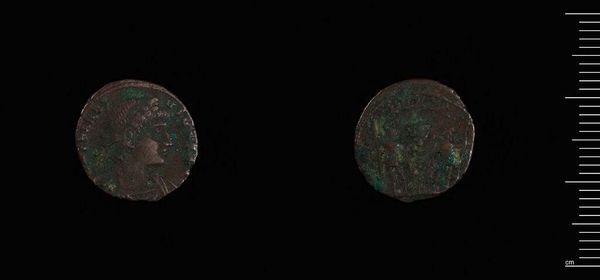
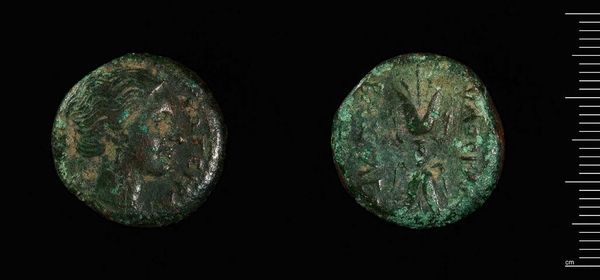
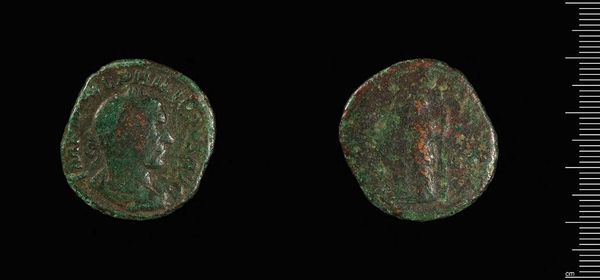
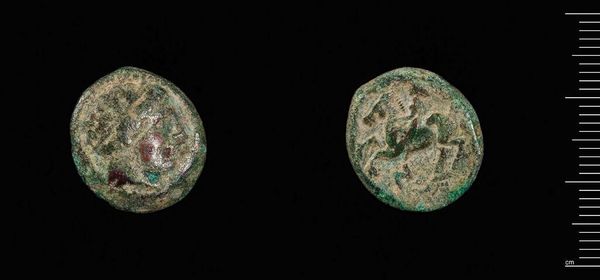
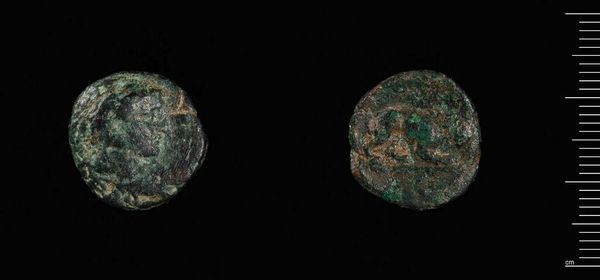
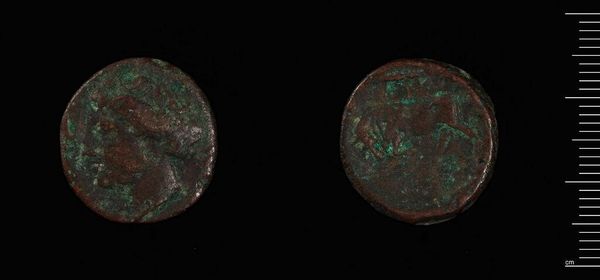
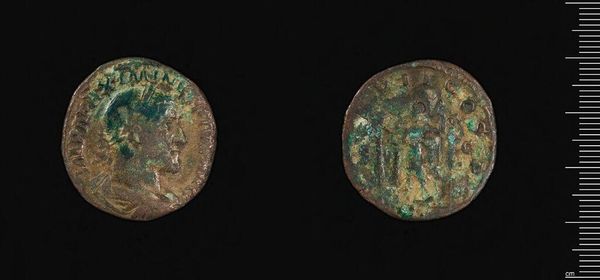
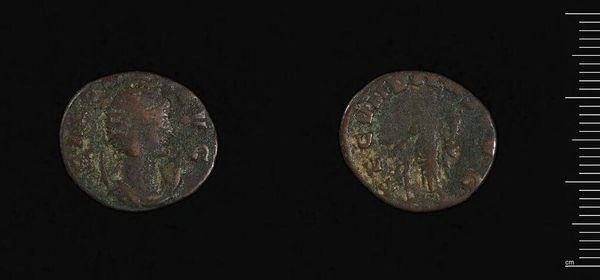
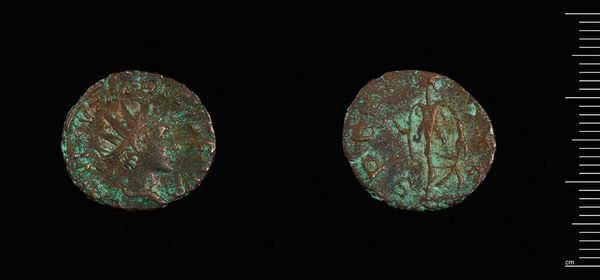
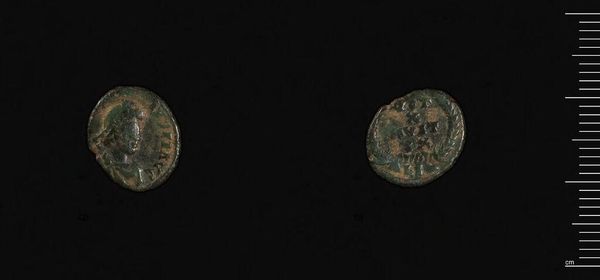
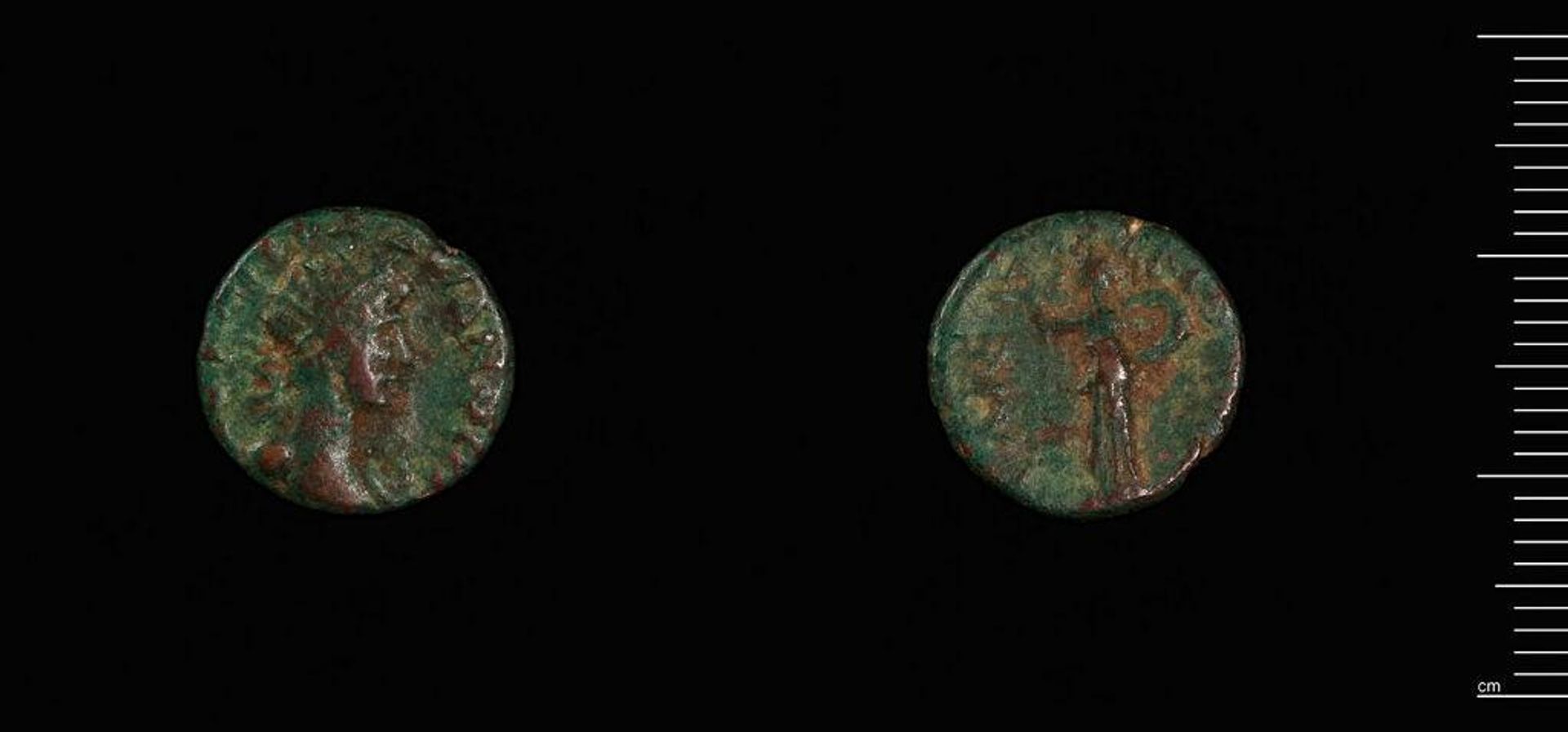
Curator: Here we have a coin, possibly from the reign of Gallienus, known as the Coin of the Koinon of Thessaly. Editor: Its patinated surface gives it an air of mystery; I’m drawn to the verdigris greens and earth-toned reds—it speaks to its age. Curator: Indeed. Coins like these were more than currency; they were tools for projecting power, reinforcing cultural identity within Thessaly during a turbulent period of the Roman Empire. Editor: So, the images—what do they tell us structurally? The figure on the reverse seems centrally placed, but almost lost amidst the texture. Curator: That's the beauty of it. The coin likely depicts a deity, but its worn state speaks to the erosion of those certainties, reflecting the anxieties of the time. Editor: A fascinating intersection of decay and design. Curator: Absolutely, a humble artifact whispering stories of identity and resilience.
Coin of the Koinon of Thessaly under Gallienus (?)
c. 253 - 268

Artwork details
- Dimensions
- 2.5 g
- Location
- Harvard Art Museums
- Copyright
- CC0 1.0
Comments
Share your thoughts
About this artwork
Curator: Here we have a coin, possibly from the reign of Gallienus, known as the Coin of the Koinon of Thessaly. Editor: Its patinated surface gives it an air of mystery; I’m drawn to the verdigris greens and earth-toned reds—it speaks to its age. Curator: Indeed. Coins like these were more than currency; they were tools for projecting power, reinforcing cultural identity within Thessaly during a turbulent period of the Roman Empire. Editor: So, the images—what do they tell us structurally? The figure on the reverse seems centrally placed, but almost lost amidst the texture. Curator: That's the beauty of it. The coin likely depicts a deity, but its worn state speaks to the erosion of those certainties, reflecting the anxieties of the time. Editor: A fascinating intersection of decay and design. Curator: Absolutely, a humble artifact whispering stories of identity and resilience.
Comments
Share your thoughts