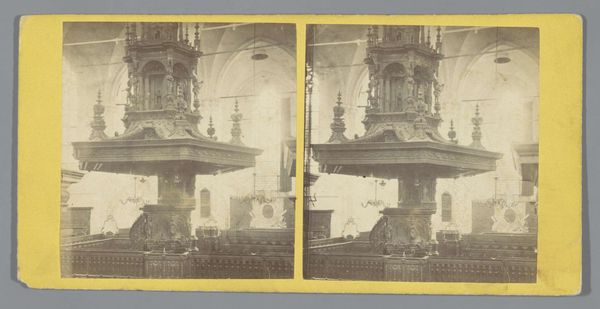
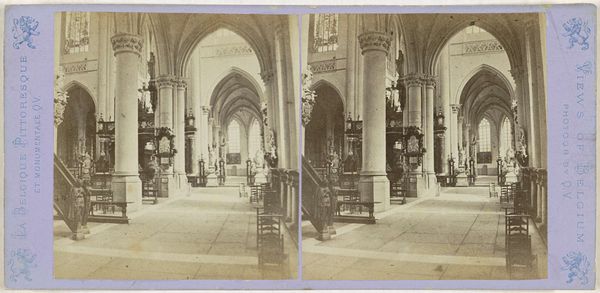
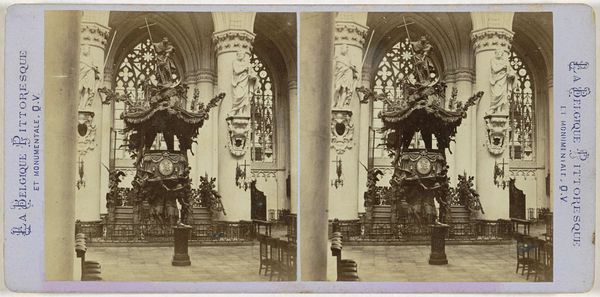
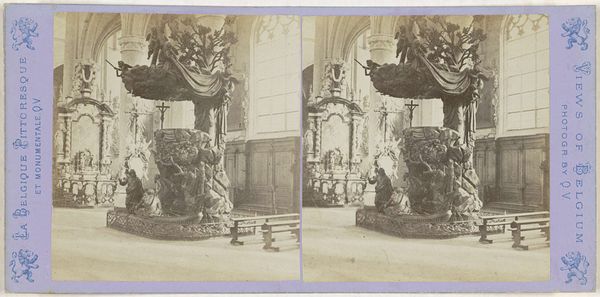
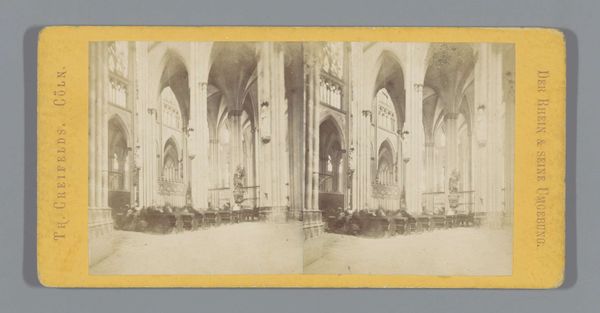
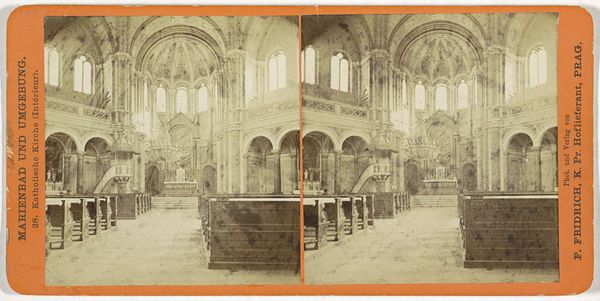
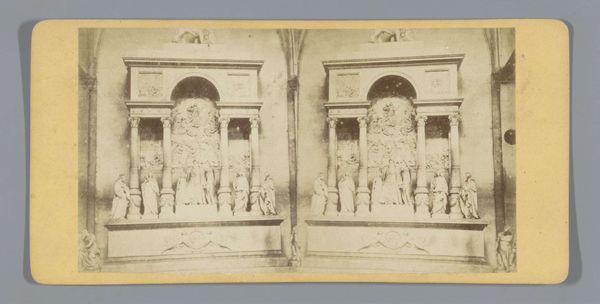
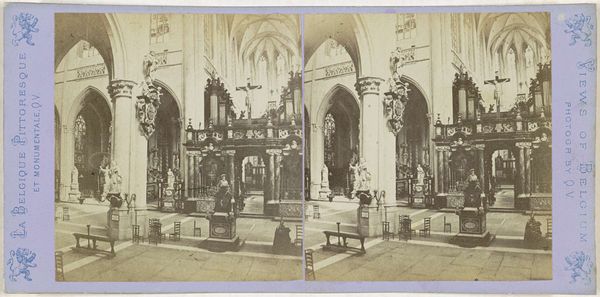
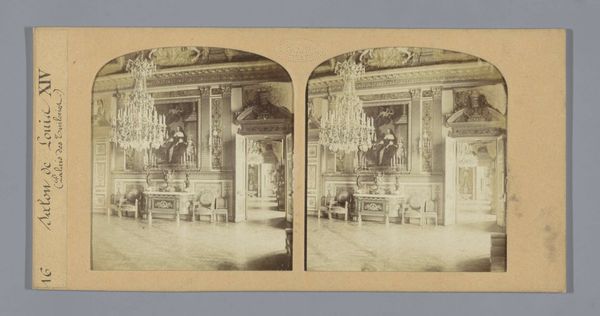
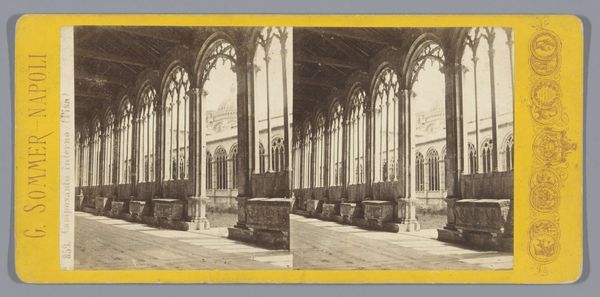
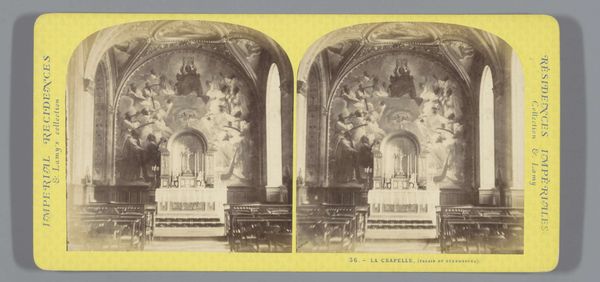
Gezicht op het interieur van de Nieuwe Kerk in Amsterdam 1860 - 1885

pieteroosterhuis
Rijksmuseum
aged paper
homemade paper
paper non-digital material
paperlike
flat design on paper
book mockup
folded paper
publication mockup
paper medium
design on paper
Dimensions: height 83 mm, width 171 mm
Copyright: Rijks Museum: Open Domain
Pieter Oosterhuis made this albumen print, titled "View of the Interior of the Nieuwe Kerk in Amsterdam," sometime in the mid-19th century. Churches like the Nieuwe Kerk were pivotal social and cultural hubs in 19th-century Netherlands. Oosterhuis captures the monument to Dutch naval hero Michiel de Ruyter. The architecture and ornamentation speak to the cultural values of the time, specifically national pride. It's no accident this monument is in the Nieuwe Kerk, a site closely tied to the Dutch royal family. By the 1800s, photography was transforming how people saw their world. The Dutch state used the new medium to document its own culture and institutions. Analyzing the visual codes—the classical architecture, the patriotic symbolism—helps us understand the image's intended message. To truly understand an artwork like this, we need to look at historical sources. How did Dutch citizens perceive their nation and their relationship to it? What role did the church play in shaping those perceptions? Art doesn't exist in a vacuum. It's a product of its time, shaped by the institutions and social forces around it.
Comments
No comments
Be the first to comment and join the conversation on the ultimate creative platform.
 React
React Comment