

1917
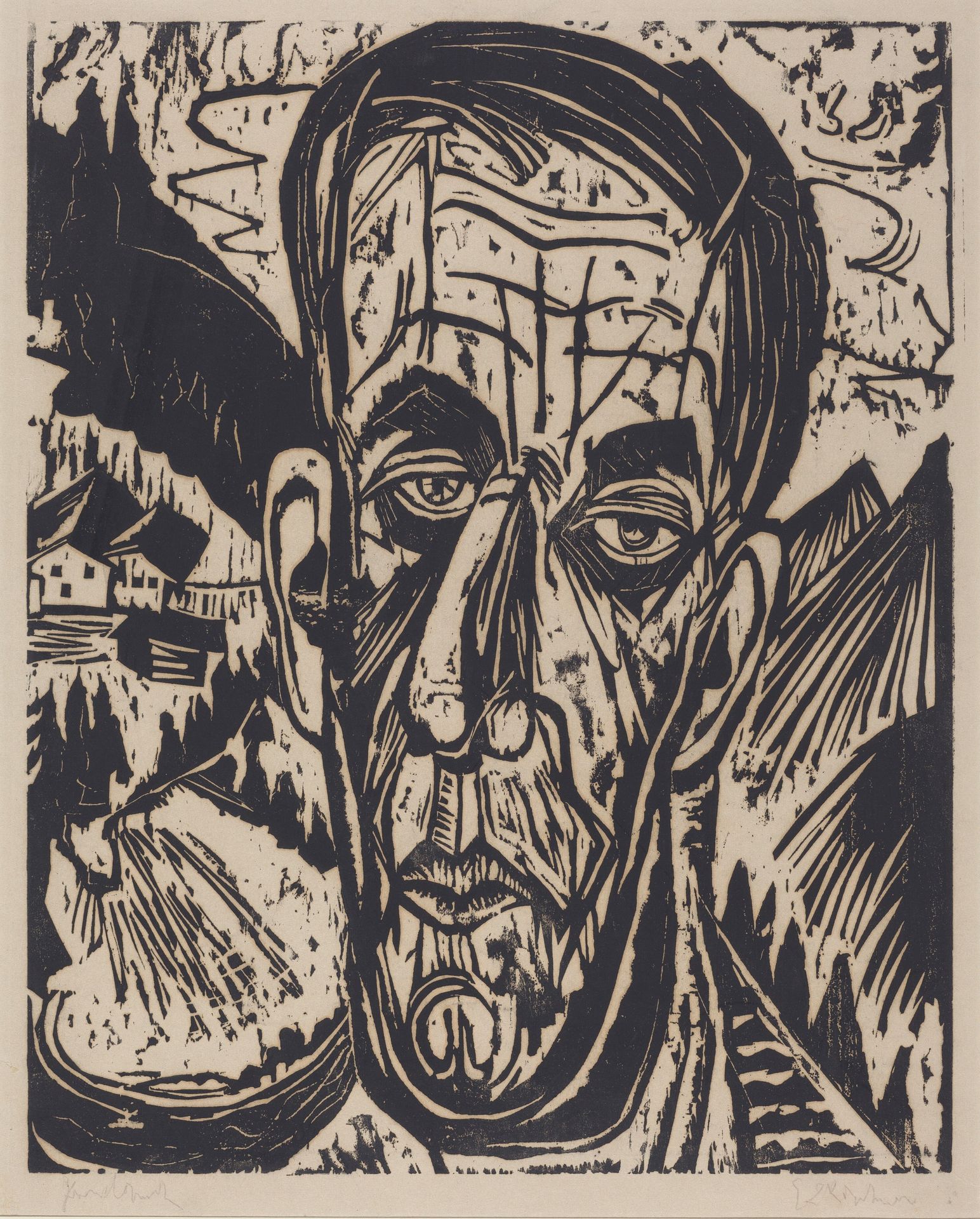
Head of van de Velde, Bright (Kopf van de Velde, Hell)


Listen to curator's interpretation
Curatorial notes
Curator: Ernst Ludwig Kirchner created this woodcut, titled "Head of van de Velde, Bright", in 1917. Editor: What a striking image. The high contrast immediately gives a sense of intensity, almost anxiety, to the piece. Curator: Absolutely. The Expressionists aimed to convey raw emotion, and Kirchner certainly achieves that here. Consider the subject: Henry van de Velde, a prominent figure in the Art Nouveau movement. By 1917, though, Europe was embroiled in World War I. Kirchner himself struggled with mental health issues exacerbated by the war, so a portrait like this becomes a fascinating reflection of those turbulent times. Editor: It’s interesting to see how he uses the woodcut medium itself to express this anxiety. The harsh lines, the deliberate gouges into the wood – they mirror a kind of internal fragmentation. Look at the way the background is rendered: those sharp, jagged lines behind his head; those houses with dark, ominous rooftops… it’s like the external world is pressing in on him. Curator: Indeed. The landscape, rather than offering a sense of peace, seems to echo the subject's inner turmoil. Notice how the face itself is almost a map of suffering: the deep furrows in the brow, the downturned mouth. This isn't simply a likeness; it’s a psychological exploration of van de Velde and perhaps Kirchner himself. There's a haunting symbolism present in this piece, of two souls enduring torment and somehow also still existing. Editor: It feels brutally honest. It doesn't shy away from revealing the vulnerabilities and the psychological weight carried by individuals during such a fraught period in history. Art became a way of carrying what felt unbearable in life. It’s easy to see how this print speaks to broader cultural anxieties as well as an individuals. Curator: Right, this woodcut transcends a mere portrait, giving voice to deeper concerns. Editor: It stays with you, doesn’t it? The starkness of the image makes it feel profoundly contemporary, despite being over a century old.