About this artwork
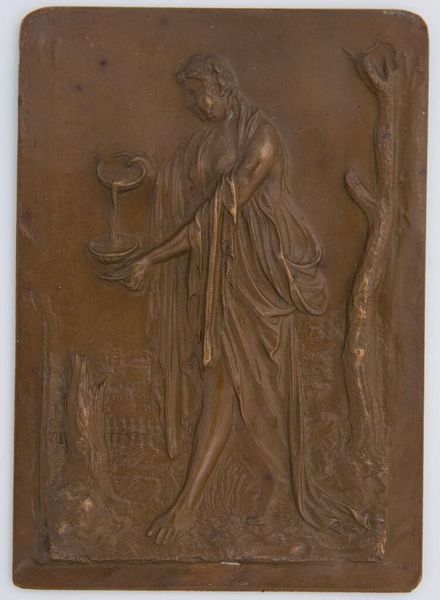
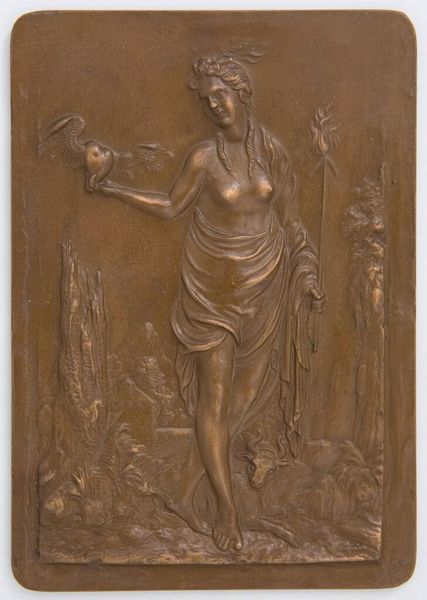
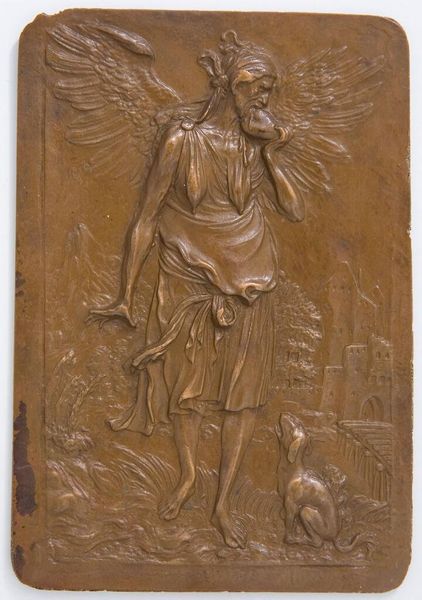
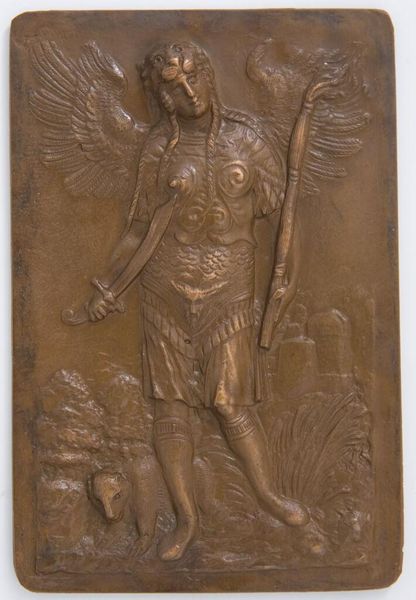
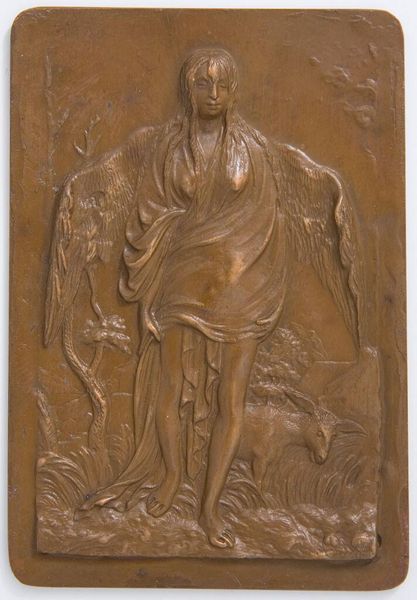
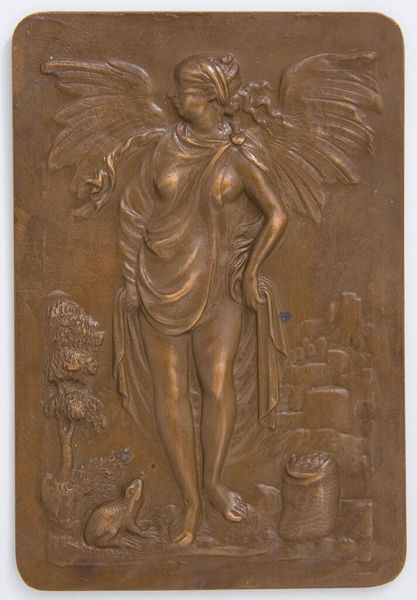
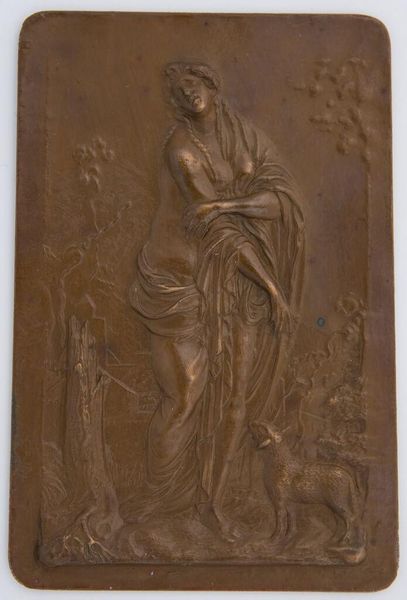
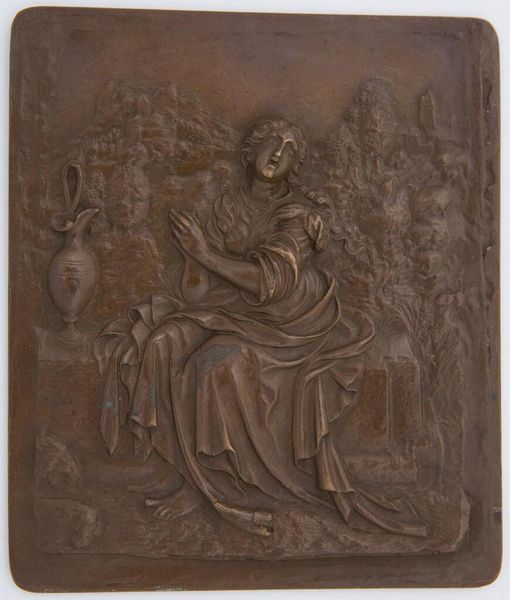
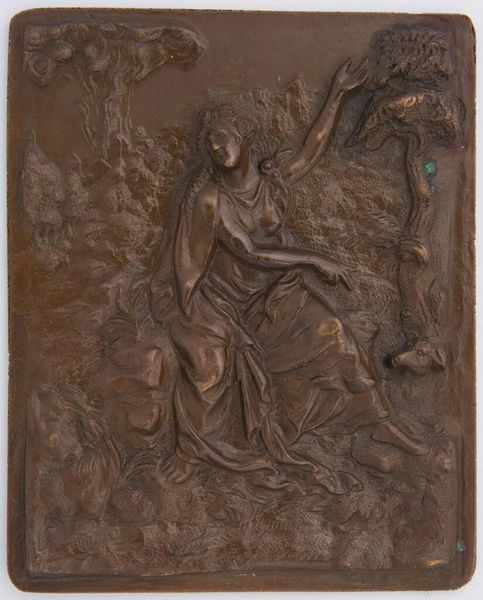
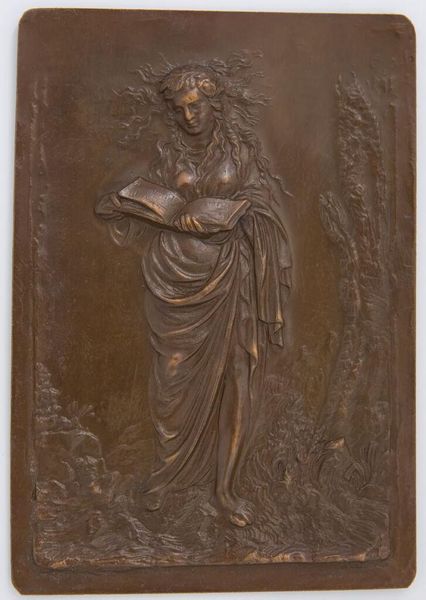
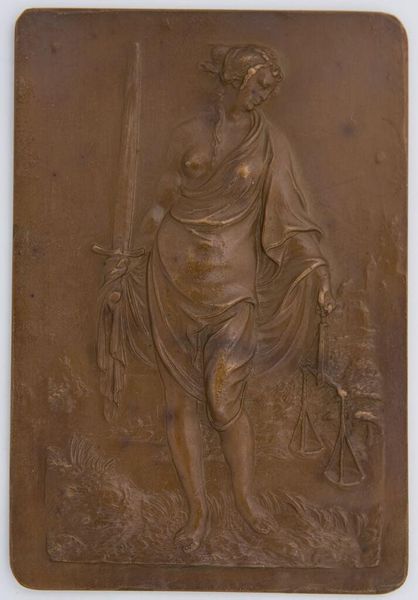
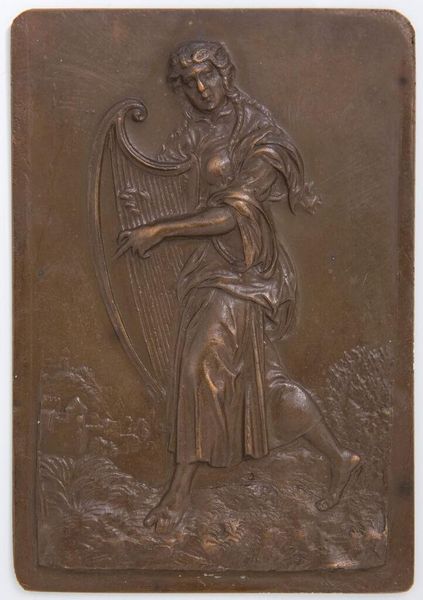
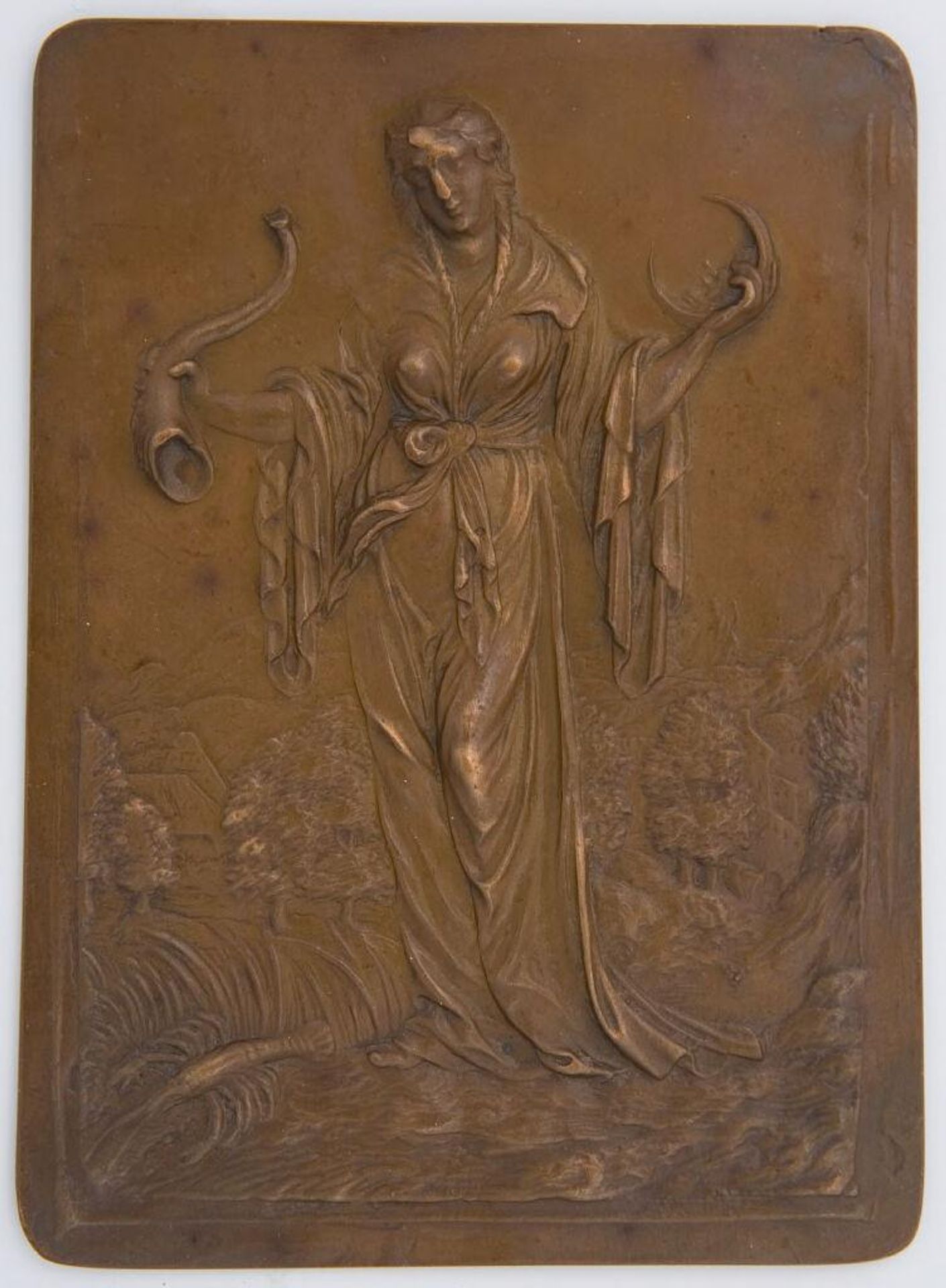
Editor: This bronze relief, "The Moon," from the series "The Seven Planetary Gods," presents a figure holding a crescent moon. It feels timeless, almost dreamlike. What symbols stand out to you? Curator: The crescent moon, of course, signifies cycles, change, and the feminine. Notice the horn of plenty, echoing the moon's abundance. These symbols were potent across cultures; lunar deities were often associated with fertility and intuition. Do you see how the figure's draped clothing both reveals and conceals? Editor: Yes, it's like she's emerging from the landscape itself. That connection to nature… it's very powerful. Thanks, I see it now. Curator: Indeed, and that's how symbols evolve and retain meaning. They tap into universal human experiences.
The Moon, from the series "The Seven Planetary Gods"
early 20th century (original from c.1540)


Artwork details
- Dimensions
- 8.4 x 6.1 cm (3 5/16 x 2 3/8 in.)
- Location
- Harvard Art Museums
- Copyright
- CC0 1.0
Comments
Share your thoughts
About this artwork
Editor: This bronze relief, "The Moon," from the series "The Seven Planetary Gods," presents a figure holding a crescent moon. It feels timeless, almost dreamlike. What symbols stand out to you? Curator: The crescent moon, of course, signifies cycles, change, and the feminine. Notice the horn of plenty, echoing the moon's abundance. These symbols were potent across cultures; lunar deities were often associated with fertility and intuition. Do you see how the figure's draped clothing both reveals and conceals? Editor: Yes, it's like she's emerging from the landscape itself. That connection to nature… it's very powerful. Thanks, I see it now. Curator: Indeed, and that's how symbols evolve and retain meaning. They tap into universal human experiences.
Comments
Share your thoughts