drawing, print, ink, engraving
drawing
baroque
dutch-golden-age
old engraving style
landscape
ink
cityscape
genre-painting
engraving
Dimensions: height 130 mm, width 246 mm
Copyright: Rijks Museum: Open Domain
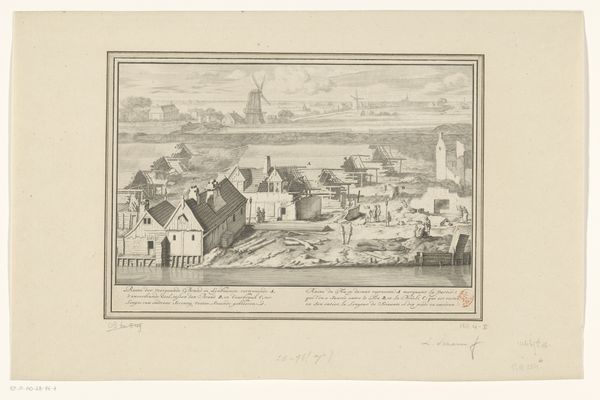
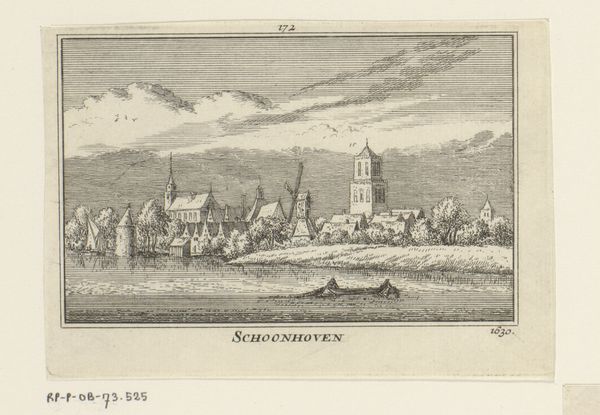
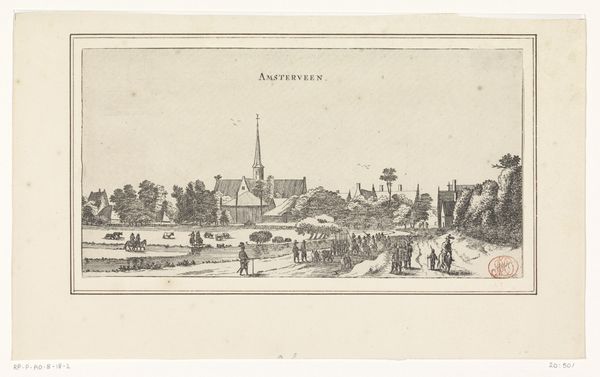
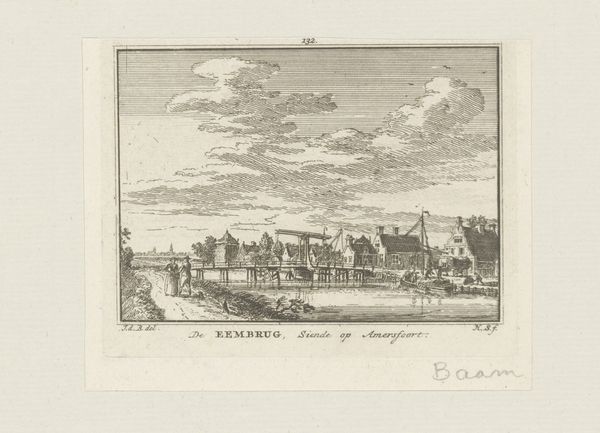
Curator: This print, attributed to an anonymous artist from after 1650, is entitled "Sloterdijk," named after the place it depicts. The Rijksmuseum holds it now. What strikes you upon first glance? Editor: It’s a bustling village scene rendered in delicate lines. You can almost smell the damp earth and hear the chatter of people. It seems small in scale, a modest depiction of everyday life. Curator: Indeed. Though "Sloterdijk" as a topos may appear ordinary, even idyllic at first, Dutch Golden Age landscapes frequently acted as signifiers of national pride and nascent capitalism. What might seem merely quaint often bore loaded messages of property and dominion. Editor: The details do hint at that. I notice the meticulous rendering of the buildings—the thatched roofs, the careful woodworking—suggests a preoccupation with craftsmanship and production. There’s a clear sense of labor imbued in the image, but at the same time the work depicted appears strangely light and free from overt indications of hierarchy. Curator: This evokes an atmosphere steeped in civic virtue and collective industry. However, the prominent church steeple casts its symbolic shadow—it is hard to determine the extent to which the church plays into a capitalist ethic through encouraging values like work, thrift, and diligence. The church may subtly guide and orient this nascent ethic. Editor: So the materials and labor presented aren't simply about craft; they become entangled with broader cultural and even moral considerations? It shifts how we might interpret something like the well-maintained thatch, now seen beyond just a roofing material, towards representing a wider ethic of care or even something resembling piety. Curator: Precisely. Through genre scenes such as these, it is important to observe and disentangle the myriad complex ways of living being etched within these prints. Editor: That adds a whole new layer to this unassuming image. The production of the artwork becomes a testament to broader themes of nationhood and morality in this view. Thank you for those considerations. Curator: And thank you, for grounding it in the physical world of making, so often overlooked when discussing the weight of symbols.
Comments
No comments
Be the first to comment and join the conversation on the ultimate creative platform.
 React
React Comment