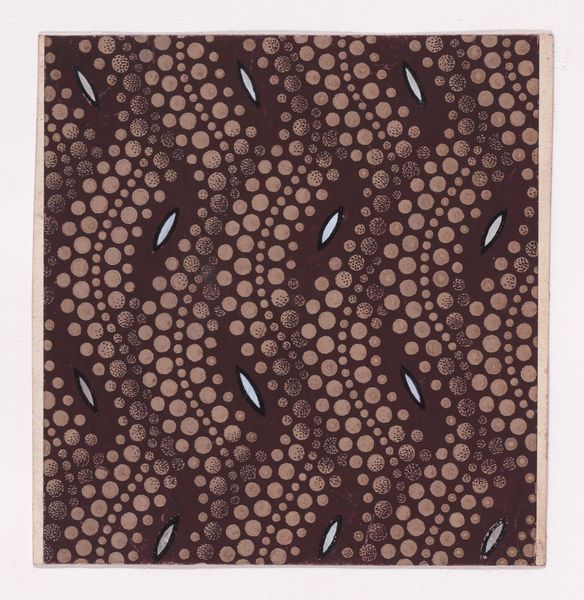
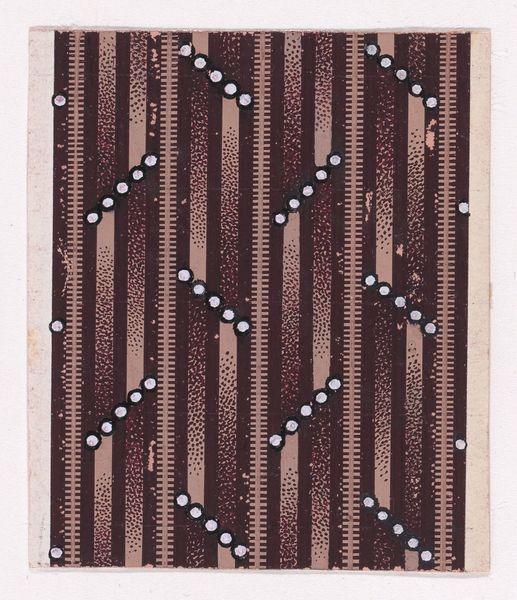
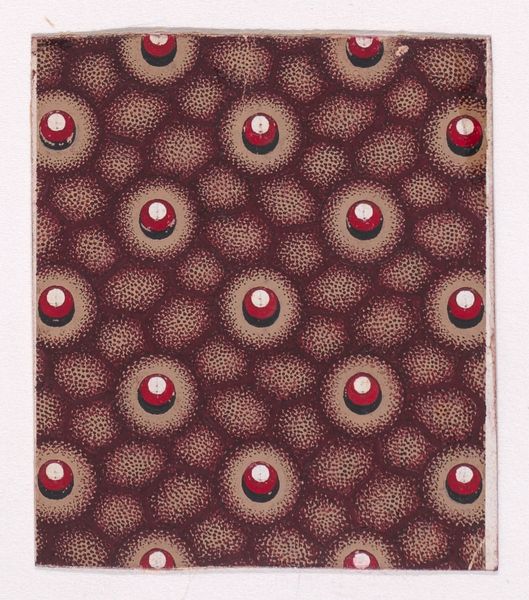
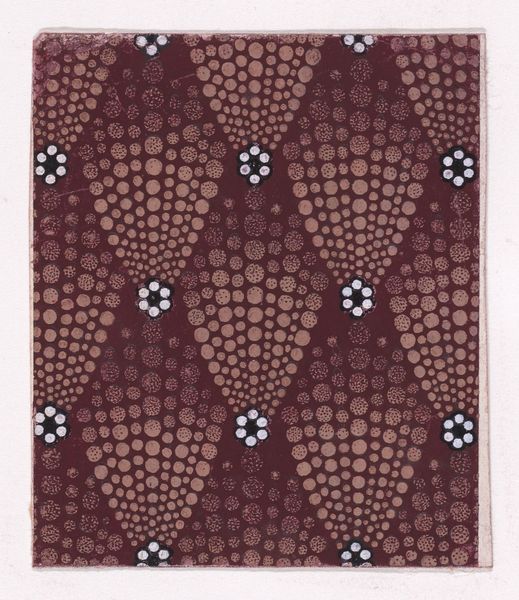
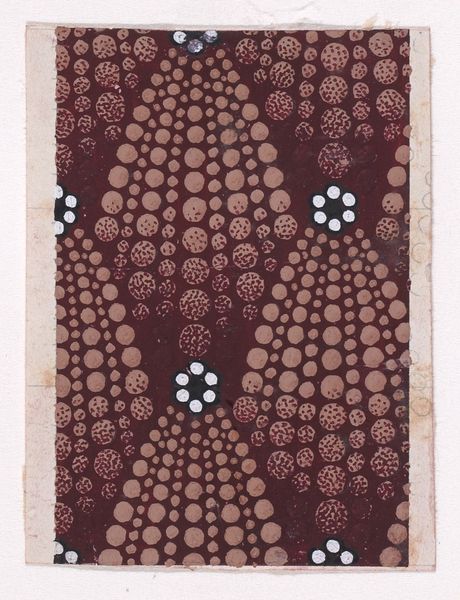
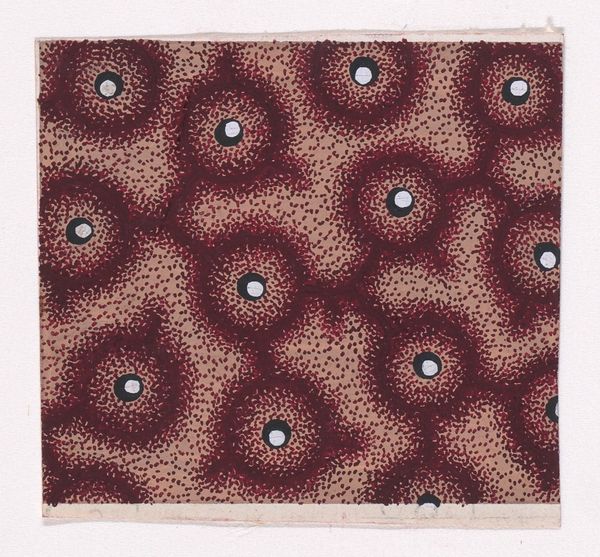
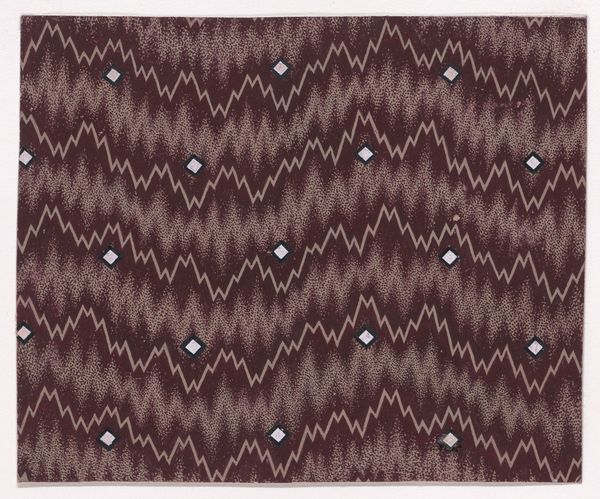
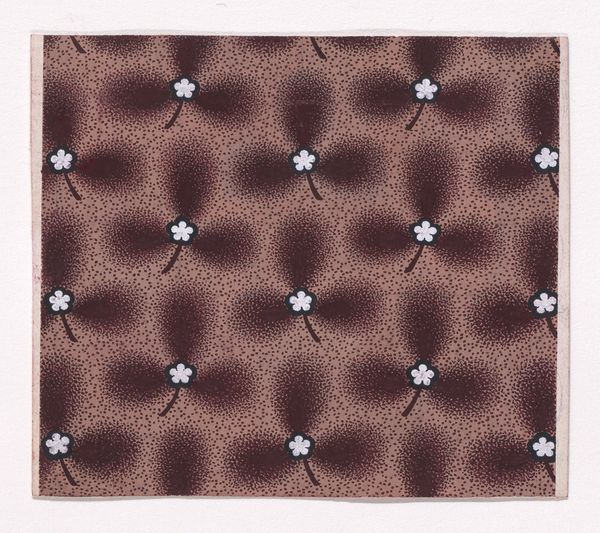
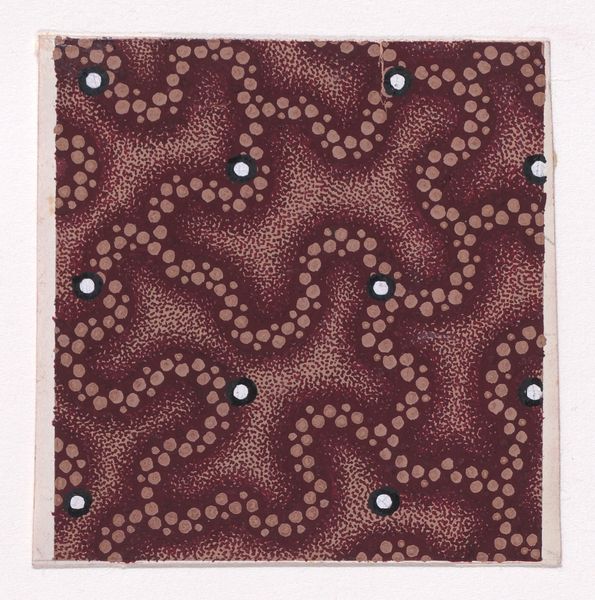
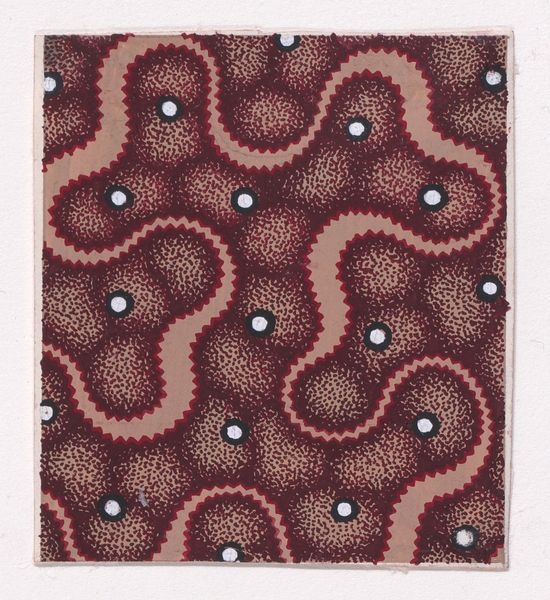
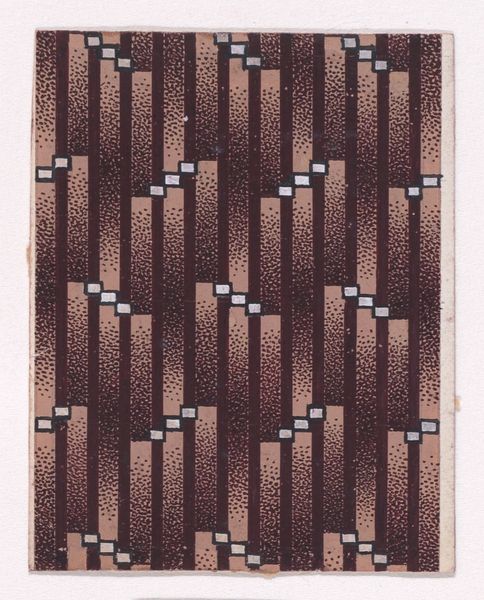
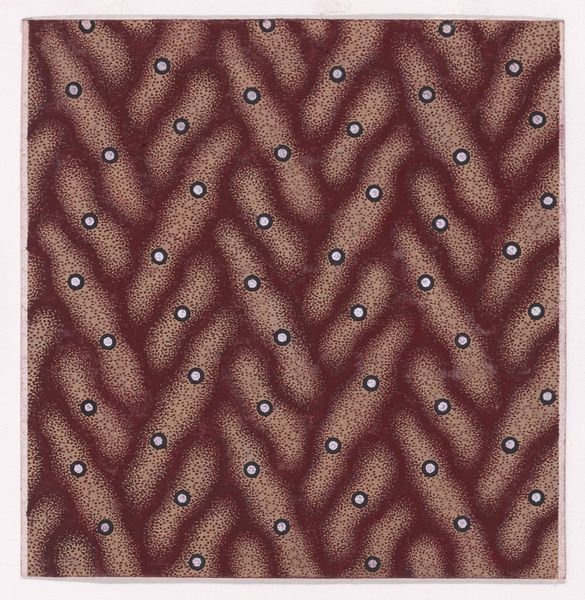
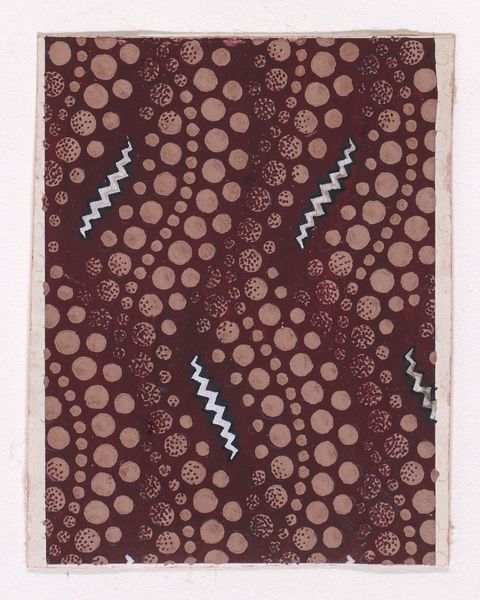
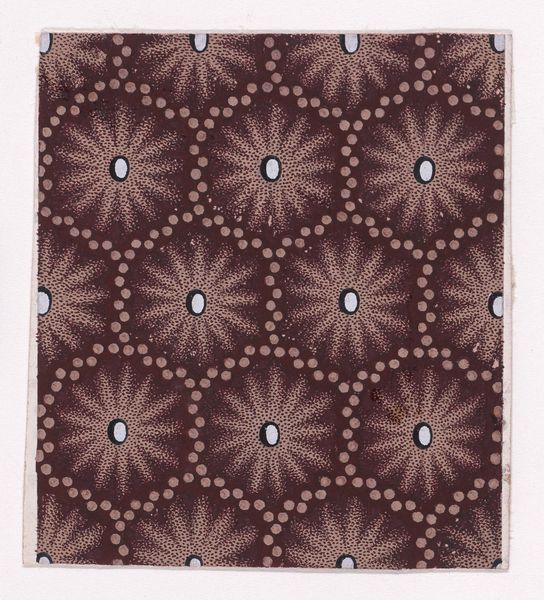
Textile Design with Alternating Strips of Groups of Three Pearls Framed by Undulating Stippled Garlands 1840
0:00
0:00


print, textile
# print
#
textile
#
organic pattern
#
geometric
#
pattern repetition
#
textile design
#
decorative-art
#
imprinted textile
Dimensions: Sheet: 2 7/8 × 2 5/8 in. (7.3 × 6.7 cm)
Copyright: Public Domain
Editor: So this textile design, made around 1840, features alternating stripes of what looks like three pearls, all framed by stippled garlands. It gives me a bit of a retro, almost hypnotic vibe. What jumps out at you? Curator: It’s fascinating how these seemingly simple motifs – the pearls, the garland – accumulate meaning over time. These "pearls," arranged in a vertical trinity, speak to notions of purity and unity. The undulating garlands framing them aren’t just decoration; they suggest cycles, rhythm, a flowing, eternal energy. Editor: So, the pearl arrangement could symbolize unity, that’s insightful. Curator: Exactly. Now consider this repetition in a textile design from 1840. How would this repeating symbol reassure a nineteenth-century viewer? Was it simply decoration or spiritual aspiration of harmony and completeness in an increasingly industrial world? Editor: Maybe it’s both? Comfort and beauty within repetition, but maybe also something deeper about connection? Curator: Precisely. Symbols like these, repeated across textiles in domestic settings, served as quiet anchors of cultural memory. The garland itself reminds us of pre-Christian symbols of victory or status, reborn here in an everyday object. What emotions are stirred when we see objects arranged serially? Does that shift its resonance, somehow? Editor: Good point, that cultural background brings a richer perspective to appreciating such design work. It transforms a simple textile pattern into an object loaded with history and symbolism. Curator: And these are just glimpses into the rich history. Consider how individual experience might shift, and add to those possibilities!
Comments
No comments
Be the first to comment and join the conversation on the ultimate creative platform.
 Collect
 React
React Comment
More like this