About this artwork
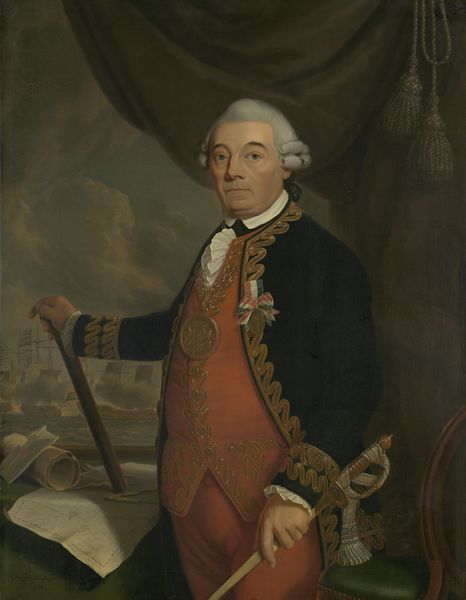
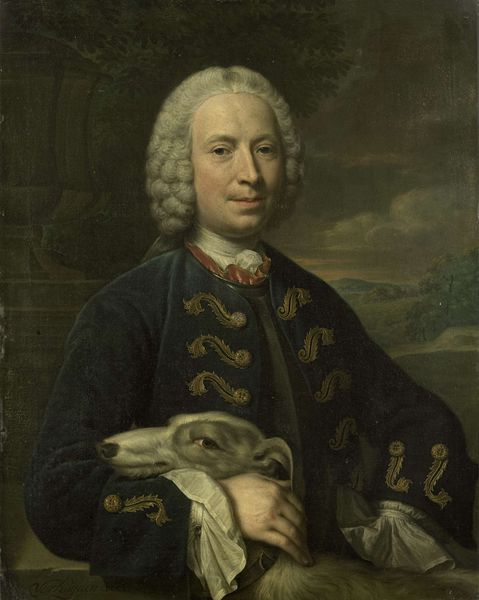
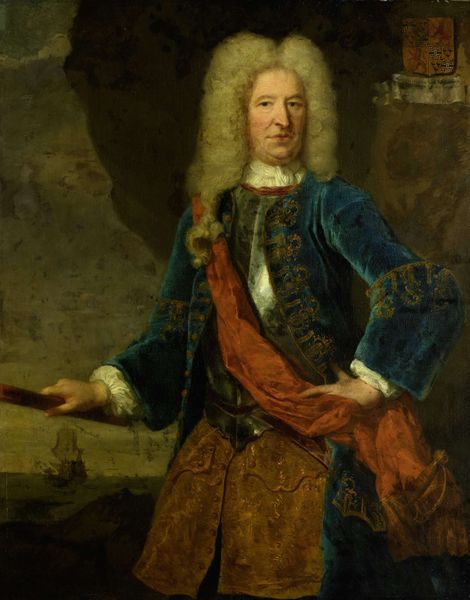
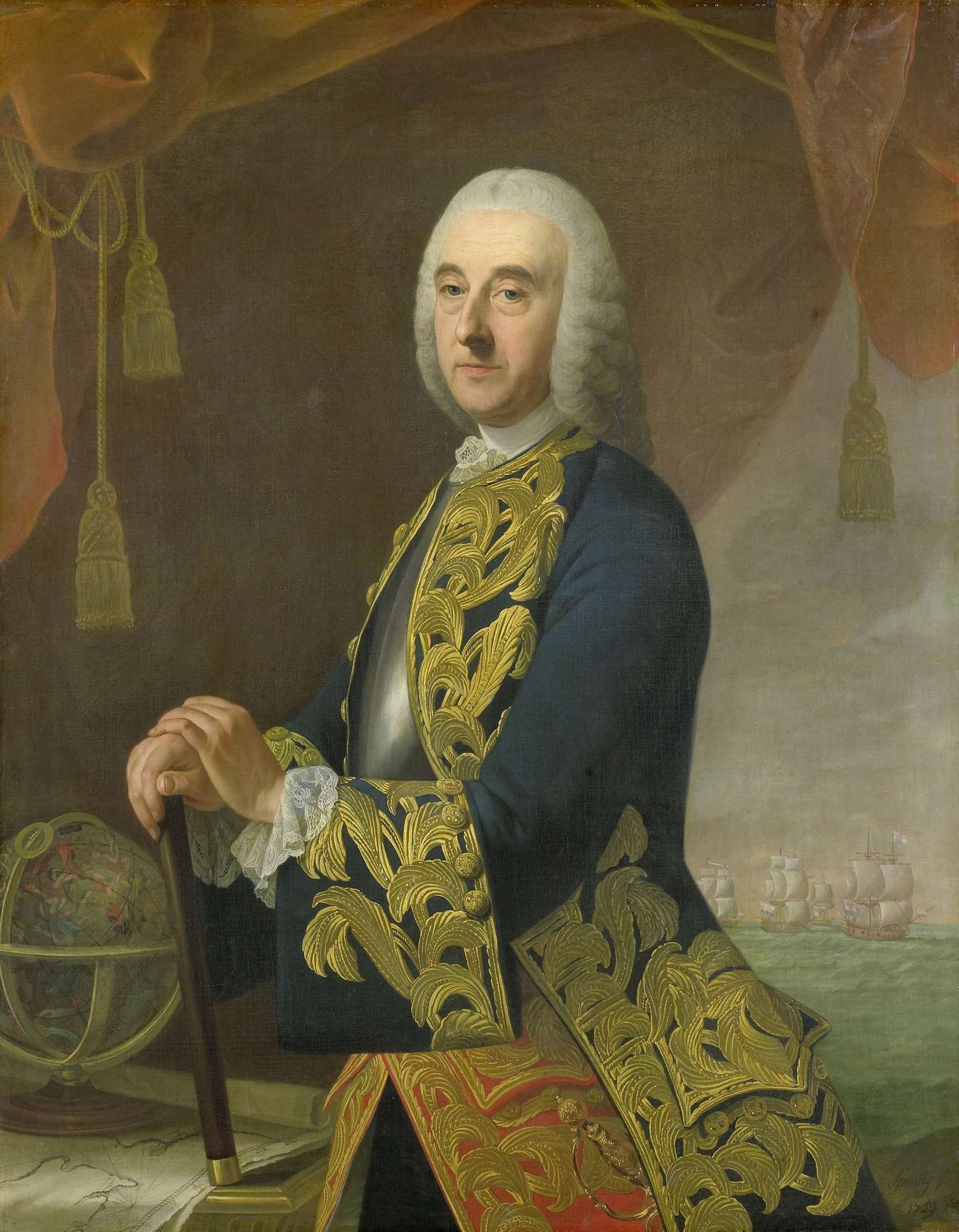
Guillaume de Spinny painted this portrait of Vice-Admiral Hendrik Lijnslager, though the exact date remains unknown, its visual impact is immediately clear. The composition balances formality with dynamic elements, inviting analysis through its structured yet subtly expressive forms. De Spinny's use of line and color articulates Lijnslager’s status and character. The swirling gold embroidery against the dark blue coat creates a sense of movement and opulence, contrasting with the calm, controlled expression of the subject. This juxtaposition plays with the semiotic codes of 18th-century portraiture, reflecting both personal identity and broader societal roles. Note how the globe and distant ships subtly reinforce themes of exploration and authority. The artist’s attention to detail invites us to consider how such portraits functioned within the period. The painting not only represents an individual but also signifies the complex interplay of power, knowledge, and representation inherent in the Dutch maritime world. These portraits are more than likenesses; they are constructions of identity.
Portrait of Vice-Admiral Hendrik Lijnslager, Son of Harmen Lijnslager and Judith Allijn
1759

Artwork details
- Medium
- oil-paint
- Dimensions
- height 113 cm, width 87 cm, depth 11 cm
- Copyright
- Rijks Museum: Open Domain
Tags
portrait
baroque
oil-paint
history-painting
Comments
Be the first to share your thoughts about this work.
About this artwork
Guillaume de Spinny painted this portrait of Vice-Admiral Hendrik Lijnslager, though the exact date remains unknown, its visual impact is immediately clear. The composition balances formality with dynamic elements, inviting analysis through its structured yet subtly expressive forms. De Spinny's use of line and color articulates Lijnslager’s status and character. The swirling gold embroidery against the dark blue coat creates a sense of movement and opulence, contrasting with the calm, controlled expression of the subject. This juxtaposition plays with the semiotic codes of 18th-century portraiture, reflecting both personal identity and broader societal roles. Note how the globe and distant ships subtly reinforce themes of exploration and authority. The artist’s attention to detail invites us to consider how such portraits functioned within the period. The painting not only represents an individual but also signifies the complex interplay of power, knowledge, and representation inherent in the Dutch maritime world. These portraits are more than likenesses; they are constructions of identity.
Comments
Be the first to share your thoughts about this work.