


Curatorial notes
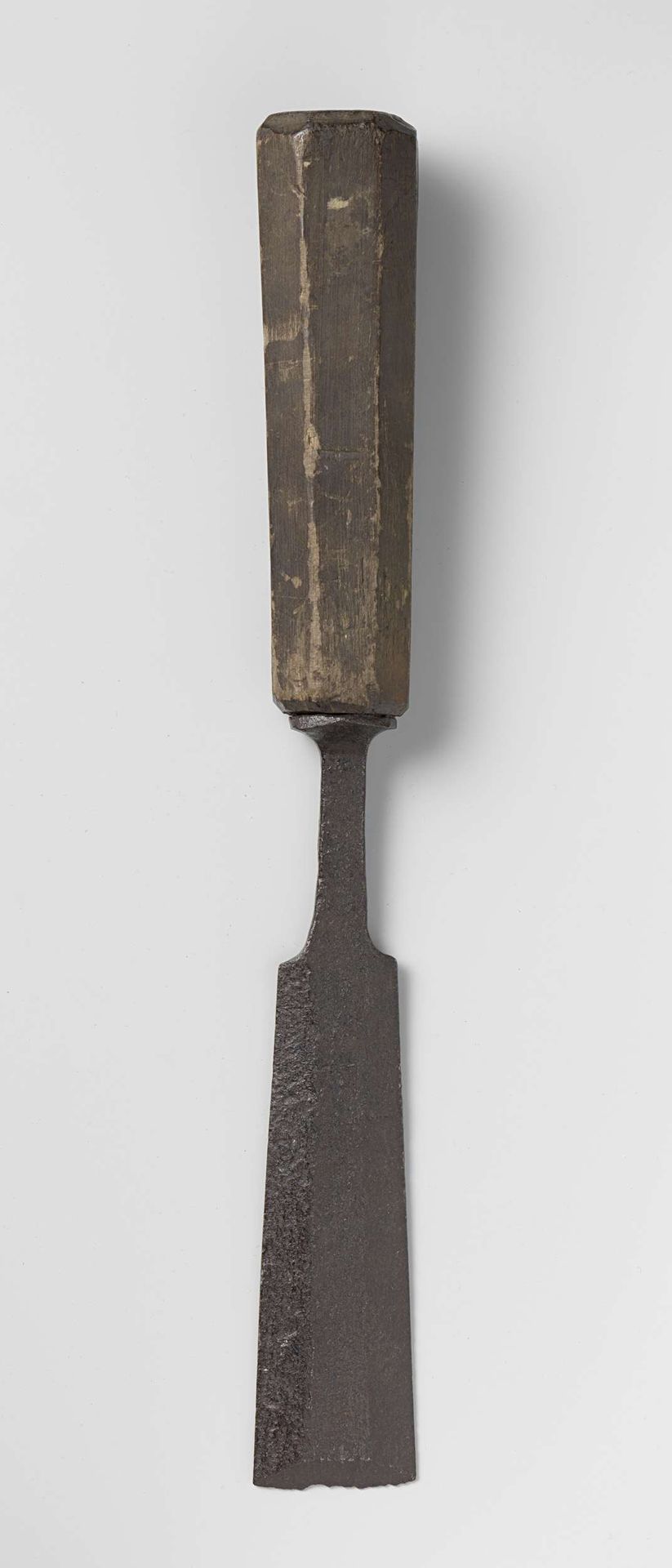
Here we have a tool, housed in the Rijksmuseum, of unknown date and authorship. Consider the object’s form: a straight, metallic blade topped by an octagonal wooden handle. The contrast between the two materials immediately captures the eye. The handle, likely shaped for grip and ergonomic function, is a rough-hewn piece of timber with a primitive yet practical design. The blade is oxidized, and its rough texture speaks to its utility. It is a marriage of wood and metal; an aesthetic of function and a statement about the relationship between human labor and the natural resources transformed by such labor. It is an object that allows us to reflect on how tools shape the world. The lack of ornamentation further emphasizes its elemental quality. We can interpret it as a study in contrasts—rough and smooth, dark and light—revealing how even the simplest object can embody complex ideas about functionality and the passage of time.
