About this artwork
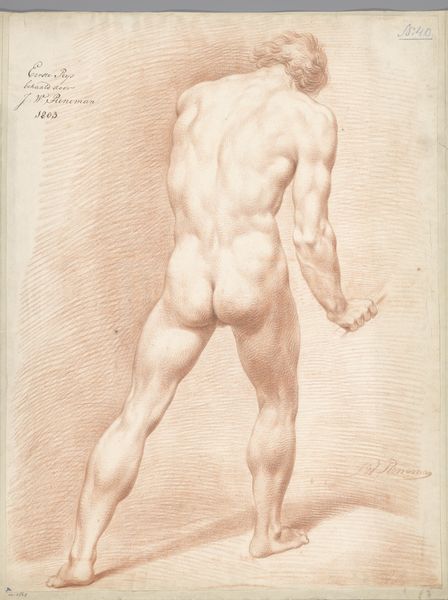
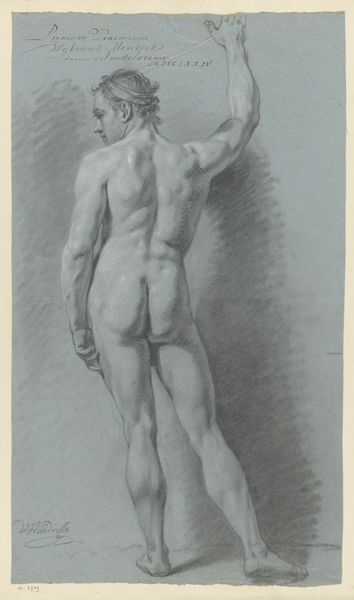
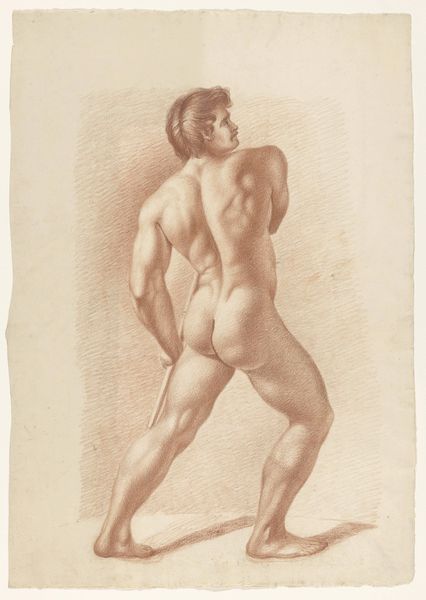
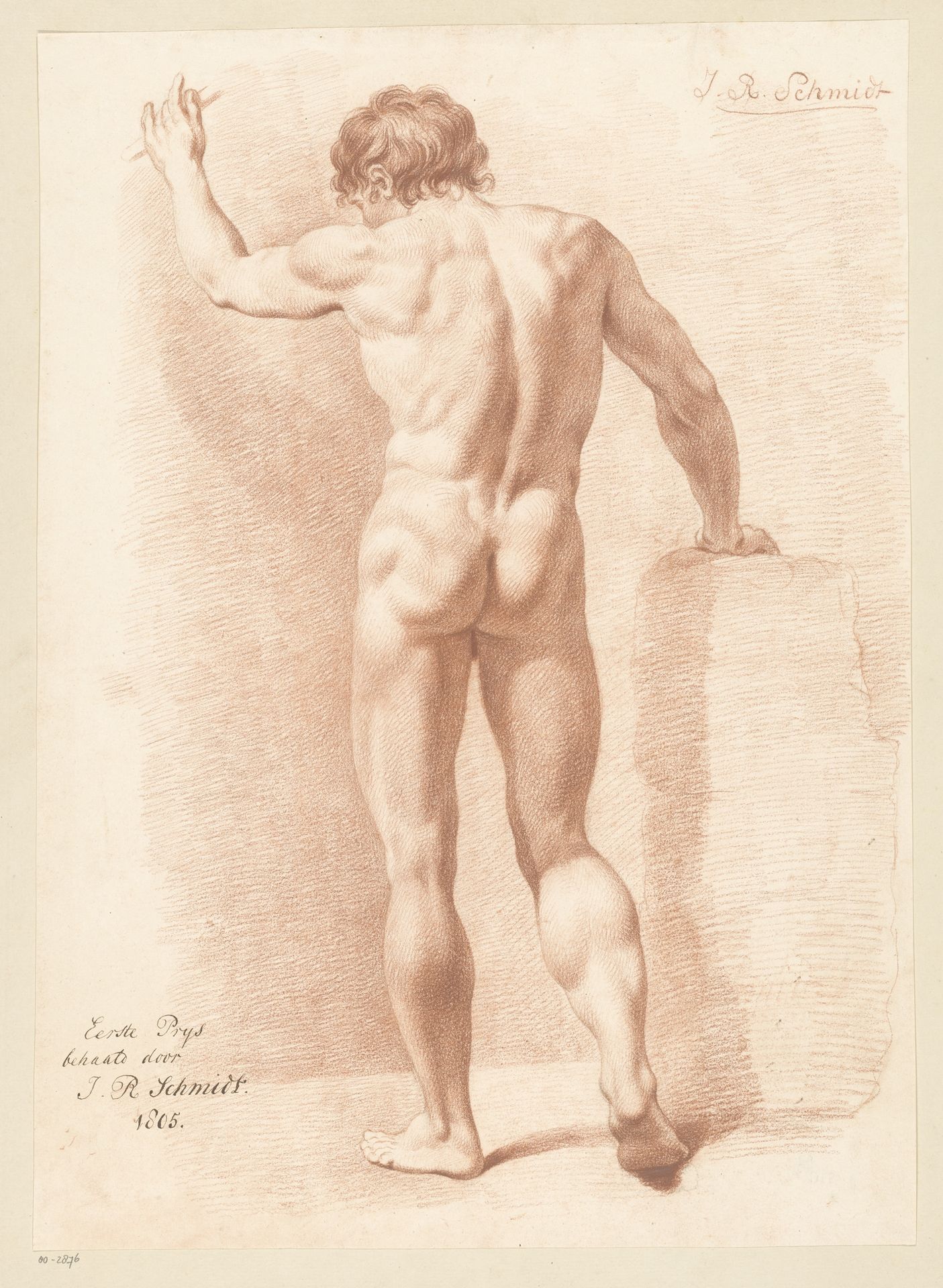
Izaak Riewert Schmidt created this nude drawing in 1805 using pen in brown ink. During the late 18th and early 19th centuries, the male nude was a central subject in academic art, reflecting both a reverence for classical ideals and the construction of masculinity. Here, the figure is seen from behind, emphasizing the musculature of his back and limbs. The drawing isn't just a celebration of the physical form; it's a reflection of the power dynamics inherent in the act of looking. Traditionally, the male gaze has dominated art history. Schmidt's drawing can be seen as perpetuating, or perhaps subtly questioning, these established norms. The male nude can reflect societal ideals of strength, beauty, and virility, but may also serve as a canvas to explore the vulnerabilities and objectification inherent in the human form. Ultimately, this drawing exists at the intersection of anatomical study, artistic expression, and cultural ideology.
Staand mannelijk naakt, op de rug gezien (1e prijs 1805)
Possibly 1805

Artwork details
- Medium
- drawing, dry-media, pencil
- Dimensions
- height 526 mm, width 379 mm
- Copyright
- Rijks Museum: Open Domain
Tags
Comments
Share your thoughts
About this artwork
Izaak Riewert Schmidt created this nude drawing in 1805 using pen in brown ink. During the late 18th and early 19th centuries, the male nude was a central subject in academic art, reflecting both a reverence for classical ideals and the construction of masculinity. Here, the figure is seen from behind, emphasizing the musculature of his back and limbs. The drawing isn't just a celebration of the physical form; it's a reflection of the power dynamics inherent in the act of looking. Traditionally, the male gaze has dominated art history. Schmidt's drawing can be seen as perpetuating, or perhaps subtly questioning, these established norms. The male nude can reflect societal ideals of strength, beauty, and virility, but may also serve as a canvas to explore the vulnerabilities and objectification inherent in the human form. Ultimately, this drawing exists at the intersection of anatomical study, artistic expression, and cultural ideology.
Comments
Share your thoughts