Edo period,
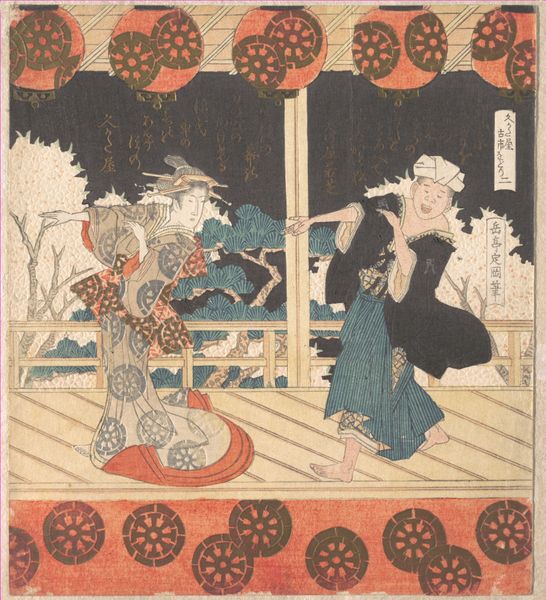
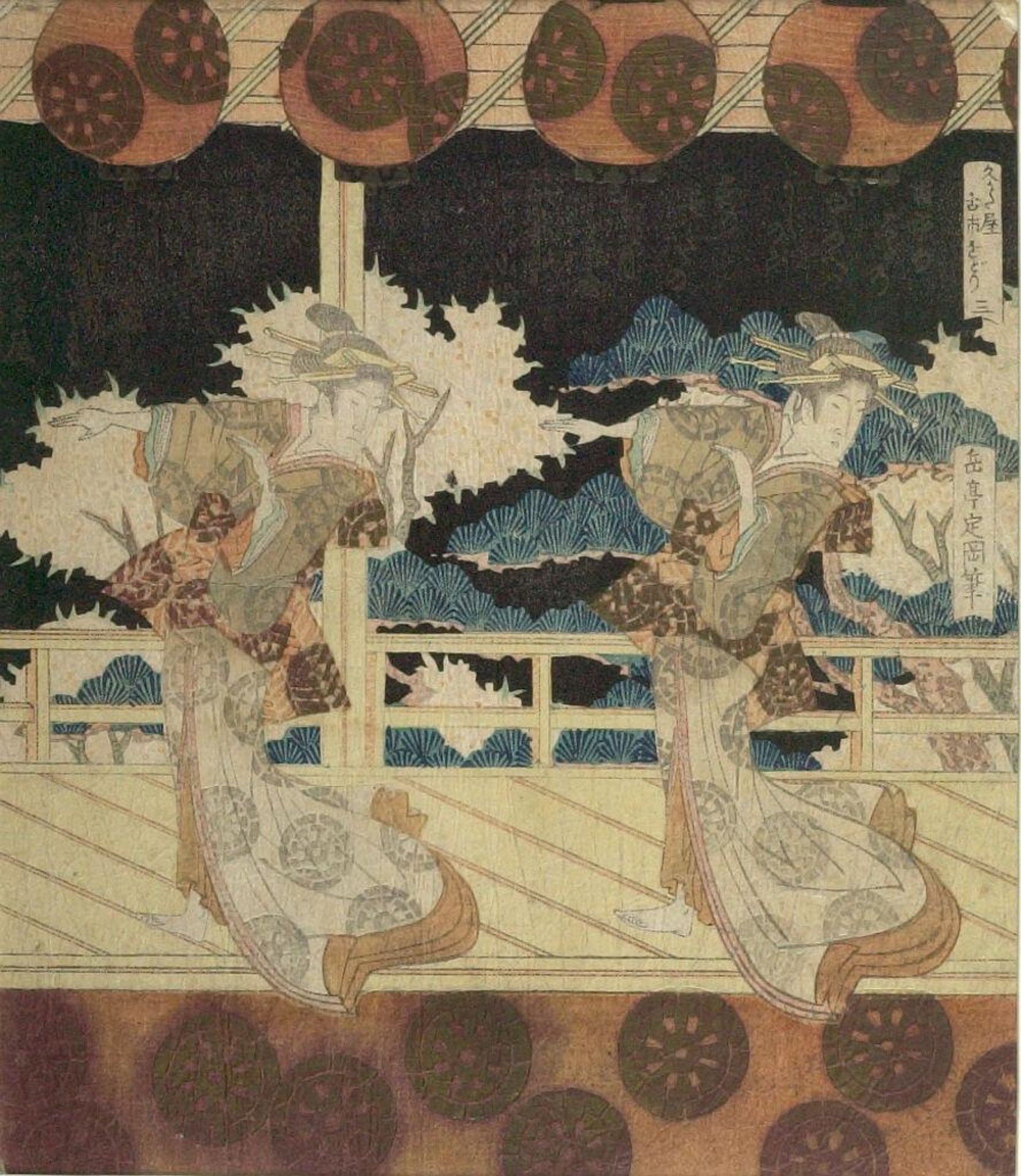
Cherry Blossom Dance


Listen to curator's interpretation
Curatorial notes
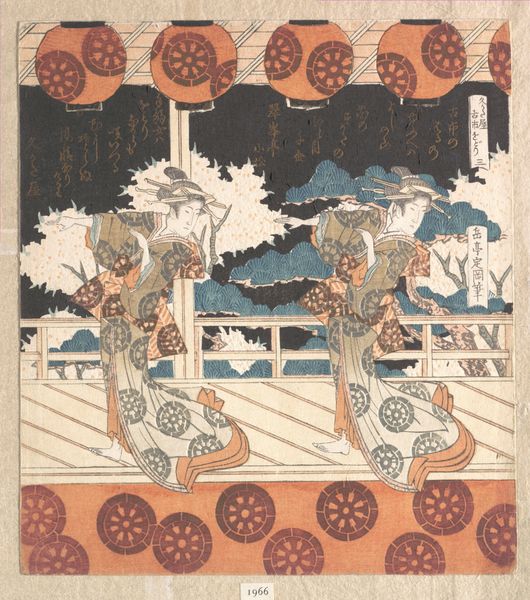
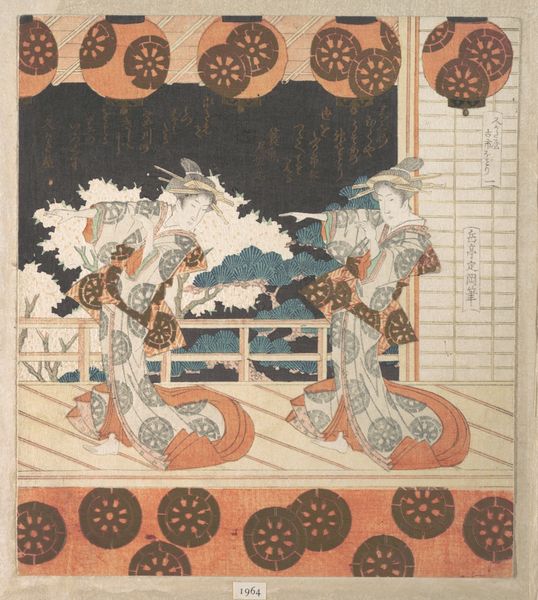
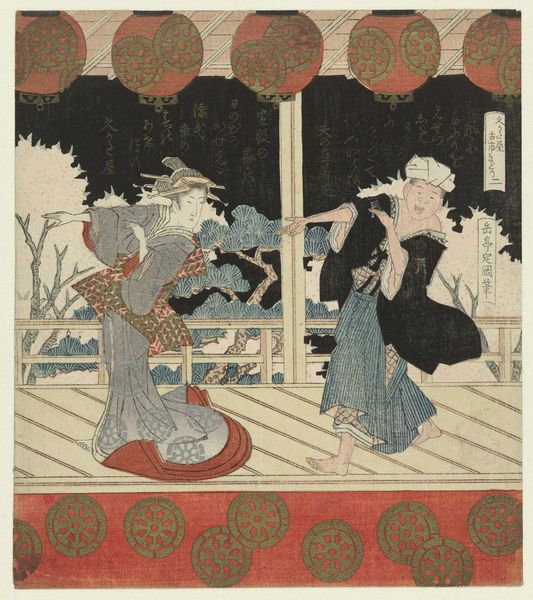
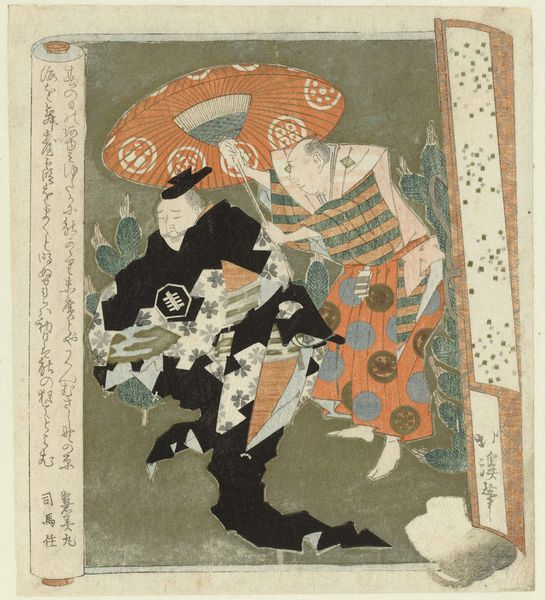
Editor: This is Yashima Gakutei’s "Cherry Blossom Dance," a woodblock print of dancers. It’s quite a small piece, yet it feels so lively. What historical narratives do you think it speaks to? Curator: Consider the transient beauty celebrated here, echoing *mono no aware*, the pathos of things, deeply rooted in Japanese aesthetics and Buddhism. What sociopolitical conditions fostered such an appreciation for fleeting moments? Editor: Perhaps a reflection on the ephemeral nature of life amidst social change? Curator: Precisely. Gakutei created this during the late Edo period, a time of relative peace but also strict social hierarchies. These prints offered a subversive glimpse into the floating world, or ukiyo, allowing for the performance and perhaps even the questioning of social roles. What do you make of the women's obscured faces? Editor: Maybe it universalizes their experience, making it less about individual identity and more about a shared cultural expression? Curator: A powerful observation. Understanding art is about unearthing these layers of history and meaning. Editor: This was really insightful, I hadn't considered the political context.