About this artwork
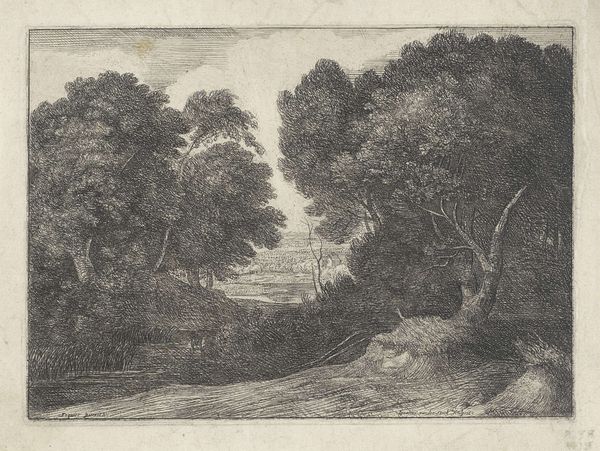
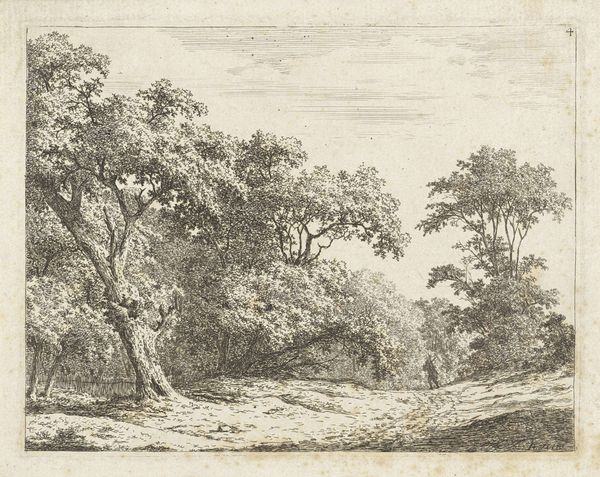
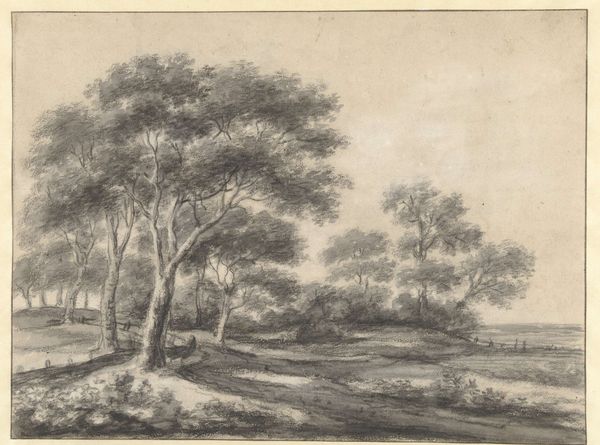
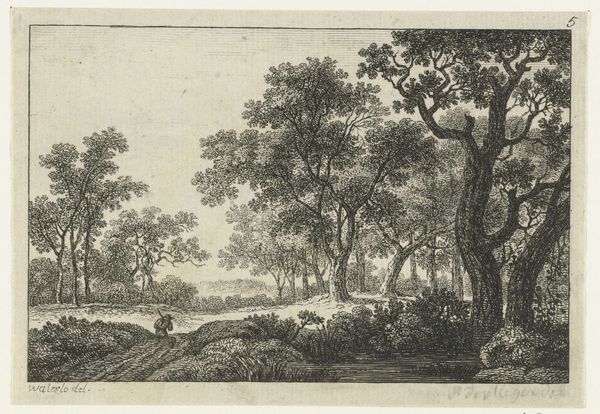
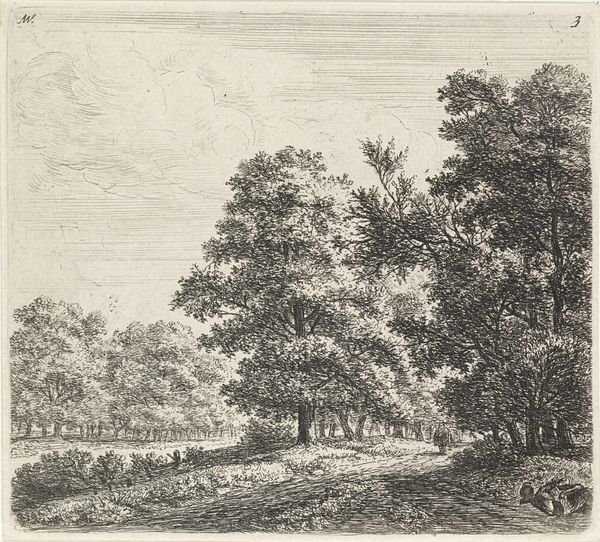
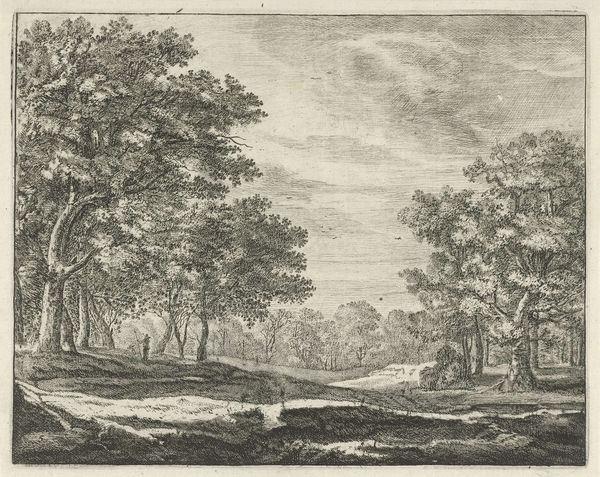
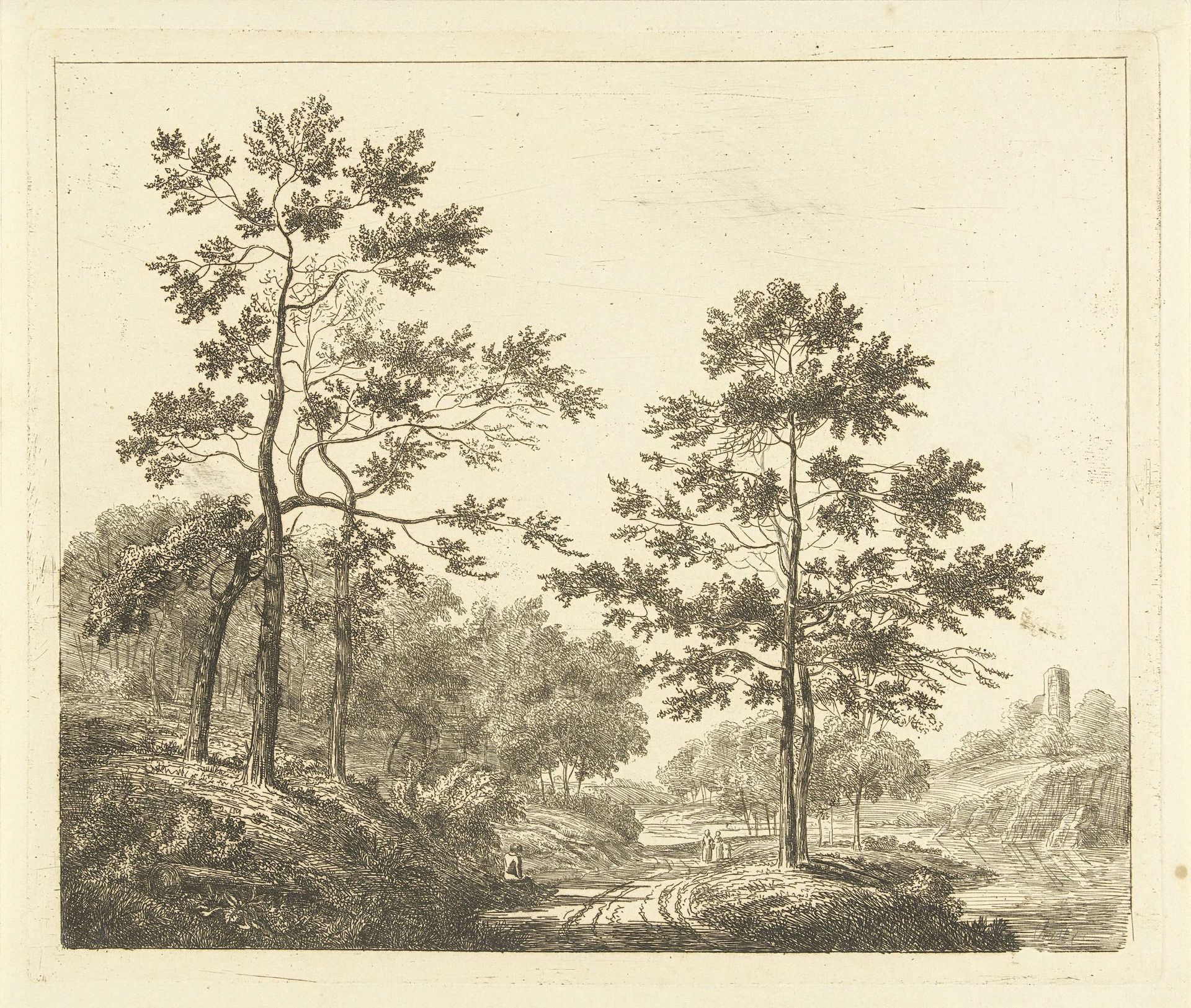
Johannes Franciscus Christ created this print called 'Bospad in heuvelachtig landschap' sometime in the first half of the 19th century. This work presents a serene landscape, inviting us to consider the evolving relationship between nature and society during that time in the Netherlands. The image creates meaning through its delicate lines and composition, evoking a sense of tranquility and harmony. Consider how the emphasis on natural beauty might reflect the cultural values of the period, in which nature was often idealized as a source of spiritual and emotional renewal. We can also think about the social conditions of artistic production, like the rise of landscape painting as a popular genre among the middle class. To fully understand Christ’s print, it is important to investigate the artistic conventions, social attitudes, and institutional structures of the time. By researching these factors, we can gain a richer appreciation of the work and its historical significance.
Bospad in heuvelachtig landschap
c. 1810 - 1830

Johannes Franciscus Christ
1790 - 1845Location
RijksmuseumArtwork details
- Medium
- etching
- Dimensions
- height 233 mm, width 278 mm
- Location
- Rijksmuseum
- Copyright
- Rijks Museum: Open Domain
Tags
Comments
Share your thoughts
About this artwork
Johannes Franciscus Christ created this print called 'Bospad in heuvelachtig landschap' sometime in the first half of the 19th century. This work presents a serene landscape, inviting us to consider the evolving relationship between nature and society during that time in the Netherlands. The image creates meaning through its delicate lines and composition, evoking a sense of tranquility and harmony. Consider how the emphasis on natural beauty might reflect the cultural values of the period, in which nature was often idealized as a source of spiritual and emotional renewal. We can also think about the social conditions of artistic production, like the rise of landscape painting as a popular genre among the middle class. To fully understand Christ’s print, it is important to investigate the artistic conventions, social attitudes, and institutional structures of the time. By researching these factors, we can gain a richer appreciation of the work and its historical significance.
Comments
Share your thoughts