1935 - 1942
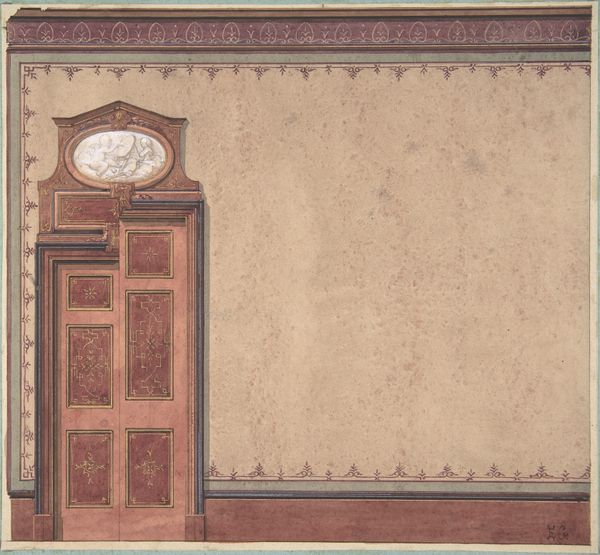
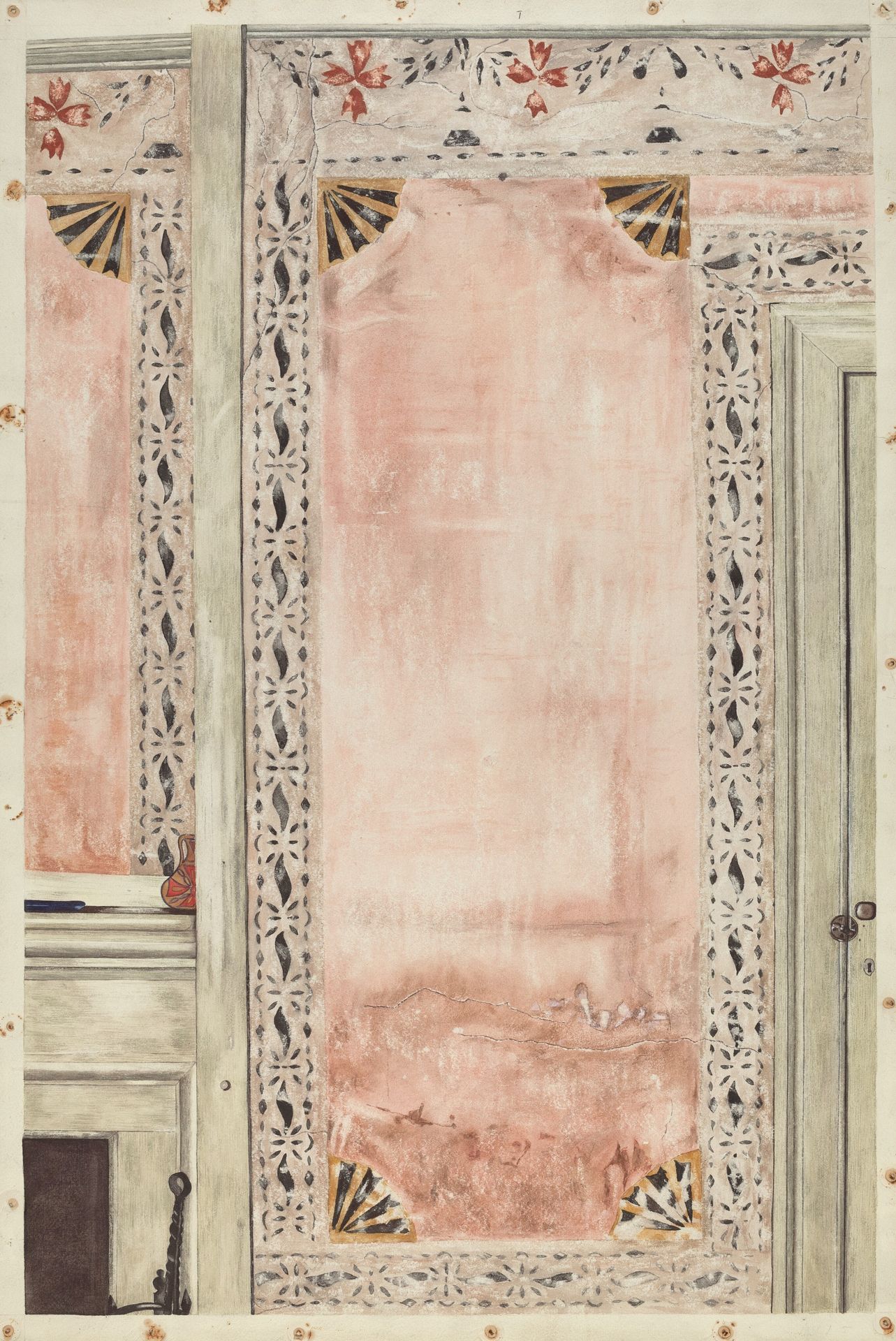
Stencilled Wall


Listen to curator's interpretation
Curatorial notes
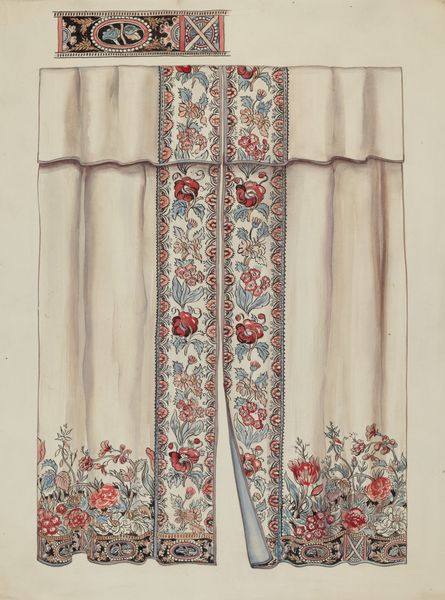
Editor: So, here we have Mildred E. Bent's "Stencilled Wall," made sometime between 1935 and 1942, a mixed-media piece including drawing and watercolor. I'm immediately drawn to the textures and patterns...it feels very domestic and almost dreamlike. How do you interpret this work? Curator: The intimacy is palpable, isn’t it? Bent’s meticulous rendering invites us to consider the politics of domestic space, particularly for women artists of her time. The stencil, typically a tool of mass production, is here employed to create something highly personal. It asks: Whose labor is valued? And how is creativity defined within domestic boundaries? Editor: That's fascinating. I hadn’t thought about the stencil in that way. Is she perhaps commenting on the societal expectations placed on women? Curator: Precisely! The delicate floral motifs juxtaposed with the almost brutalist stencil work speak to a tension. Consider also the watercolor medium itself—often seen as ‘feminine’—and how Bent uses it to document what might be considered ephemeral or unimportant: a wall. What does it mean to preserve these “feminine” spaces? What statements might Bent be trying to make? Editor: I see! It’s almost a quiet rebellion, finding artistic value in everyday domesticity. It is also preserving memories in uncertain times, perhaps a hopeful act... Curator: I agree. Looking closer at these sorts of images helps us question established norms and think critically about how domestic labour can reflect creativity and expression. Editor: This has been really insightful, looking beyond the surface to see the underlying social and political commentaries. I had not really explored those ideas before today. Curator: Absolutely. Art gives us the opportunity to delve deeper and explore wider social and philosophical concepts relevant across history.