1860 - 1880
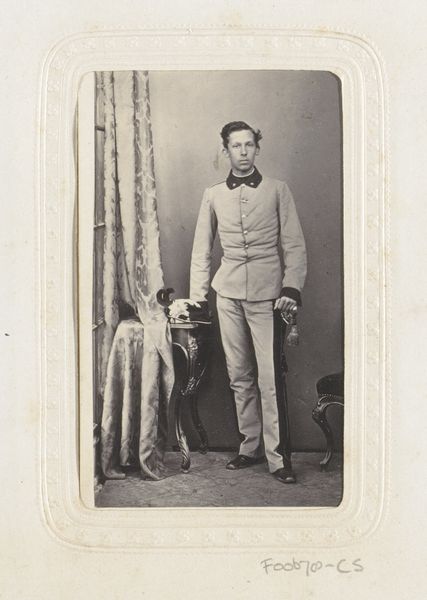
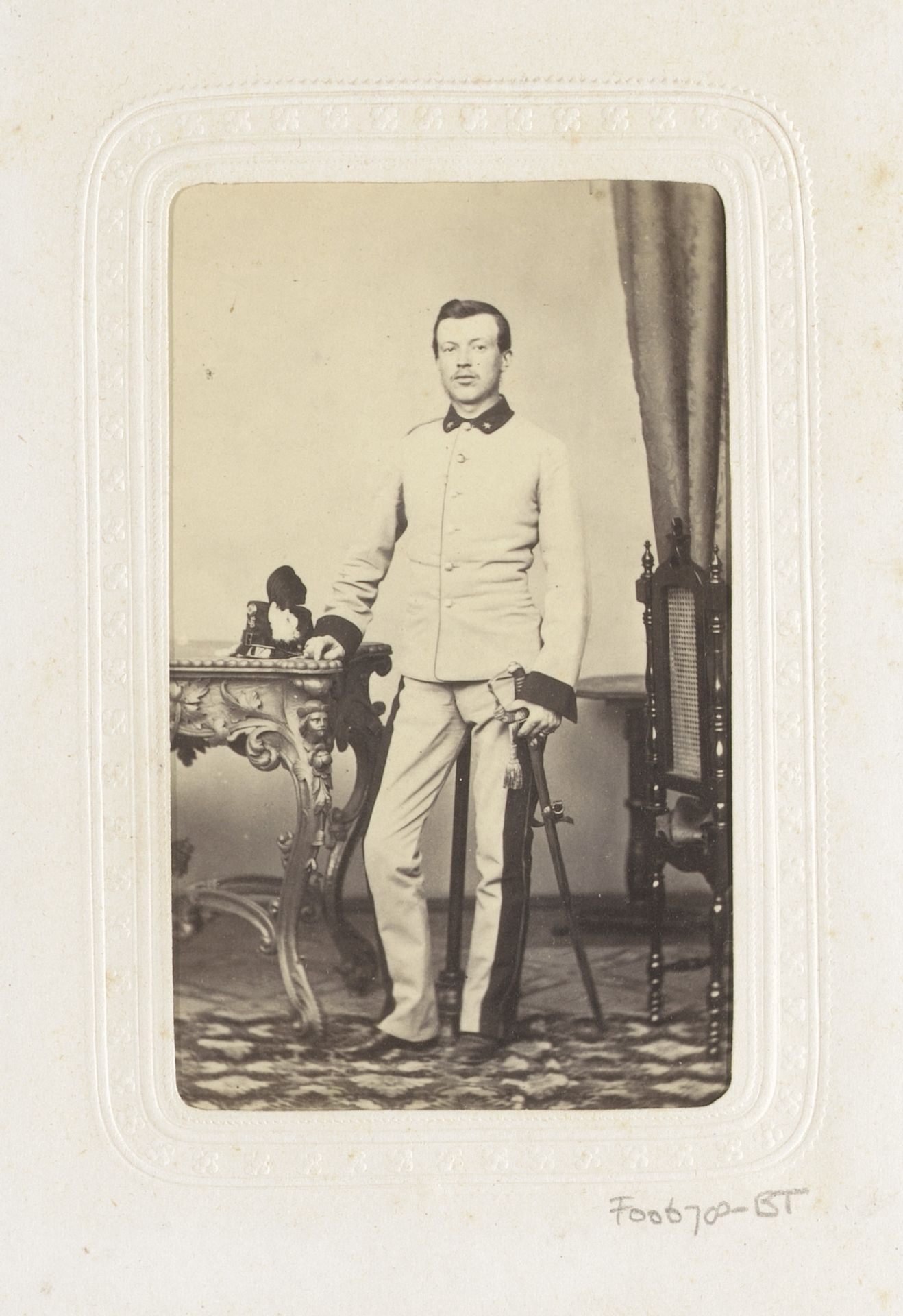
Portret van een staande militair

Listen to curator's interpretation
Curatorial notes
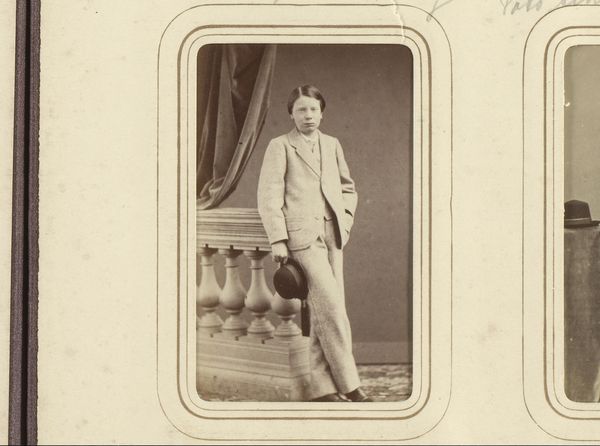
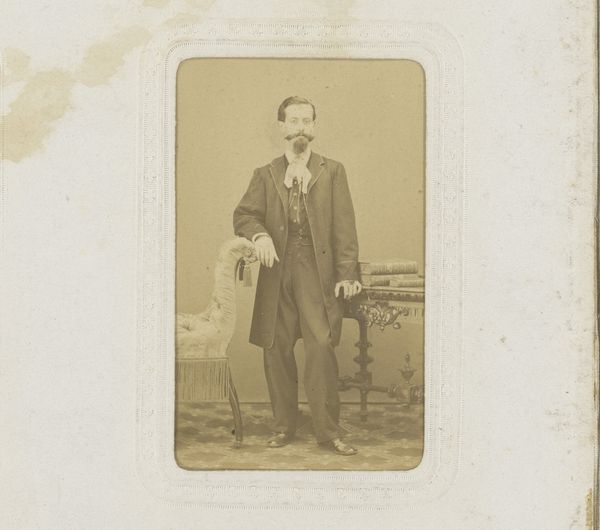
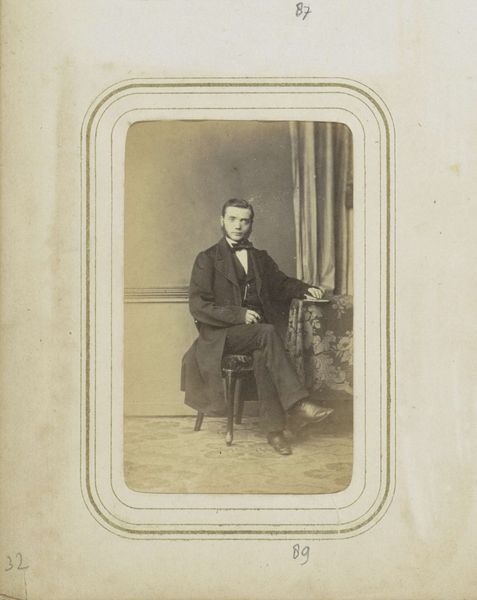
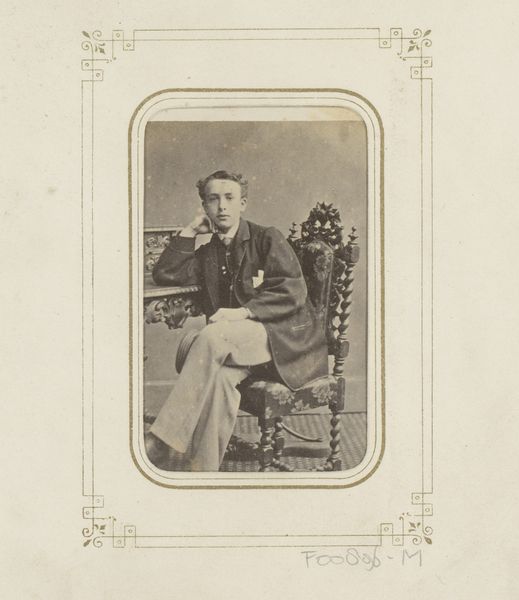
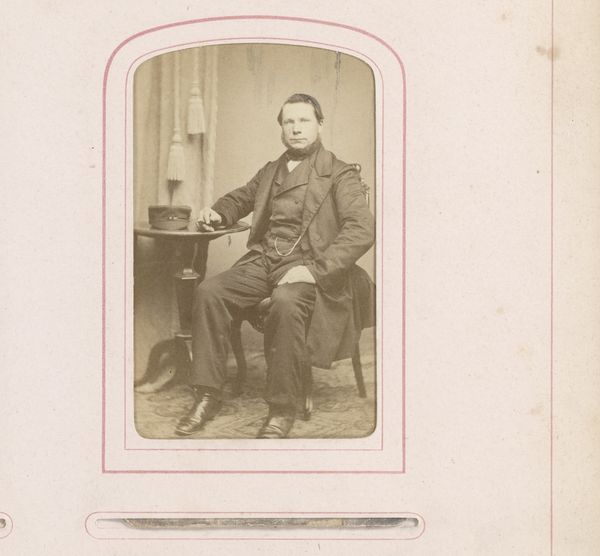
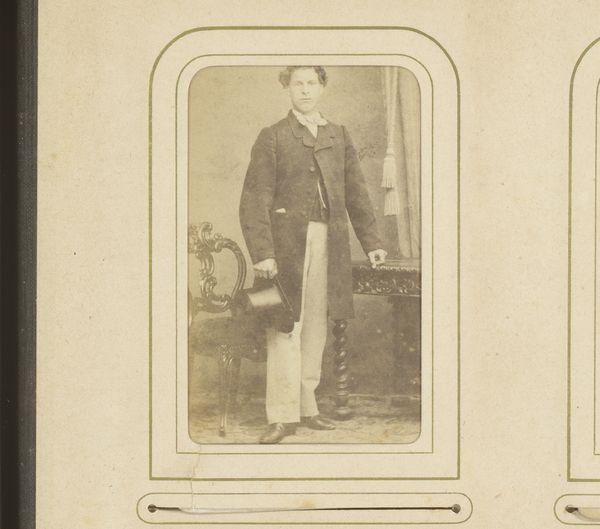
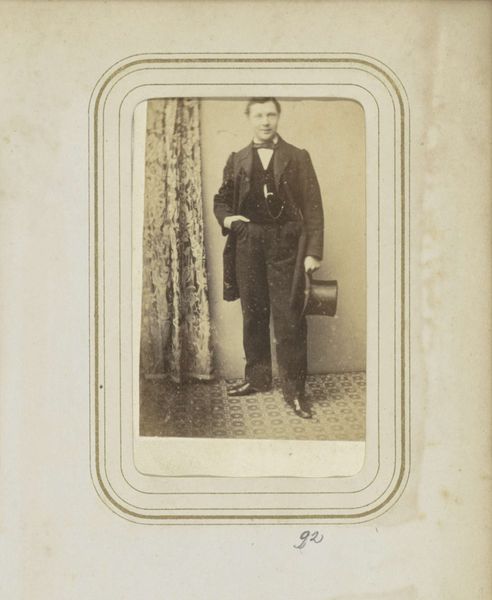
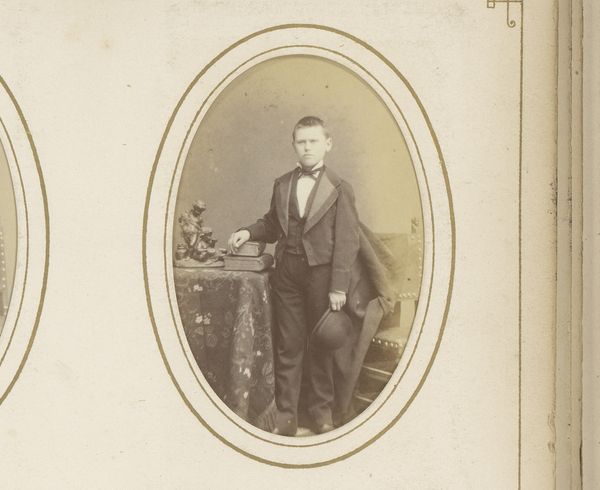
Curator: Let's take a look at this intriguing photograph. It's titled "Portret van een staande militair," or "Portrait of a Standing Soldier," attributed to B. Joseph Fechner, and it was made sometime between 1860 and 1880, using the gelatin-silver print process. Editor: Immediately, what strikes me is the overall tonal range—the delicate gradations of grey, nearly monochromatic, give it a very formal and stoic feel. Curator: The realism is undeniable; photographs from this period provide an incredible record of social classes and identities. The man's uniform, the style of the table and chair – they tell us a great deal about the material culture and perhaps even the political climate of the time. Notice how carefully posed the sitter is, almost as if consciously trying to project a desired persona. Editor: And the texture! Look at the detail captured in the carpet and drapery; then juxtapose that with the rather smooth, almost idealized depiction of his face. There's a real contrast happening between surfaces, contributing to a visually captivating experience. Curator: Exactly. The rigid pose combined with those material signifiers – the sword, the decorative table – reinforces a societal ideal, projecting an image of order and authority at a time when European society was undergoing seismic shifts and industrial revolutions. Photography democratized portraiture, but didn't necessarily alter its conventions regarding representation and the display of power. Editor: Perhaps the way the light catches his buttons versus the dull sheen on the sword hints at a quiet internal conflict, a battle between duty and personal feeling? Or am I projecting too much onto the subject based on what I read from the carefully balanced asymmetry of the scene? Curator: No, I think you’re right on target. This wasn’t a snapshot, but a carefully constructed image reflecting the values of the period and, likely, the sitter’s personal aspirations within a specific social hierarchy. Editor: Well, I'm certainly more conscious now of the carefully composed elements within this study in monochrome— the way a stark light contrasts and enhances the overall composition. Curator: Yes, indeed. Thinking about photography as an act shaped by political and economic structures, helps us interpret these images not merely as historical records, but as tools of representation.