1732 - 1760
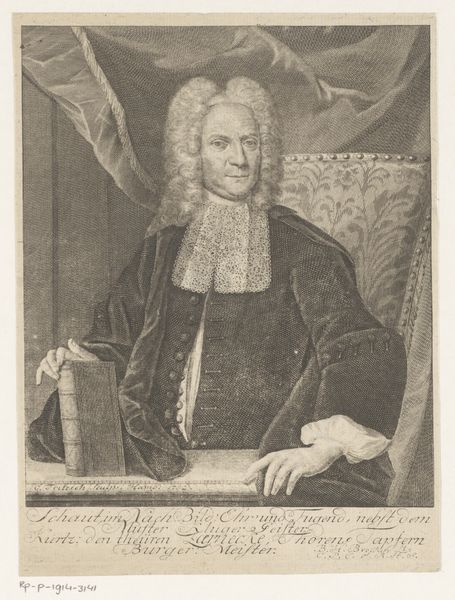
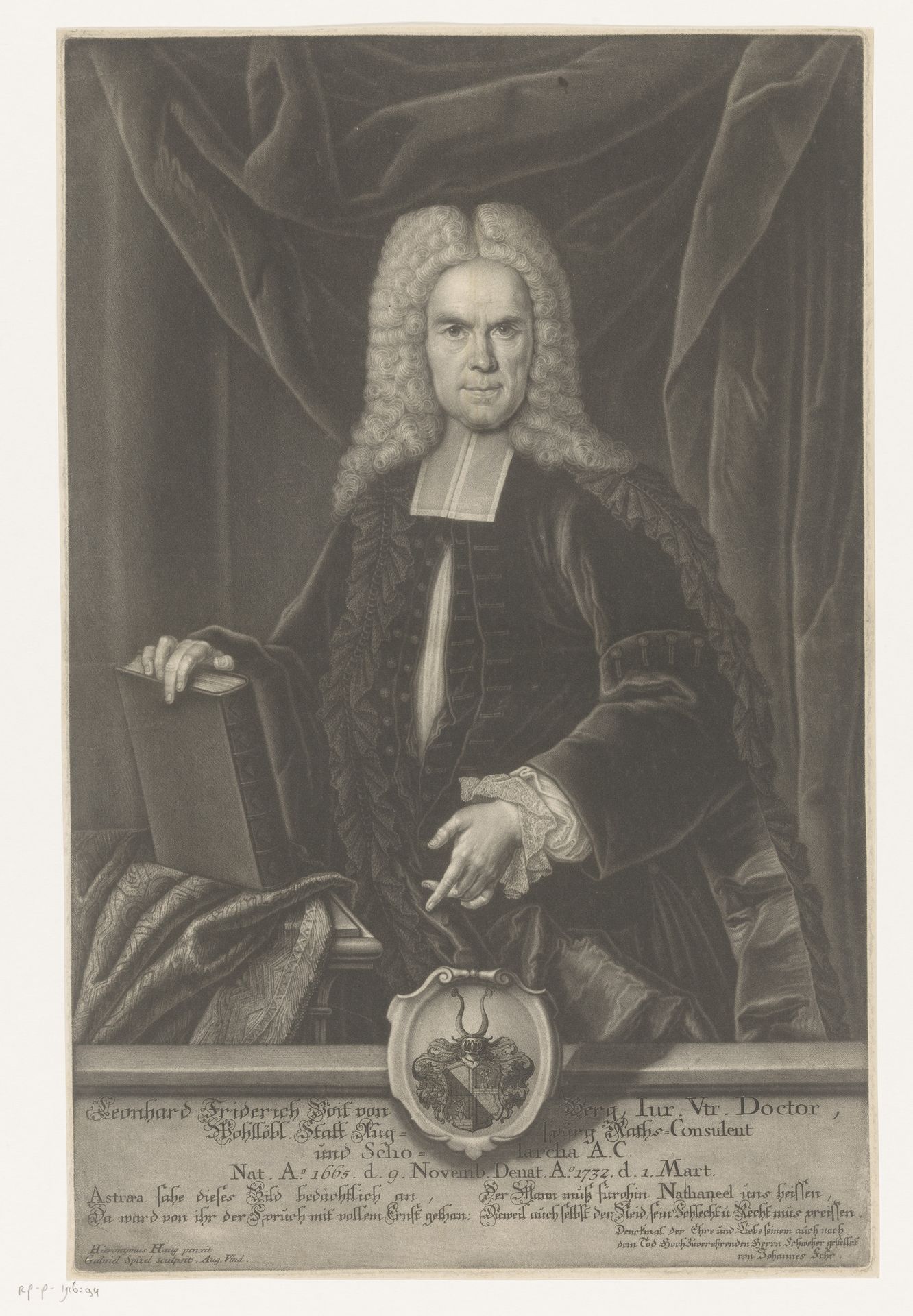
Portret van Leonhard Friedrich Voit von Berg

Gabriel Spitzel
1697 - 1760Location
RijksmuseumListen to curator's interpretation
Curatorial notes
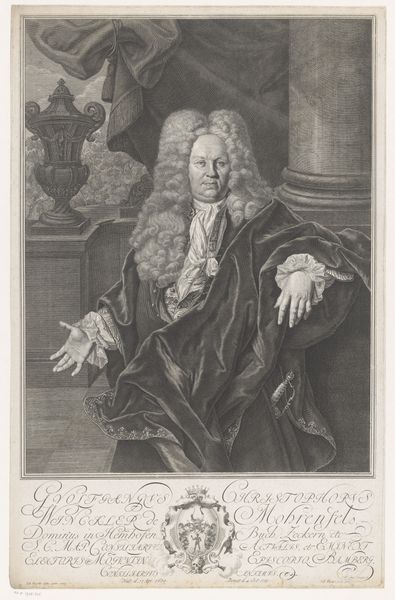
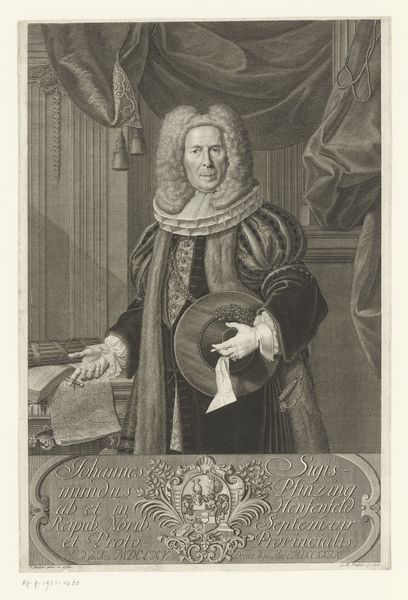
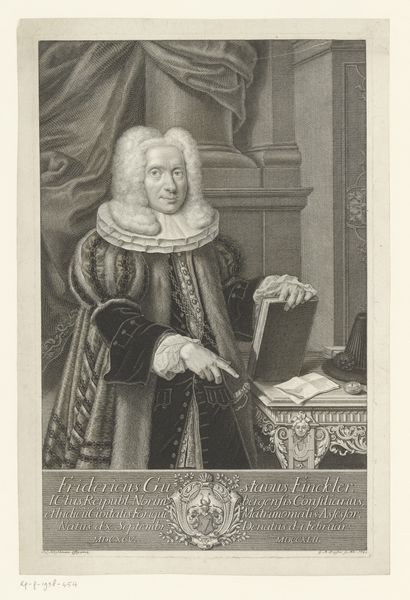
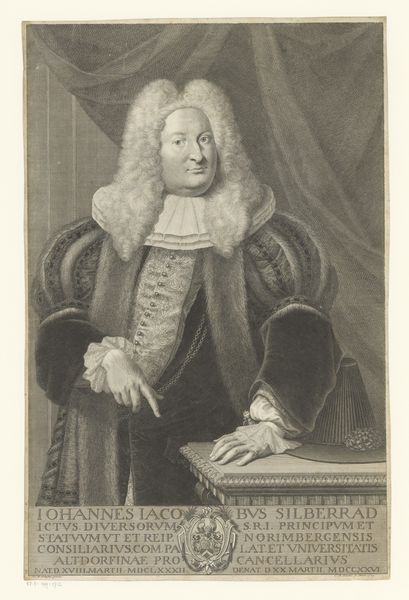
Editor: So, this is a print entitled "Portret van Leonhard Friedrich Voit von Berg," made sometime between 1732 and 1760. It's very stately and formal, but the way the subject's hand is positioned makes him look a little bit like he is about to start conducting an orchestra. What do you see in this portrait? Curator: Well, beyond the Baroque aesthetic – the heavy drapery, the elaborate wig – I see a powerful statement about identity and social positioning. Look closely at the composition; notice how the subject’s gaze meets ours directly, projecting authority. But also consider the social context: who was represented in art, and who was excluded? How does the history of portraiture intersect with societal power structures? The ostentatious display of wealth in his attire tells us something about class, power, and visibility in 18th-century society, doesn't it? Editor: It definitely screams power. The fact that he has his own crest featured there, in addition to the grand wig and clothes, tells you everything. But if those things are signifiers of wealth, what statement is being made? Is he trying to look like an intellectual with that book? Curator: Exactly. These status symbols construct and reinforce his social identity within a system of privilege. Ask yourself, what narratives are prioritized and perpetuated through art, and whose stories remain untold? The tools of wealth he has surrounding him are intentional, especially since they're printed for distribution and displayed for the public. Editor: So it’s not just about individual representation but about reinforcing an entire social order. This wasn't immediately visible, so it helps to place it in context. Curator: Precisely, we’ve excavated some interesting narratives embedded in the image. What appears straightforward on the surface reveals layers of meaning upon closer inspection.