About this artwork
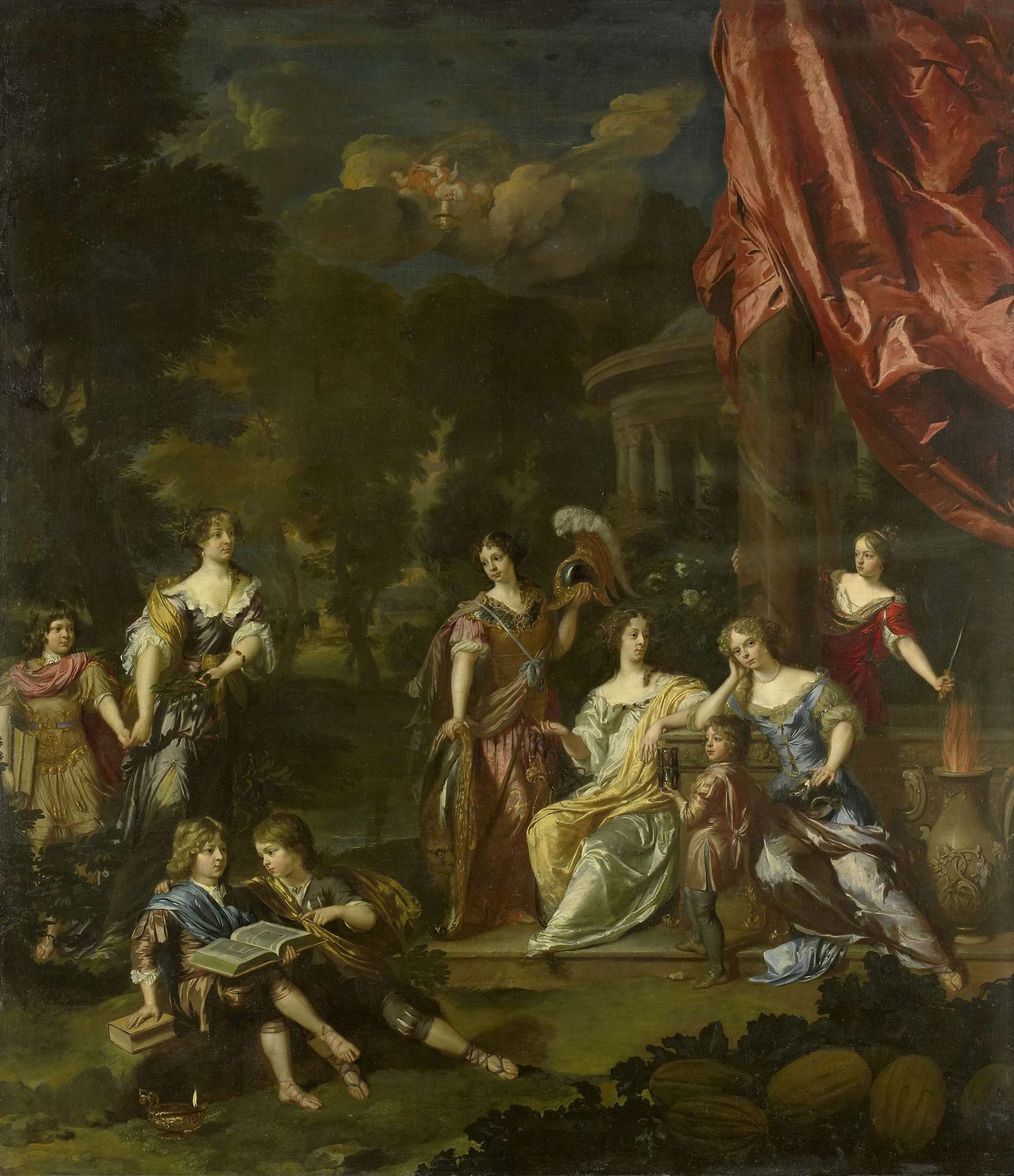
Daniël Mijtens the Younger painted this allegorical group portrait of the children of Diederic Pietersz van Leyden van Leeuwen and Alida Paets sometime in the second half of the 17th century. It offers a glimpse into the worldview of a wealthy Dutch family during the Golden Age. Portraits like this served to showcase not just likeness, but also status, values, and aspirations. Here, the children are not simply depicted, they are allegorized, cast as figures embodying virtues and elements. The boys are immersed in study, indicating the importance of education, while the girls are adorned with symbols of beauty, war and fire. It is impossible to ignore the influence of class in this representation. The children’s fine clothing, leisurely pursuits, and the lush garden setting speak volumes about the family’s privileged position in Leiden society. Mijtens’s portrait participates in constructing and reinforcing a social hierarchy, where wealth and status are not merely enjoyed but performed for posterity.
Allegorizing Group Portrait of the Children of Diederic Pietersz van Leyden van Leeuwen, Burgomaster of Leiden, and Alida Paets
1679

Artwork details
- Medium
- oil-paint
- Dimensions
- height 178.3 cm, width 156.3 cm, depth 6.5 cm
- Copyright
- Rijks Museum: Open Domain
Tags
Comments
Share your thoughts
About this artwork
Daniël Mijtens the Younger painted this allegorical group portrait of the children of Diederic Pietersz van Leyden van Leeuwen and Alida Paets sometime in the second half of the 17th century. It offers a glimpse into the worldview of a wealthy Dutch family during the Golden Age. Portraits like this served to showcase not just likeness, but also status, values, and aspirations. Here, the children are not simply depicted, they are allegorized, cast as figures embodying virtues and elements. The boys are immersed in study, indicating the importance of education, while the girls are adorned with symbols of beauty, war and fire. It is impossible to ignore the influence of class in this representation. The children’s fine clothing, leisurely pursuits, and the lush garden setting speak volumes about the family’s privileged position in Leiden society. Mijtens’s portrait participates in constructing and reinforcing a social hierarchy, where wealth and status are not merely enjoyed but performed for posterity.
Comments
Share your thoughts