About this artwork
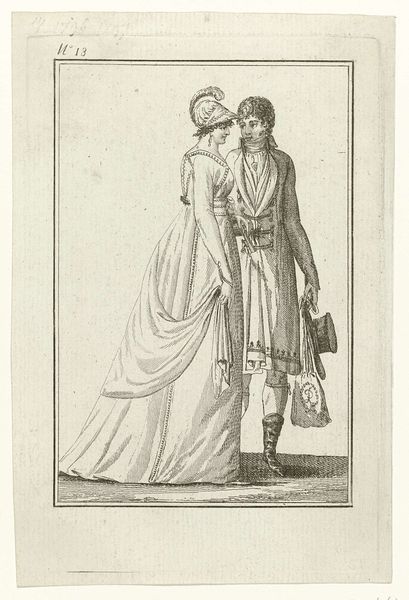
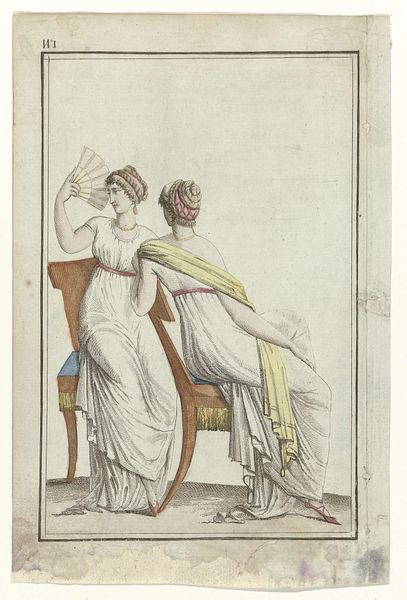
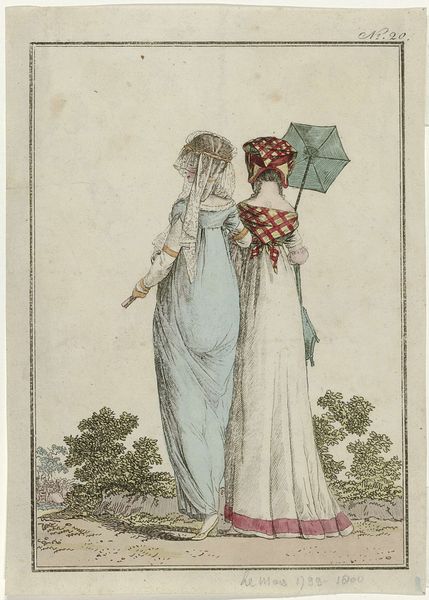
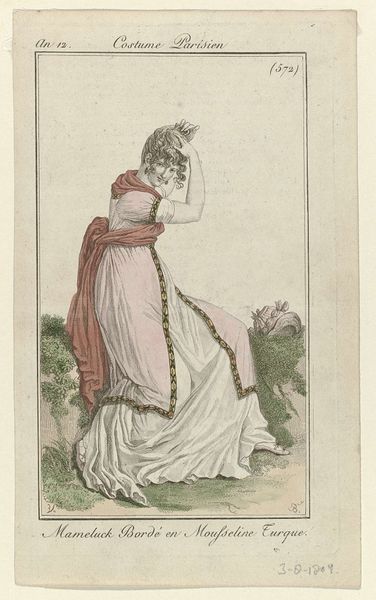
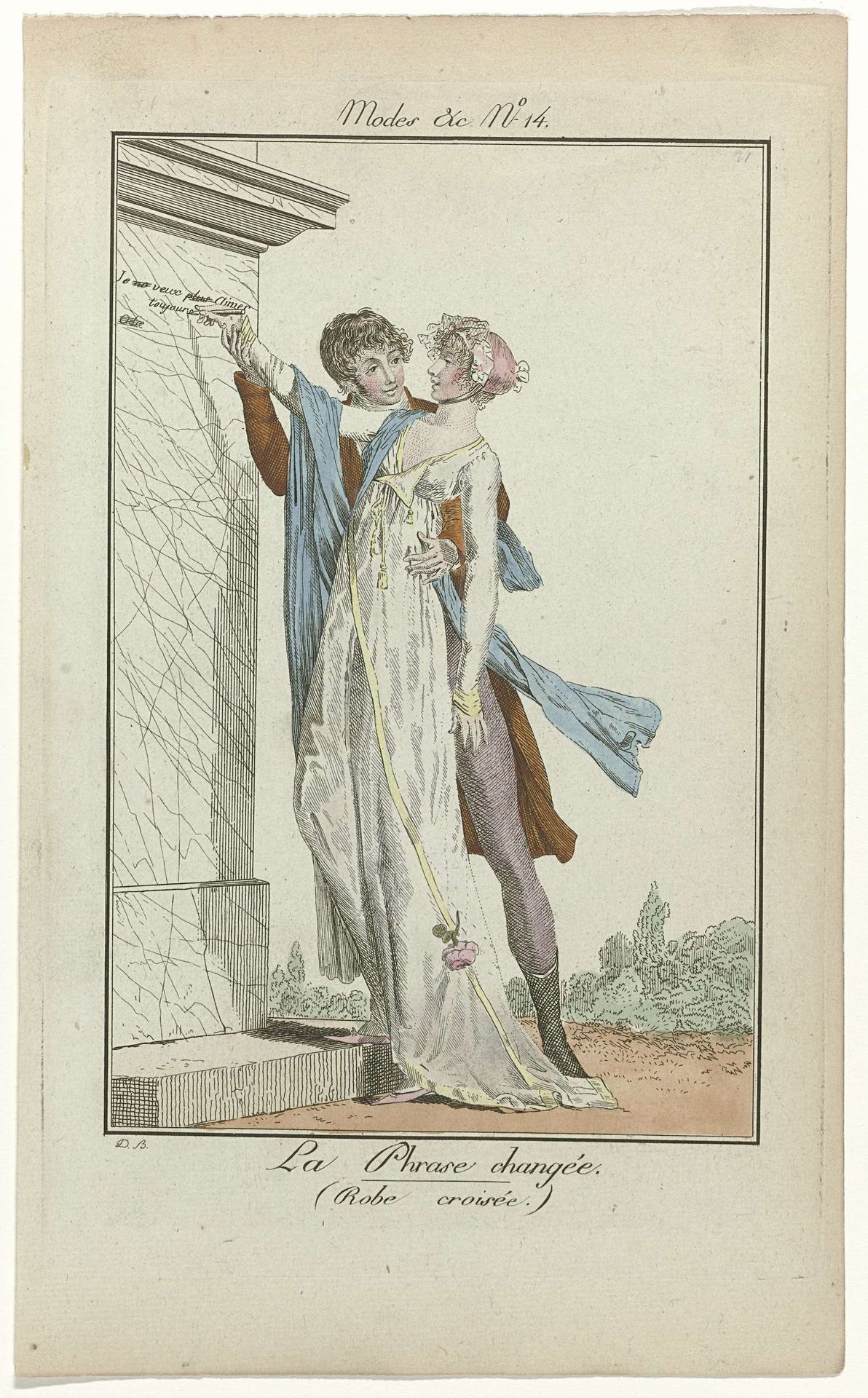
Louis Philibert Debucourt created this hand-colored etching titled "La Phrase changée" around 1799 in France. It presents a snapshot of Parisian fashion and social life during a politically turbulent time. The image creates meaning through its subtle visual cues and cultural references. The woman’s flowing "robe croisée" embodies the neoclassical style, a rejection of the extravagant fashions of the ancien régime. The man, with his more practical attire, seems to be amending a graffitied phrase on the wall, hinting at changing social values, and a shift toward a more egalitarian society after the French Revolution. Is he rewriting love? Is he trying to impress his female companion? The piece reflects the social and political climate of post-revolutionary France, when the old order was dismantled and new ideals were taking shape. Fashion became a means of expressing political allegiance and social identity. Understanding this etching requires a grasp of French history and the role of fashion in expressing social change. By studying sources from the period, we can better interpret Debucourt's commentary on a society in flux.
Modes et Manières du Jour, 1799-1800, No. 14 : La Phrase changée. (Robe croisée)
1799 - 1800

Artwork details
- Medium
- print, engraving
- Dimensions
- height 191 mm, width 124 mm
- Copyright
- Rijks Museum: Open Domain
Tags
Comments
Share your thoughts
About this artwork
Louis Philibert Debucourt created this hand-colored etching titled "La Phrase changée" around 1799 in France. It presents a snapshot of Parisian fashion and social life during a politically turbulent time. The image creates meaning through its subtle visual cues and cultural references. The woman’s flowing "robe croisée" embodies the neoclassical style, a rejection of the extravagant fashions of the ancien régime. The man, with his more practical attire, seems to be amending a graffitied phrase on the wall, hinting at changing social values, and a shift toward a more egalitarian society after the French Revolution. Is he rewriting love? Is he trying to impress his female companion? The piece reflects the social and political climate of post-revolutionary France, when the old order was dismantled and new ideals were taking shape. Fashion became a means of expressing political allegiance and social identity. Understanding this etching requires a grasp of French history and the role of fashion in expressing social change. By studying sources from the period, we can better interpret Debucourt's commentary on a society in flux.
Comments
Share your thoughts