1926
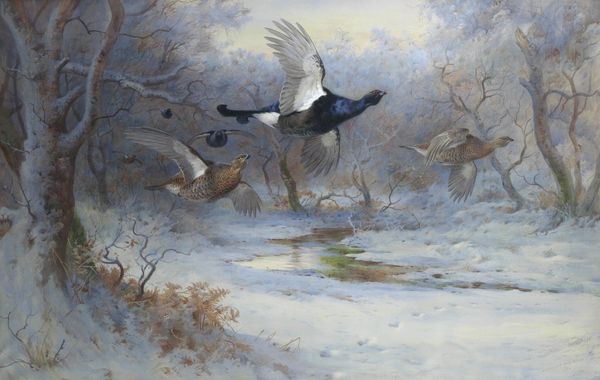
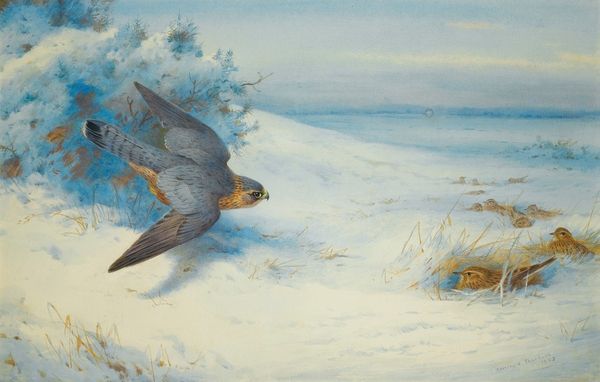
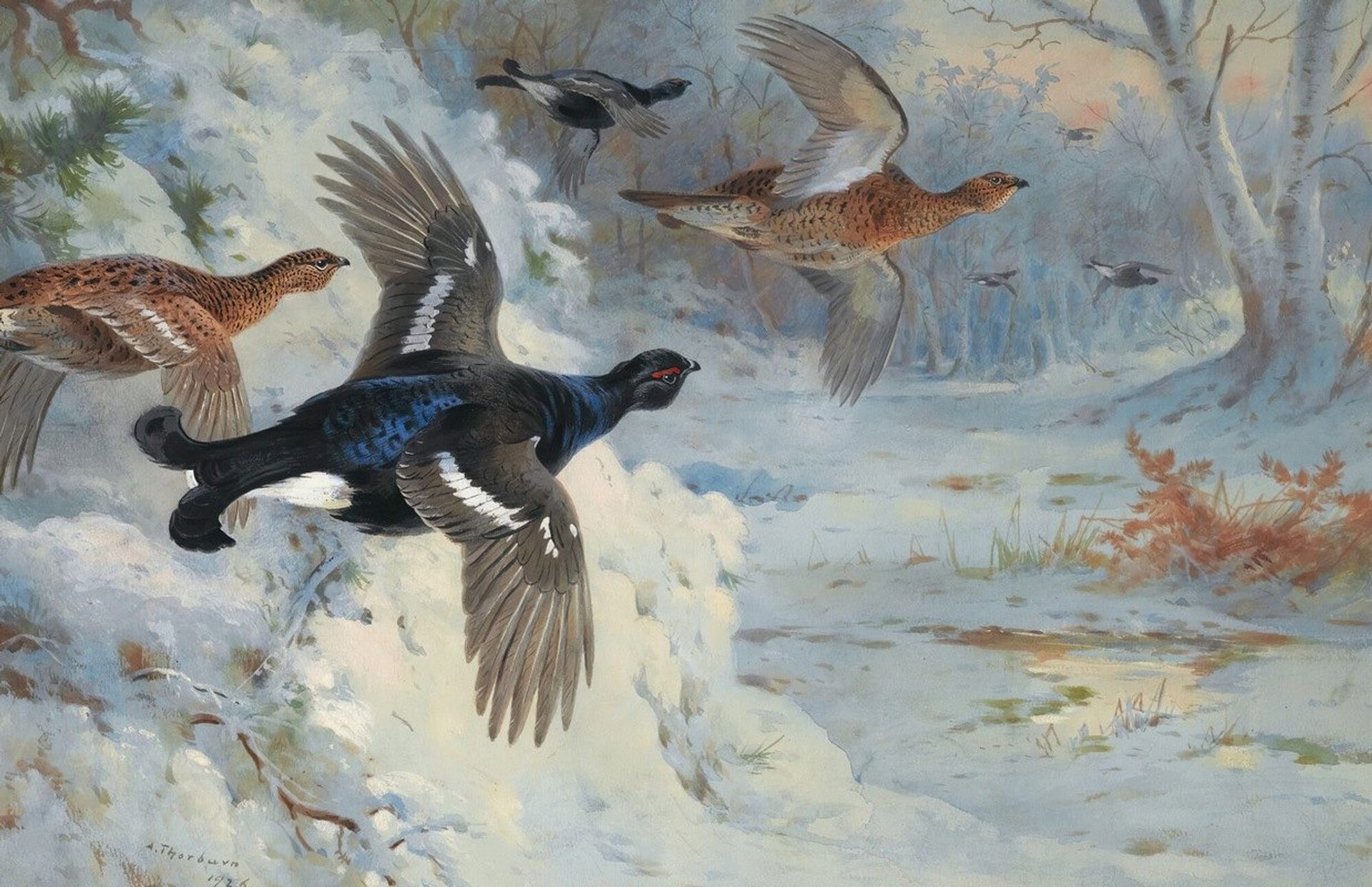
Through The Snowy Coverts-Blackgame

Listen to curator's interpretation
Curatorial notes
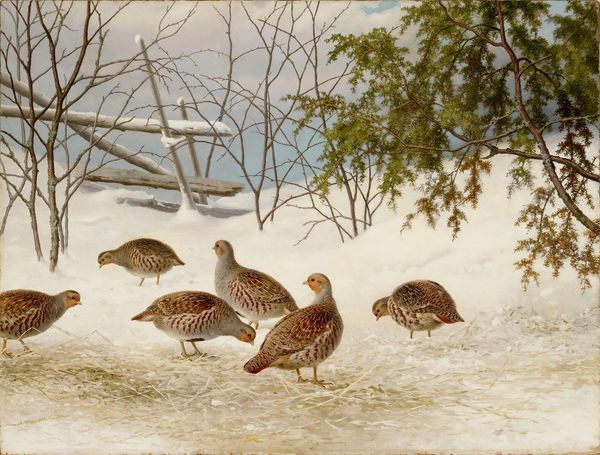
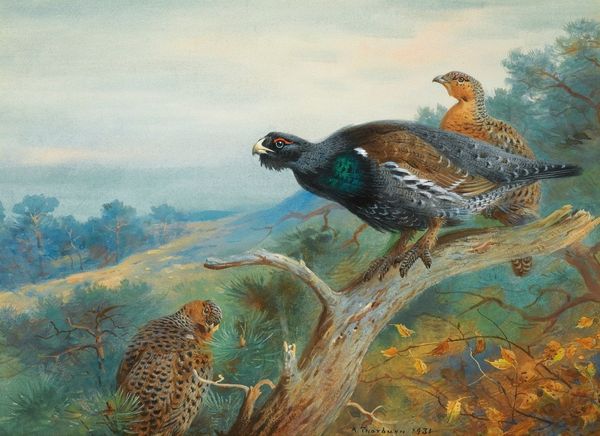
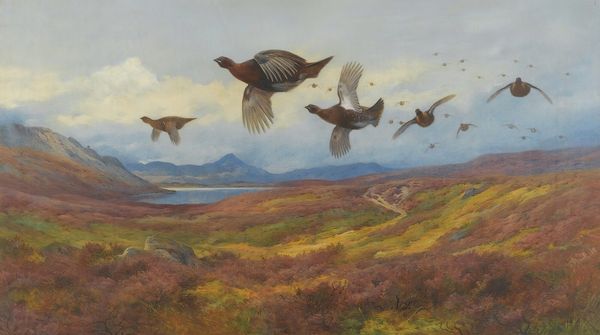
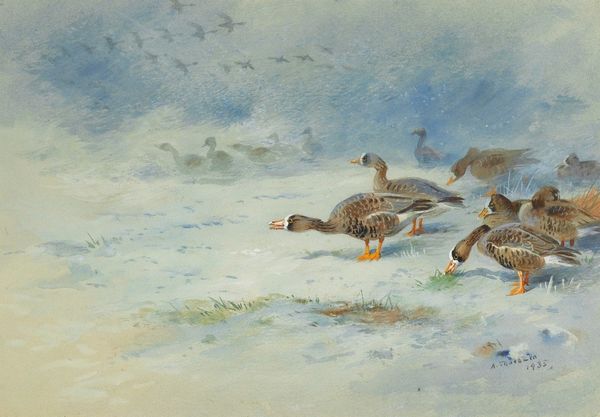
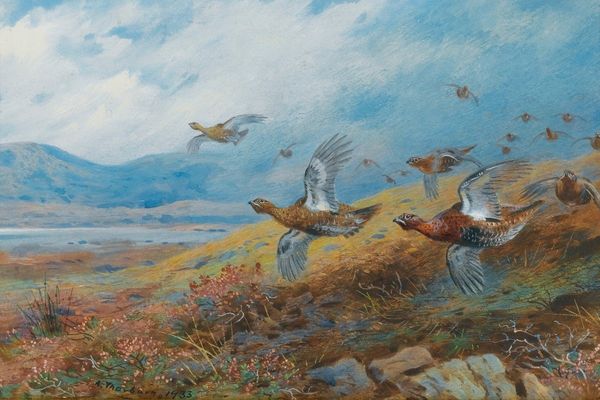
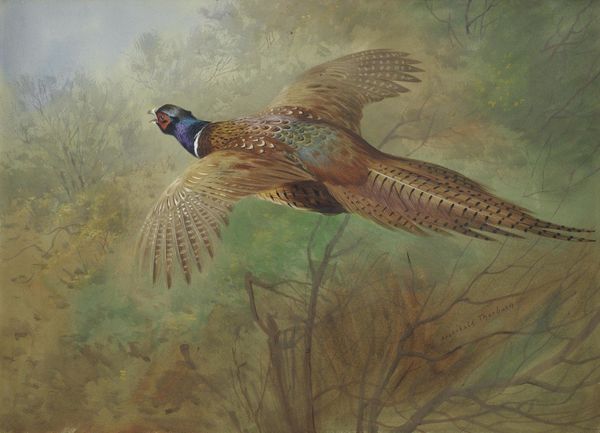
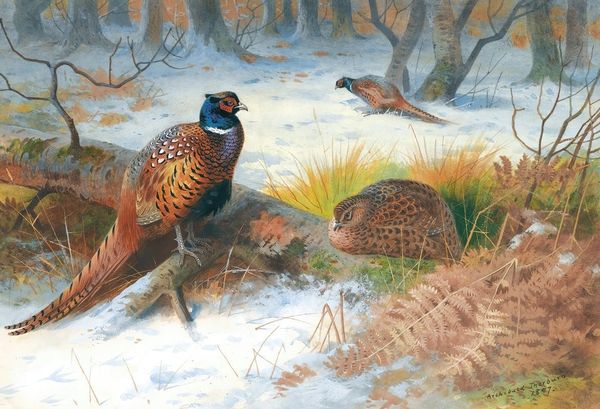
Editor: So this watercolor piece, "Through The Snowy Coverts-Blackgame" by Archibald Thorburn, created in 1926, is interesting! It’s a flurry of birds against a wintry landscape. I get a sense of the thrill of the hunt, but also of the birds' struggle for survival in a harsh environment. How do you interpret this work, especially considering the time it was made? Curator: It's intriguing how you picked up on the themes of hunting and survival. Thorburn was known for his meticulously detailed depictions of British birds, catering to a growing interest in ornithology and conservation in the late 19th and early 20th centuries. But his works weren't merely scientific illustrations. They also reflect a certain cultural ideal: the romanticism of the British countryside and its wildlife, often implicitly tied to notions of national identity. How does knowing this influence your perception? Editor: That's fascinating! Knowing that there was this cultural romanticizing of the countryside definitely shifts my understanding. So the painting becomes less about pure documentation and more about promoting a specific image, a specific *idea* of Britain. Is it maybe glossing over some of the harsher realities of rural life? Curator: Exactly! Think about the social context: this painting was created in the interwar period, a time of significant social and economic upheaval in Britain. These idealized depictions of nature may have served as a form of escapism, a nostalgic yearning for a perceived simpler, more harmonious past. And consider the role of galleries and wealthy patrons in promoting these images. Did the art market shape the artist's subject matter? Editor: It makes you wonder whose interests are being served by this particular kind of artwork. Thanks, I hadn't really thought about it that way! Curator: Absolutely. It’s a reminder that art is rarely created in a vacuum. Understanding its historical context allows us to see beyond the surface beauty and to critically examine the underlying cultural and political narratives.