photography
#
pictorialism
#
landscape
#
photography
#
19th century
#
cityscape
#
realism
Dimensions: height 90 mm, width 133 mm
Copyright: Rijks Museum: Open Domain
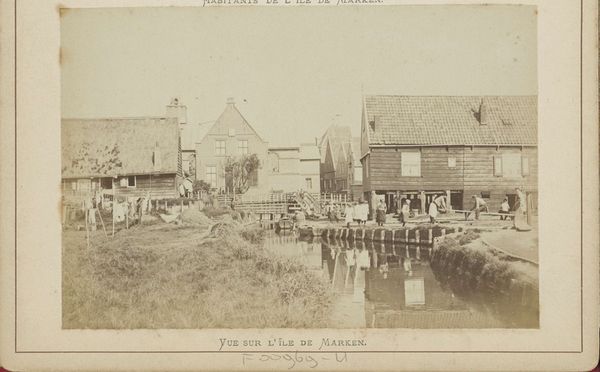
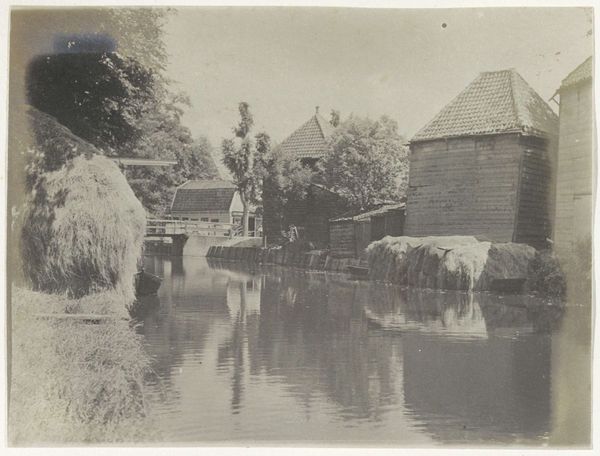
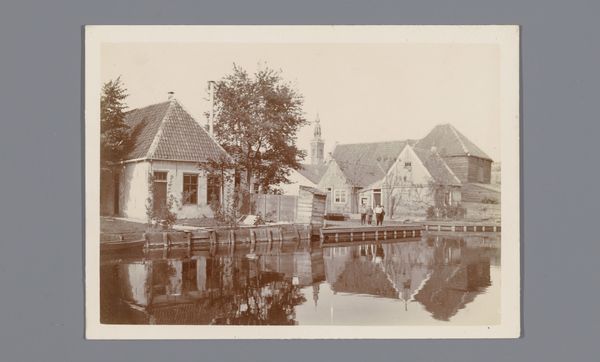
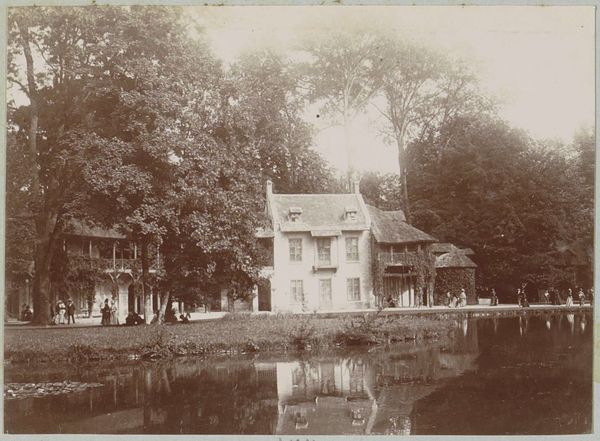
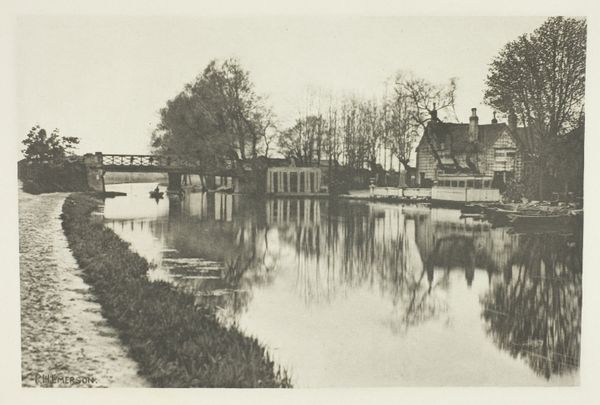
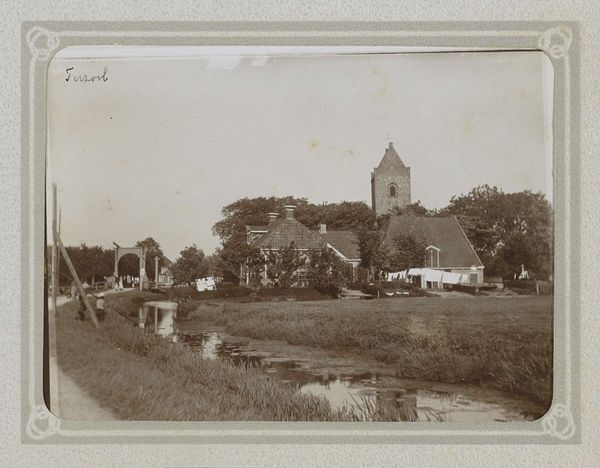
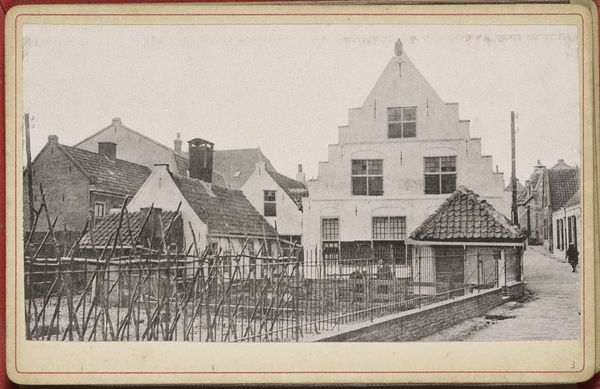
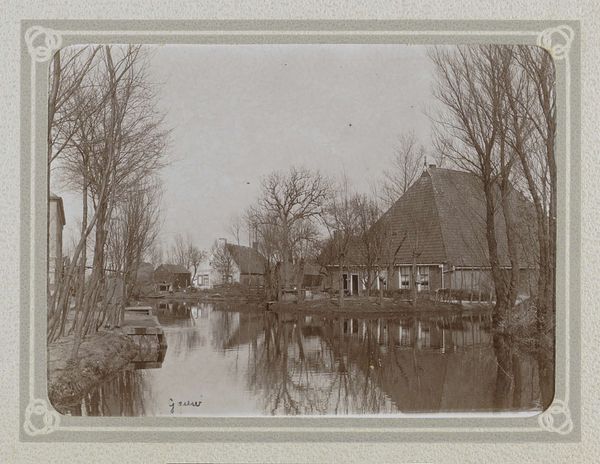
Curator: So, here we have a photographic print titled "Gezicht op huizen aan een sloot in Marken," which translates to "View of houses on a ditch in Marken." This photograph, of unknown authorship, originates from sometime between 1875 and 1910. It's part of the Rijksmuseum's collection and offers an intriguing glimpse into a past cityscape. Editor: My first impression is one of faded tranquility. The sepia tones give it a wistful, almost dreamlike quality. There’s something melancholic, perhaps in its stillness. Like a memory fading around the edges. Curator: That aligns well with the Pictorialist style evident in the photograph. Pictorialism, prominent during that era, emphasized artistic effect, often manipulating the photographic process to mimic painting. It served as a means for photographers to assert photography's status as an art form in its own right, against the backdrop of debates about photography's objectivity. Editor: Yes, the composition is carefully considered, almost staged. The canal bisects the image beautifully. The play of light on the water’s surface feels… painterly, almost impressionistic. It makes you wonder how much the photographer altered the original image to get this specific look. It seems too staged to be strictly realism. Curator: Indeed. This work occupies an interesting space between realism and a more romantic vision of landscape. Marken itself, as an isolated island community, was undergoing considerable social and economic shifts during this period due to increased tourism. Images like this can tell us a lot about the image makers’ intentions, from recording aspects of a rural society undergoing immense change, to selling a certain idyllic version of it to outsiders. Editor: So there’s a tension there? An honest depiction versus a carefully crafted narrative? It’s interesting how the choice to embrace Pictorialism could influence viewers, presenting the city not as it was but how one *wanted* to see it. Even these figures strolling along the canal. I see just enough detail, just a blurriness… like ghosts. Curator: Exactly! These figures become symbols, inhabitants of an older, simpler way of life that was being both preserved and commodified at the same moment. By the late 19th century photography and ethnographic studies influenced how cultural heritage would be visualized. These images offer a potent window onto broader cultural trends. Editor: It really makes you question the act of image making, then and now. What do we choose to capture, and why? And more so: what remains unseen, untold? The houses almost lean together. Time can do some great and sometimes painful things. Curator: Well said. It highlights how visual representations are always deeply intertwined with the socio-historical context and cultural politics of their time. Thanks. Editor: Thank you.
Comments
No comments
Be the first to comment and join the conversation on the ultimate creative platform.
 Collect
 React
React Comment
More like this