
Curatorial notes
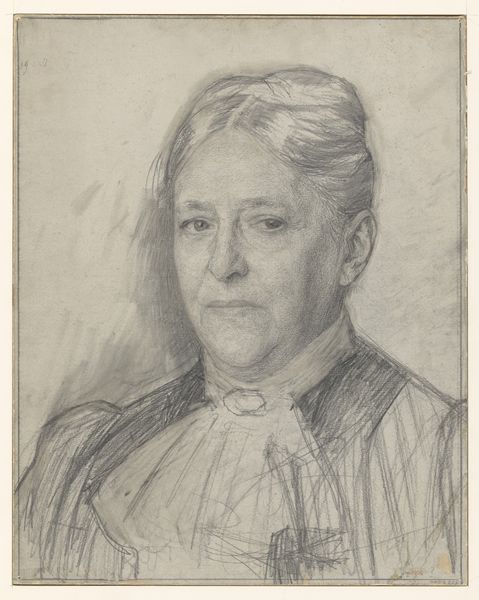
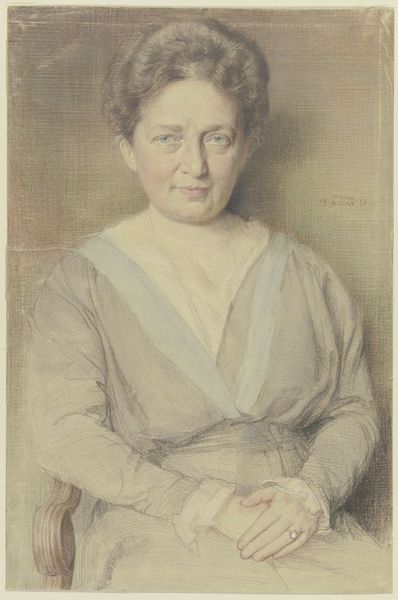
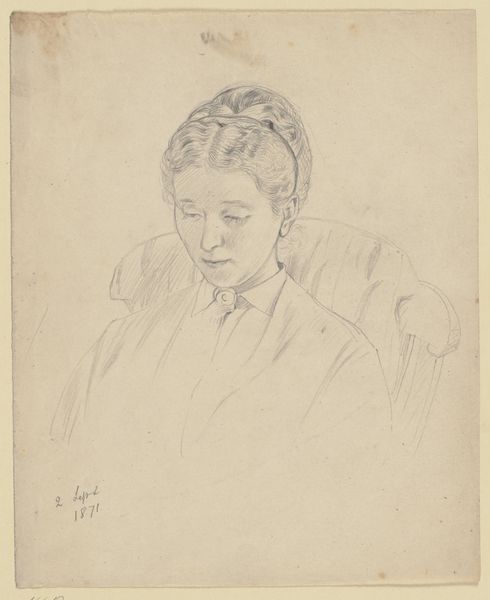
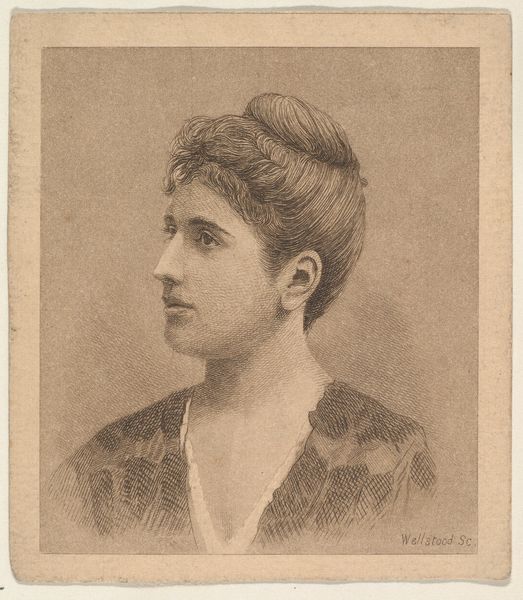
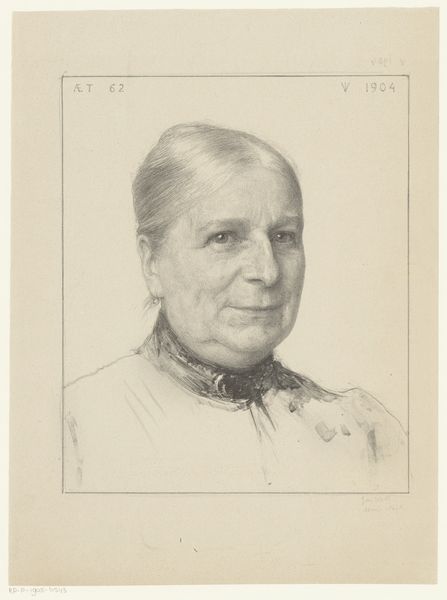
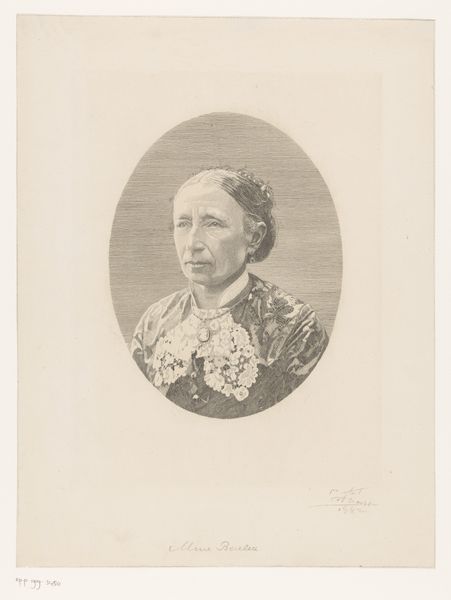
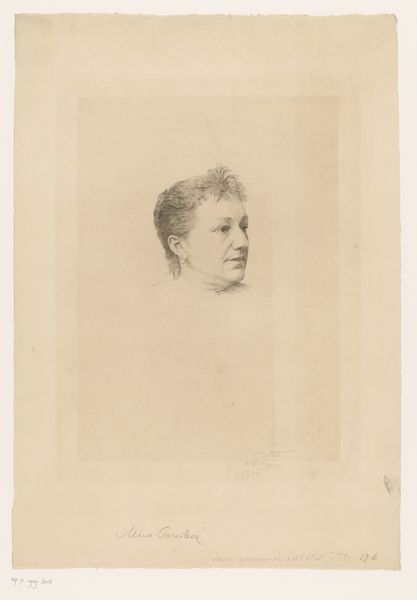
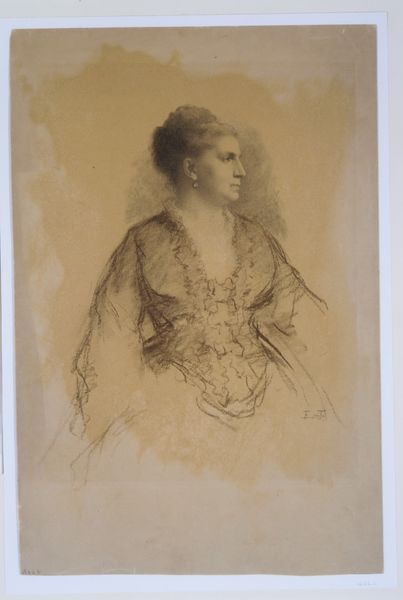
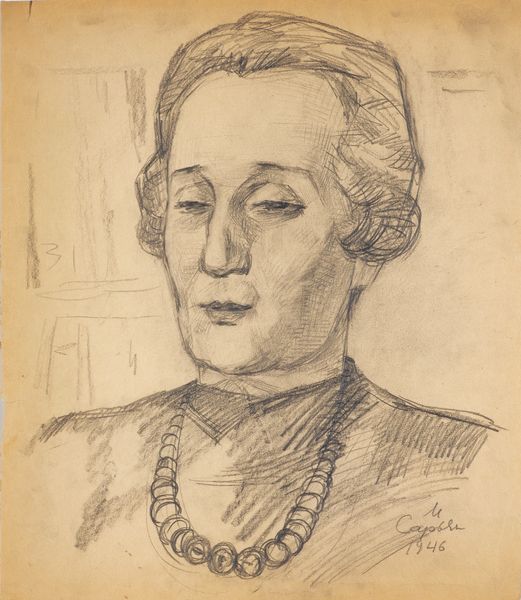
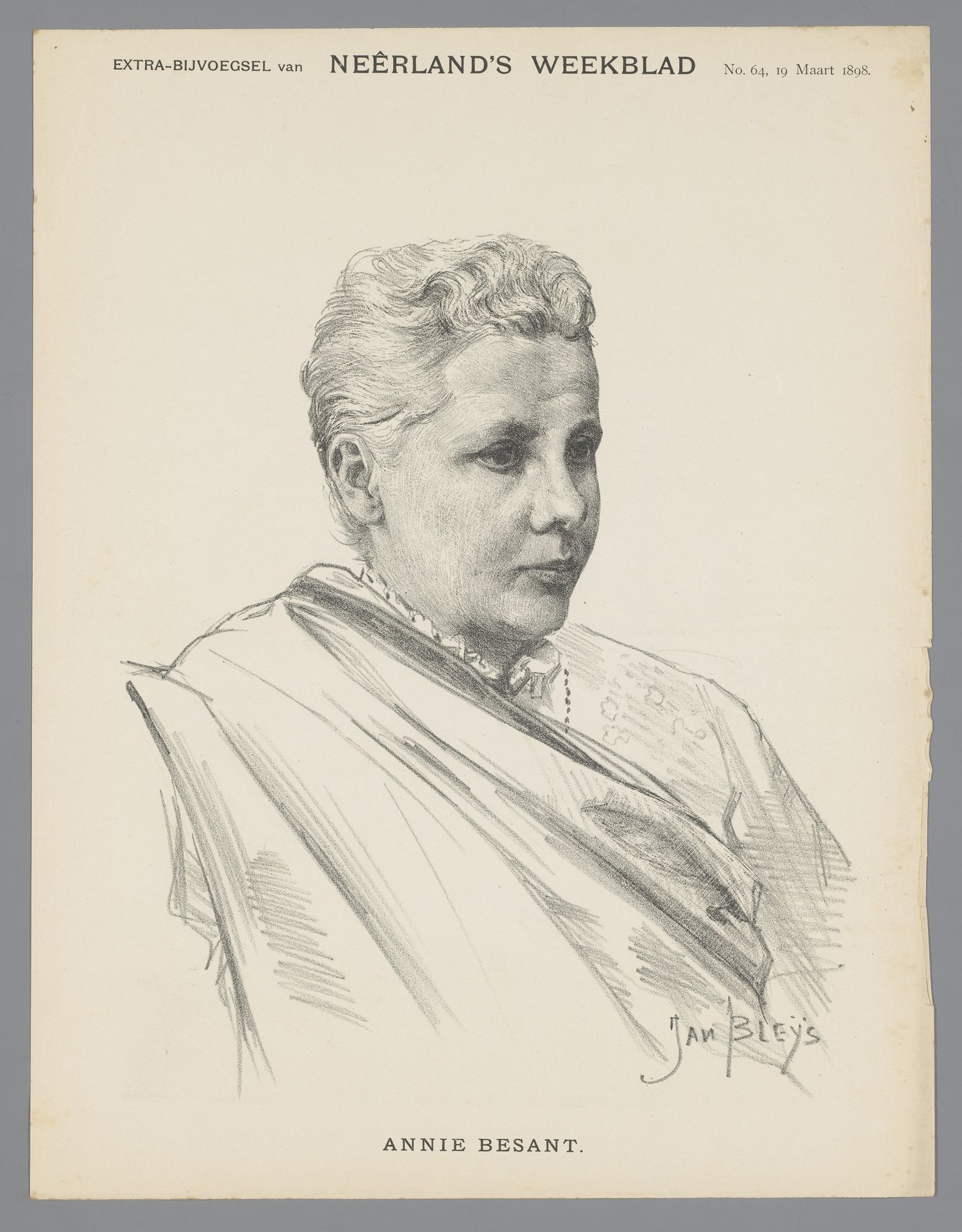
Editor: This drawing is a portrait of Annie Besant by Jan Bleijs, possibly from 1898. It’s a pencil sketch with very delicate linework. I’m struck by her direct gaze – there’s a sense of quiet determination about her. How do you interpret this work? Curator: That determination resonates with me as well. Annie Besant was a prominent Theosophist, women's rights activist, writer, and orator. Bleijs, captures Besant, in what appears as both European and Indian clothing, indicative of Besant’s connection to both Western and Eastern cultures. Do you notice the detail in her eyes and its relation to the strong angle of her jaw? Editor: Yes, the focus on her eyes draws you in! And it makes sense that you pick up on the blend of clothing – she looks quite distinguished. Were images like this used to promote her causes? Curator: Exactly. As an activist, Besant understood the power of image. Portraits like this weren't just likenesses; they were carefully constructed representations designed to project her chosen persona. Consider, too, that this drawing appeared in *Neerland's Weekblad*. Think about its readership, and what this portrait might have communicated to them about Besant’s politics. Editor: That's a great point! It bridges her activism and this more formal representation. Seeing it as a political statement rather than just a portrait shifts my perspective. Curator: Right. By situating Besant within a broader cultural and historical framework, we start to unpack the complexities of identity, representation, and political action. The personal becomes inextricably linked to the political. Editor: I’m definitely seeing more in this simple drawing now. Thanks for shedding light on Besant's context and its intersectional implications. Curator: Absolutely. It's through these connections that we can really begin to appreciate art’s role as a powerful social mirror.