c. 1930
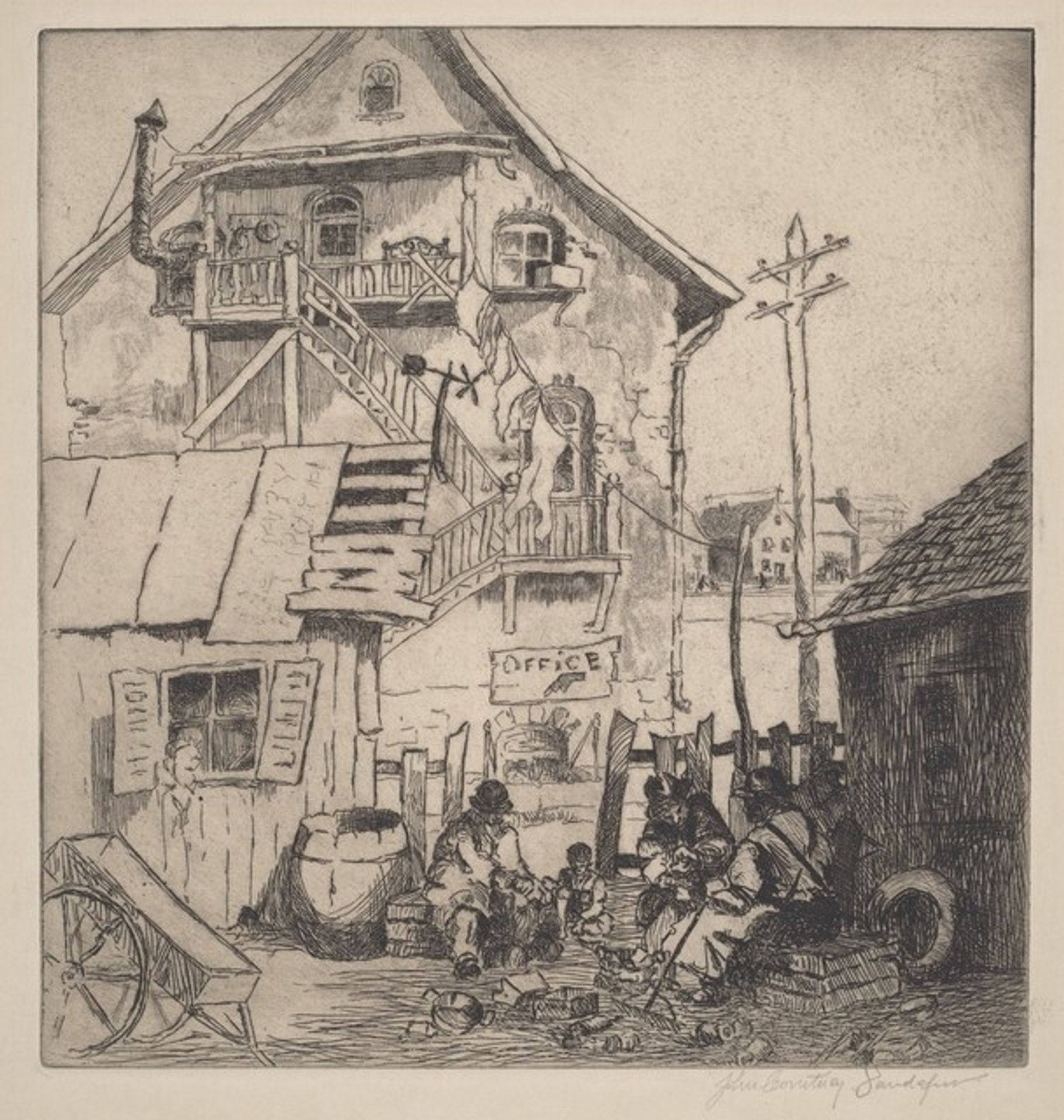
Chicago Background


Listen to curator's interpretation
Curatorial notes
Editor: This is John Courtney Sandefur's "Chicago Background," from around 1930. It's a drawing and print, using etching and graphite. I find it fascinating, all these layers of material give it an almost gritty realism. What stands out to you about this work? Curator: Well, first, let's think about the materials themselves. Graphite and etching both involve a kind of labor, a direct physical engagement with the medium. It’s about how the image comes into being through this process, right? Editor: Exactly! I was thinking that the roughness comes from this manual process. Curator: Precisely! And this links to the social context. What kind of labor are we seeing represented? These men gathered outside what appears to be a very humble "Office" speak volumes. Look at the discarded tires and broken equipment; are these men at work, or out of work? How does Sandefur’s choice of materials reinforce a sense of urban decay and working-class life in Chicago? Editor: That’s a great point! The materials mirror the subject matter. Curator: Indeed. The drawing and print, processes accessible perhaps to a wider range of artists at the time, connect with this depiction of everyday labor and survival. Notice how the labor isn't hidden, refined away – it’s integral to the artwork itself. Editor: It's less about artistic genius, and more about the means and making. Curator: Absolutely. Sandefur presents us with a picture of not just what Chicago looked like, but how people existed and struggled within its economic structure. Editor: This really gives a new perspective about this "background" as foregrounding the reality of working-class experience in 1930s Chicago. Curator: Agreed. Thinking about the materiality directs our attention toward the broader social and economic conditions that shaped both the artwork and the lives of those represented in it.