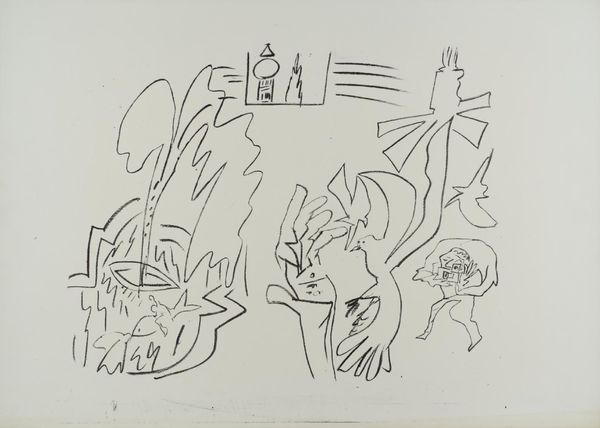
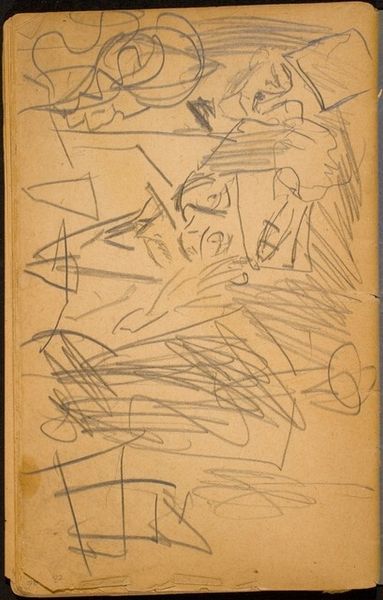
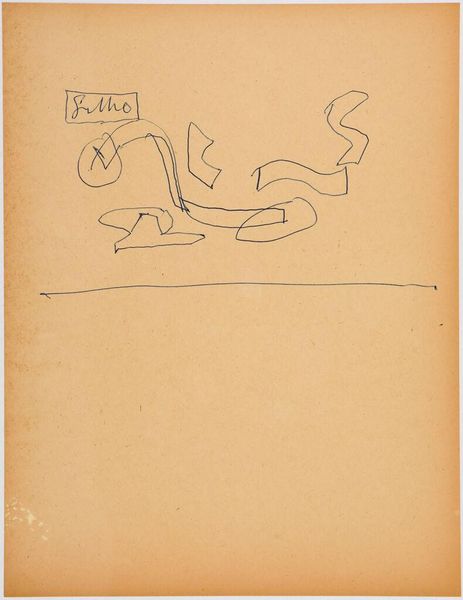
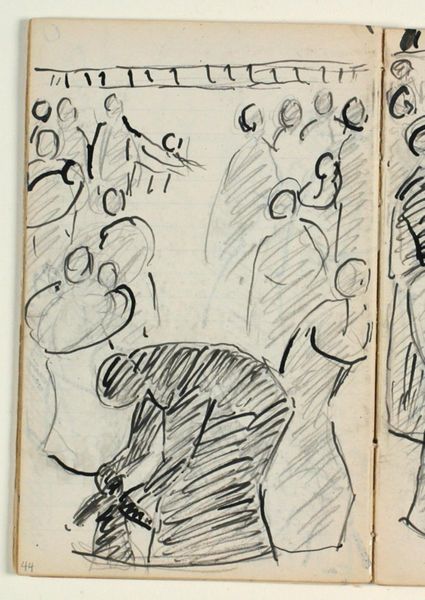
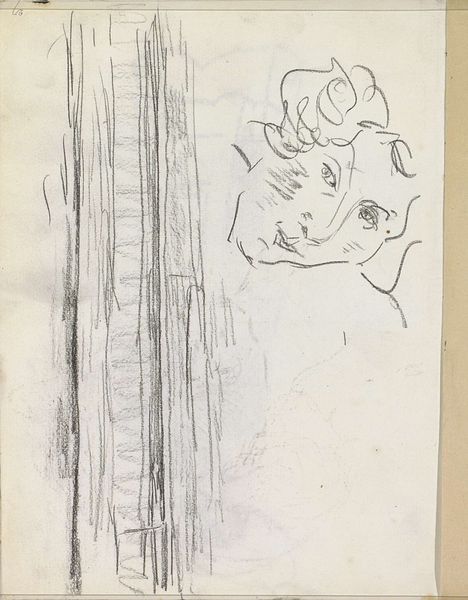
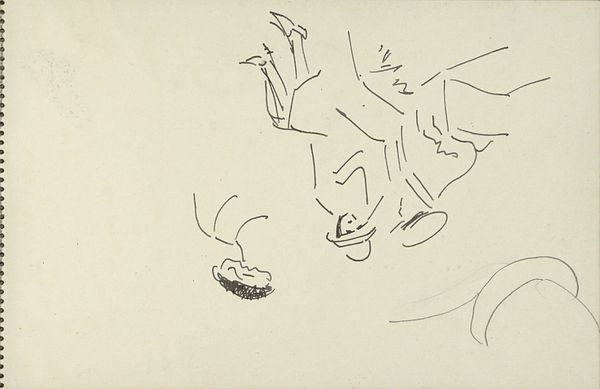
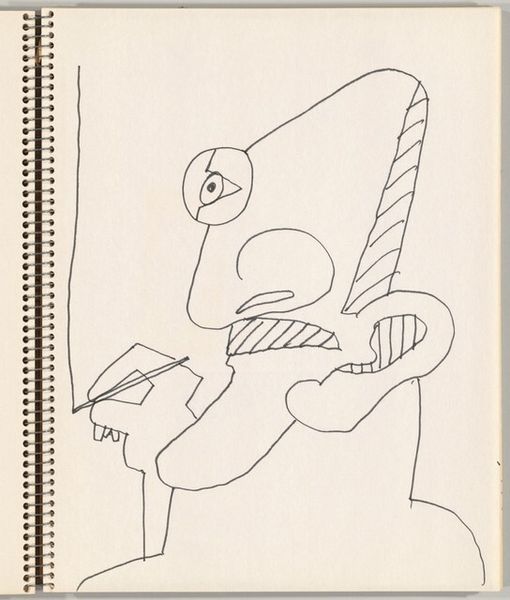
An Artist at the Easel with a Female Nude and a Horse-Man Possibly 1973 - 1974
0:00
0:00


drawing, graphic-art, paper, ink
#
portrait
#
drawing
#
graphic-art
#
figuration
#
paper
#
ink
#
line
#
surrealism
#
modernism
Dimensions: image: 31 x 47.8 cm (12 3/16 x 18 13/16 in.) book: 31.8 x 25 x 2 cm (12 1/2 x 9 13/16 x 13/16 in.)
Copyright: National Gallery of Art: CC0 1.0
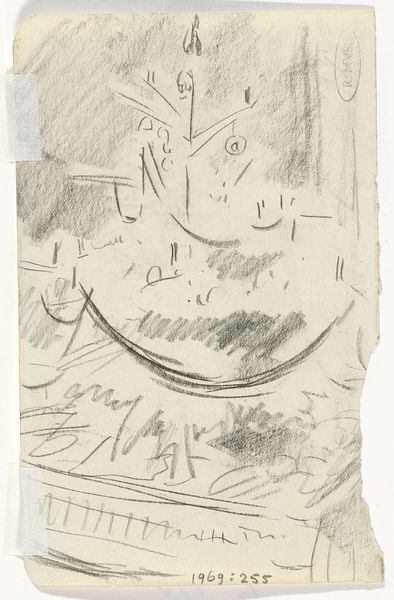
In this 1974 sketch by Marc Chagall, we encounter a dreamscape of symbols, rendered with a playful, almost childlike hand. Note the dove, a timeless emblem of peace and purity, soaring above a vase of flowers, themselves symbols of love and beauty. Now, consider the figure of the horse-man. In ancient mythology, the centaur embodied the duality of human and animal nature, a struggle between intellect and instinct. Chagall frequently used this figure to represent the artist, torn between earthly desires and creative inspiration. The crescent moon is often associated with female empowerment and fertility. These recurring motifs of doves, centaurs, and celestial bodies evoke a collective memory, echoing through centuries of art and culture. Each symbol resonates with deep-seated emotions and subconscious associations, inviting us to explore the hidden landscapes of our minds. Observe how these symbols resurface throughout art history, evolving and adapting to new contexts. The horse-man, for example, appears in various guises, from the classical sculptures of Greece to the surrealist paintings of the 20th century. Its meaning shifts and transforms, reflecting the changing values and anxieties of each era.
Comments
No comments
Be the first to comment and join the conversation on the ultimate creative platform.
 Collect
 React
React Comment
More like this