About this artwork
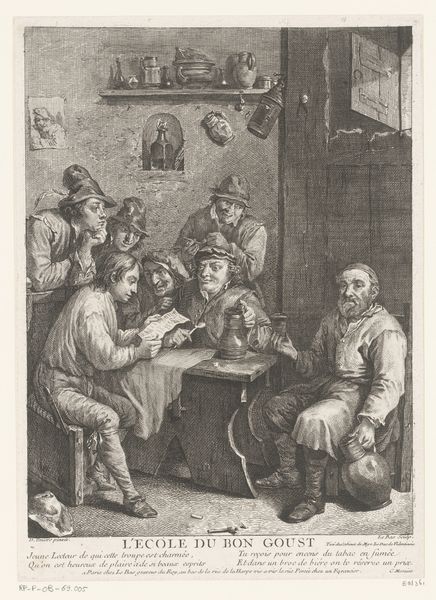
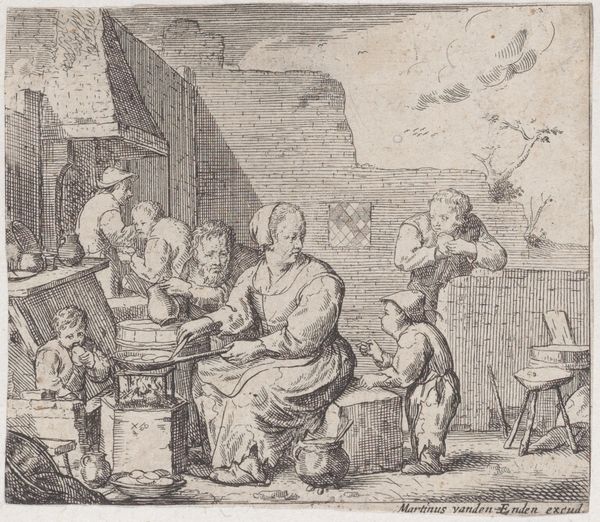
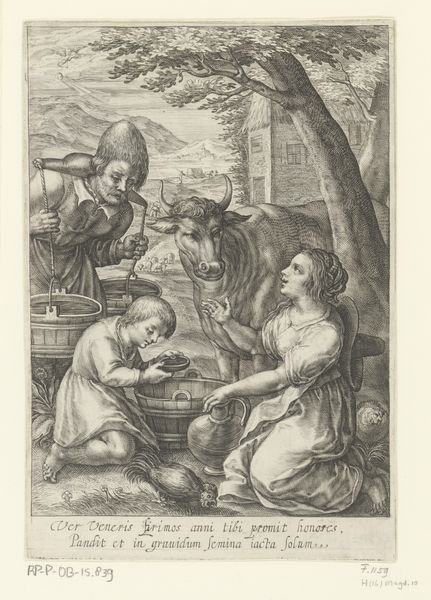
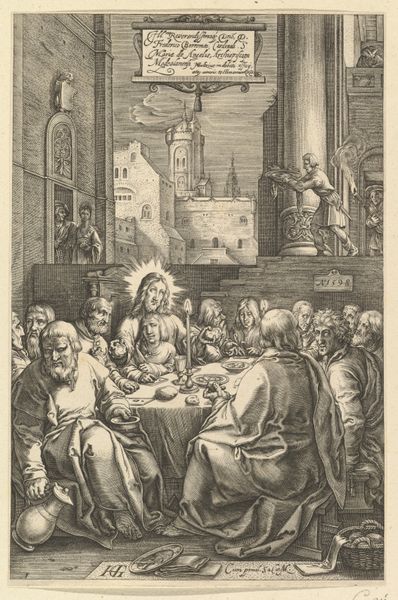
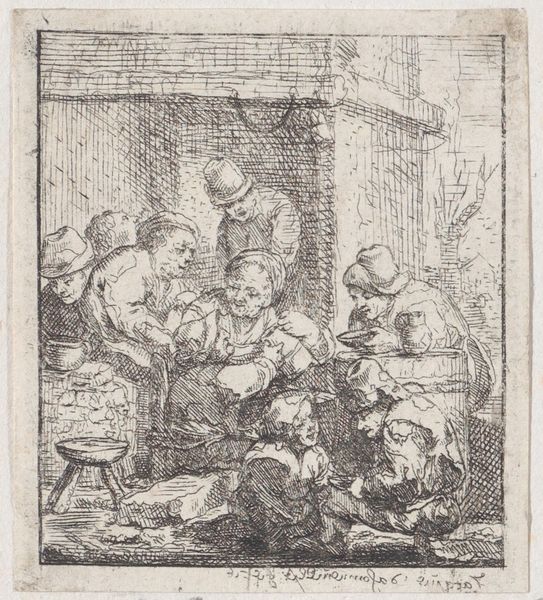
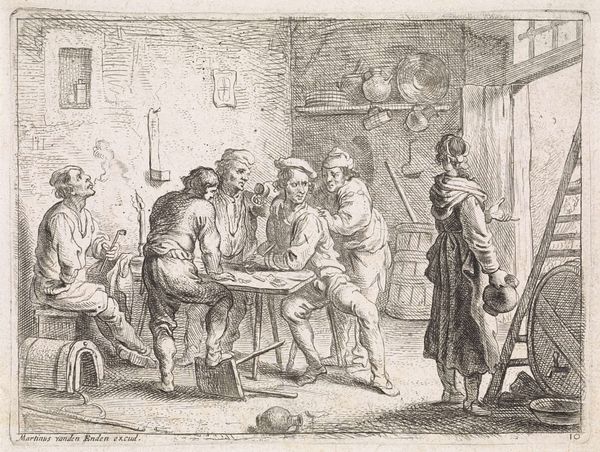
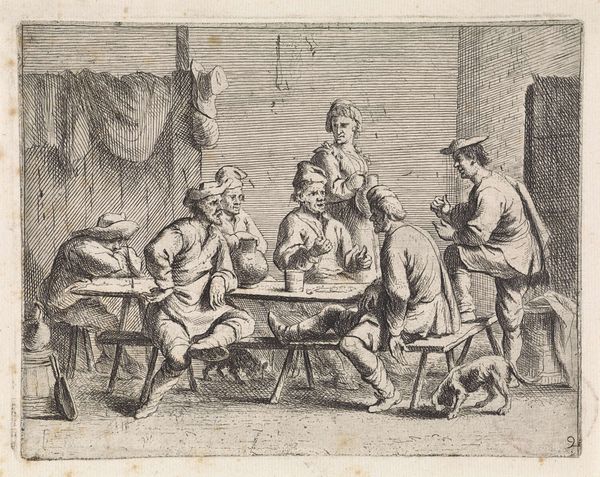
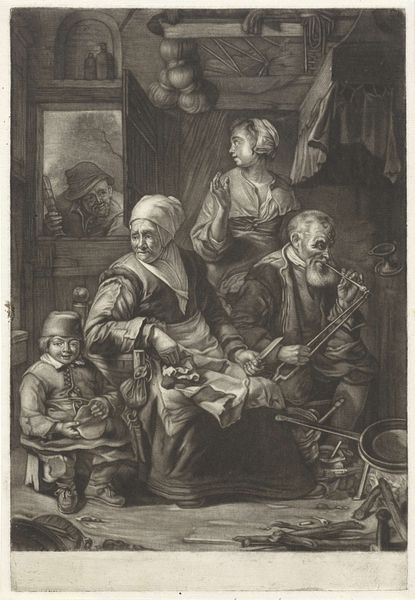
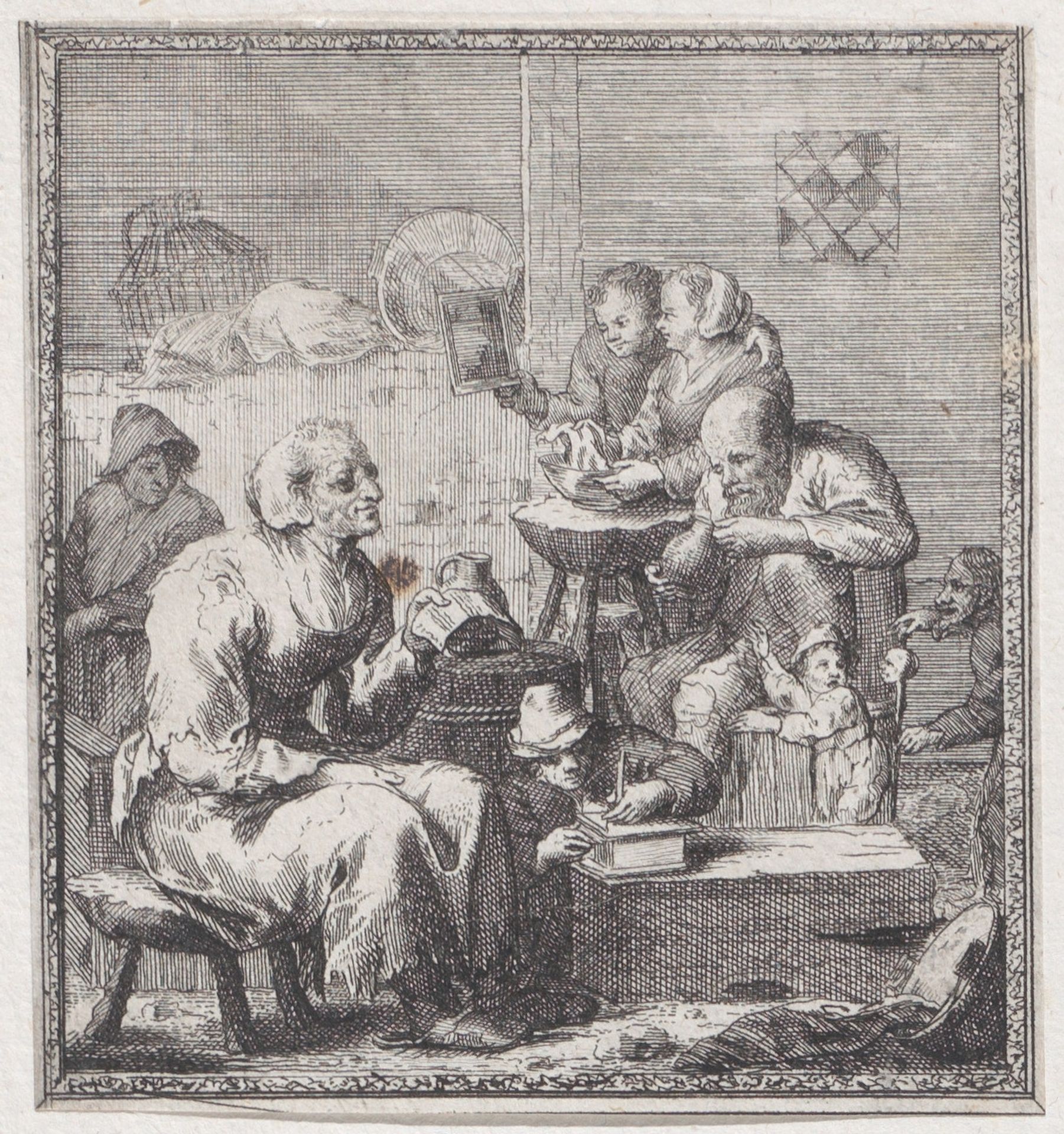
Editor: This etching, “Eight Peasants in a Rustic Interior” by Jacques Dassonville, from between 1635 and 1675, depicts what seems to be a multigenerational family scene. The cross-hatching creates an incredible sense of depth and texture. What stands out to you? Curator: This print is fascinating when we consider its mode of production. Dassonville, through the labor-intensive process of etching, transformed a scene of, ostensibly, peasant life into a commodity for consumption. It’s less about the idealized ‘rustic interior’ and more about the socio-economic relationship being formed. Editor: A commodity? I hadn't thought about it that way. It seemed like just capturing everyday life. Curator: Consider the materiality of the print itself. Etching, a process requiring skill, time, and specific materials – the metal plate, acids, inks – elevates this 'everyday' scene into something valuable for a different social class. Who would buy this, and why? What kind of market existed for these images? Editor: So, by focusing on the process, you're saying that the print isn't just a depiction, but also a product reflecting societal values and power structures of the time? Curator: Precisely. It compels us to ask: How did the artist's labor and the consumption habits of the patrons shape this piece? Was it about observation, documentation, or about romanticizing something far removed from their reality? Editor: I never thought about it in terms of production and consumption. This definitely changes my understanding of the image and prints from the Baroque period. Curator: Material analysis allows us to appreciate not just the "what" but also the "how" and the "why" behind the artwork. Examining production opens pathways for historical analysis and understanding.
Eight peasants in a rustic interior
1635 - 1675

Jacques Dassonville
1614 - 1675
The Metropolitan Museum of Art
Metropolitan Museum of Art, New York, NYArtwork details
- Medium
- drawing, print, etching
- Dimensions
- Sheet (Trimmed): 3 1/2 × 3 1/4 in. (8.9 × 8.2 cm)
- Location
- Metropolitan Museum of Art, New York, NY
- Copyright
- Public Domain
Tags
Comments
Share your thoughts
About this artwork
Editor: This etching, “Eight Peasants in a Rustic Interior” by Jacques Dassonville, from between 1635 and 1675, depicts what seems to be a multigenerational family scene. The cross-hatching creates an incredible sense of depth and texture. What stands out to you? Curator: This print is fascinating when we consider its mode of production. Dassonville, through the labor-intensive process of etching, transformed a scene of, ostensibly, peasant life into a commodity for consumption. It’s less about the idealized ‘rustic interior’ and more about the socio-economic relationship being formed. Editor: A commodity? I hadn't thought about it that way. It seemed like just capturing everyday life. Curator: Consider the materiality of the print itself. Etching, a process requiring skill, time, and specific materials – the metal plate, acids, inks – elevates this 'everyday' scene into something valuable for a different social class. Who would buy this, and why? What kind of market existed for these images? Editor: So, by focusing on the process, you're saying that the print isn't just a depiction, but also a product reflecting societal values and power structures of the time? Curator: Precisely. It compels us to ask: How did the artist's labor and the consumption habits of the patrons shape this piece? Was it about observation, documentation, or about romanticizing something far removed from their reality? Editor: I never thought about it in terms of production and consumption. This definitely changes my understanding of the image and prints from the Baroque period. Curator: Material analysis allows us to appreciate not just the "what" but also the "how" and the "why" behind the artwork. Examining production opens pathways for historical analysis and understanding.
Comments
Share your thoughts