1824 - 1827
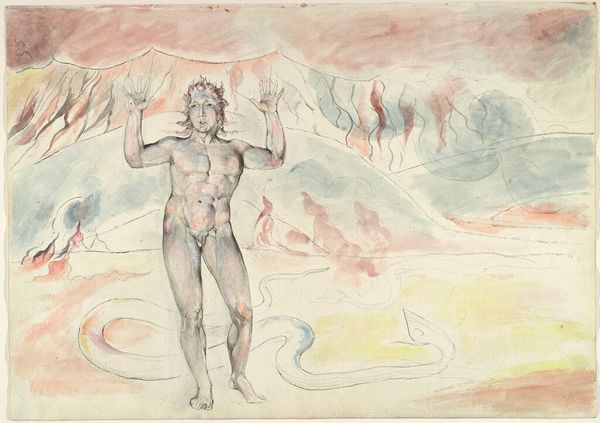
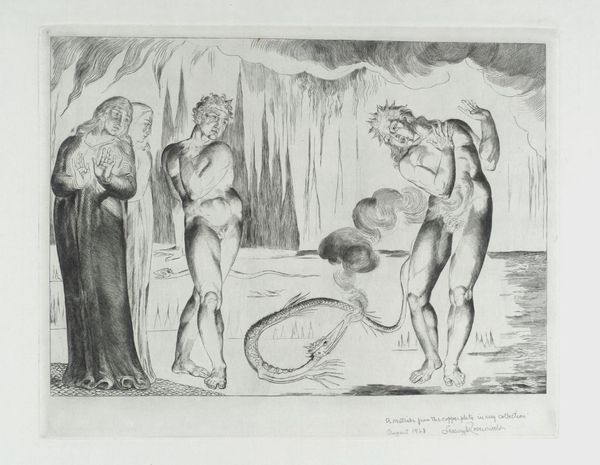
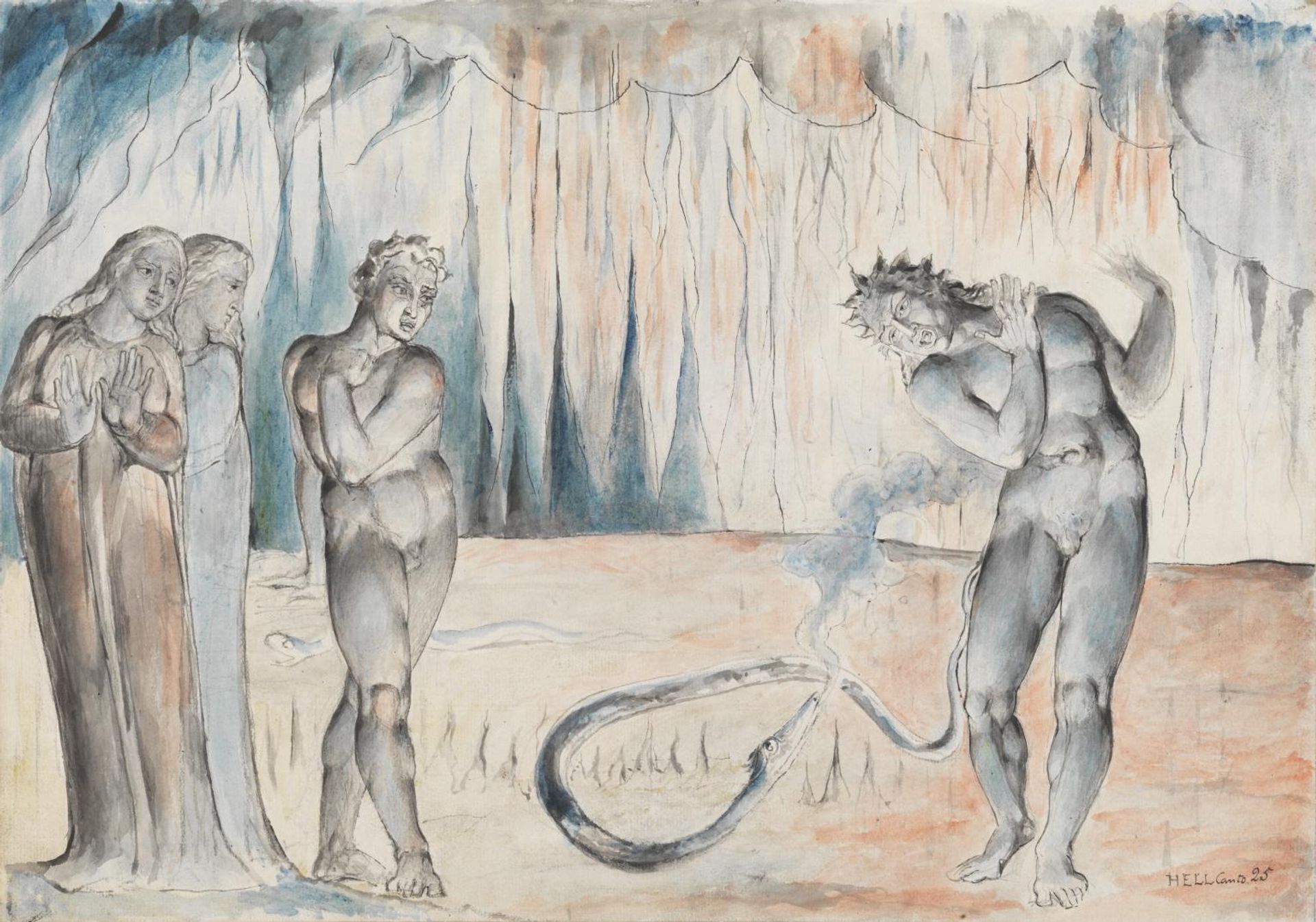
The Serpent Attacking Buoso Donati. Verso: A Man with a Transparent Hood (?) over his Head


Listen to curator's interpretation
Curatorial notes
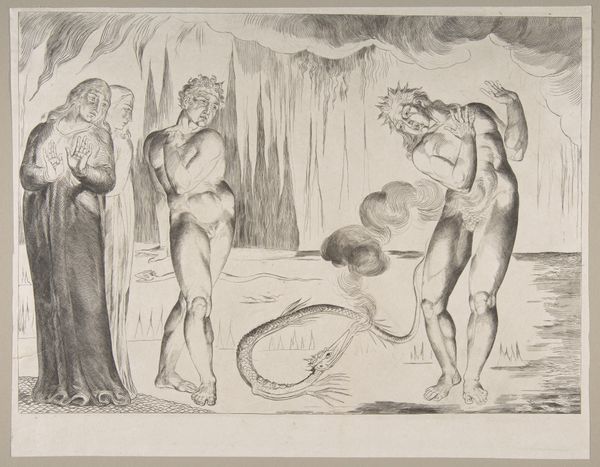
Curator: William Blake's watercolor, "The Serpent Attacking Buoso Donati," presents a harrowing scene. It feels like a nightmare unfolding. Editor: It’s stark, isn’t it? The figures seem trapped in a desolate landscape. The tension between the figures is palpable, almost vibrating off the surface. Curator: Blake, who lived from 1757 to 1827, was deeply invested in the symbolic power of classical and biblical imagery. Snakes appear in many of his artworks, and are often a symbol of evil. Editor: Given that this piece illustrates a scene from Dante's Inferno, what do you make of the figures’ nakedness? It evokes a profound vulnerability. The serpent could be understood as a symbol of unchecked capitalist greed. Curator: The nakedness emphasizes the loss of innocence, a fall from grace, which is common in Blake’s visual vocabulary. He’s tapping into a very old understanding of morality, not just a political statement. Editor: I see your point, but can both not be true at once? We must question whose innocence is being centered. Curator: Perhaps. Regardless, Blake's vision remains powerful. Editor: Absolutely, it really makes you think about how power, corruption, and our collective vulnerabilities intersect.