1584
Tower of Babel


Listen to curator's interpretation
Curatorial notes
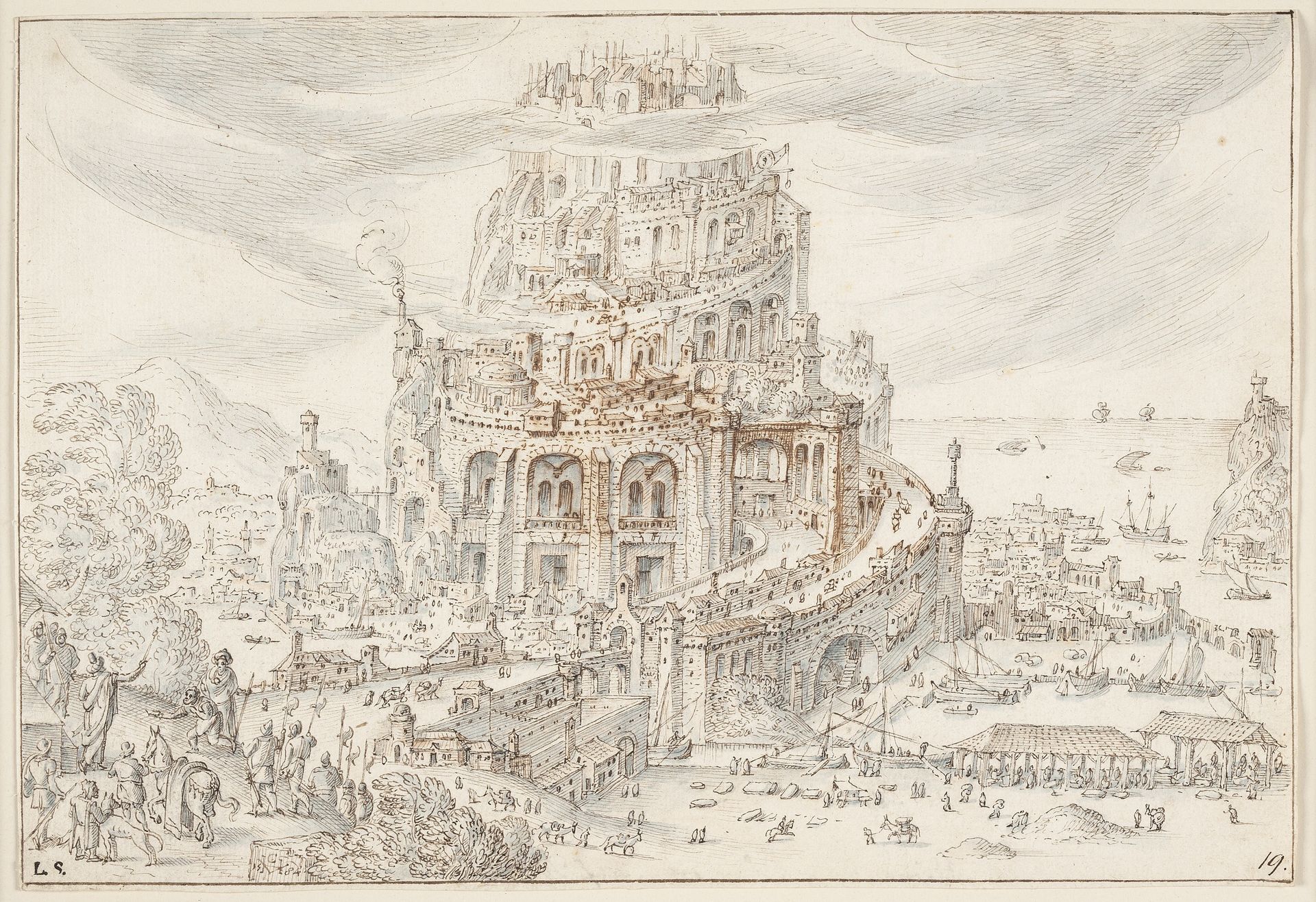
Hendrick van Cleve III created this drawing of the Tower of Babel in the late 16th century, a time when the repercussions of the Protestant Reformation rippled across Europe. Van Cleve's Tower is not just an architectural feat; it's a commentary on human ambition, power, and perhaps, the religious divisions of his time. It evokes the biblical narrative where humanity’s unified language and purpose are scattered by divine intervention, a story ripe for interpretation during an era of religious upheaval. Note how the tower is teeming with figures from diverse stations, all contributing to a single, perhaps misguided, endeavor. The emotional heart of this image lies in the contrast between collective aspiration and the potential for fragmentation. Does it reflect a longing for unity, or a cautionary tale about overreaching? Van Cleve’s Babel mirrors the societal tensions of his era, and invites us to reflect on the ever-present push and pull between collaboration and discord in our own societies.