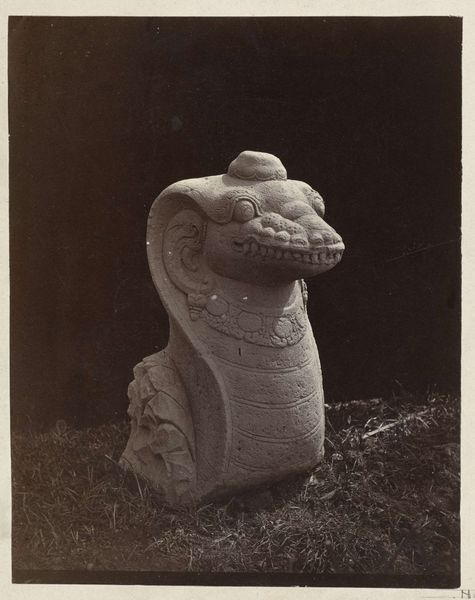
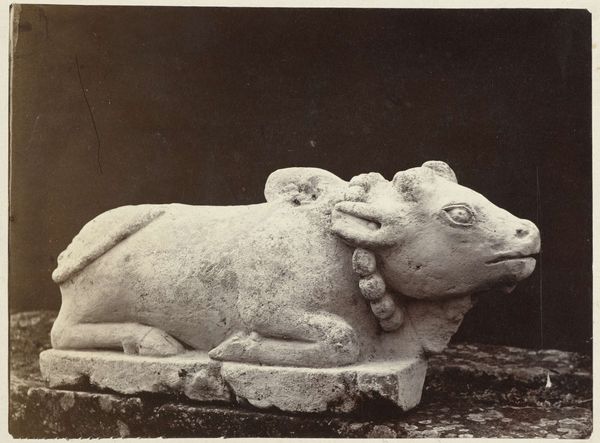
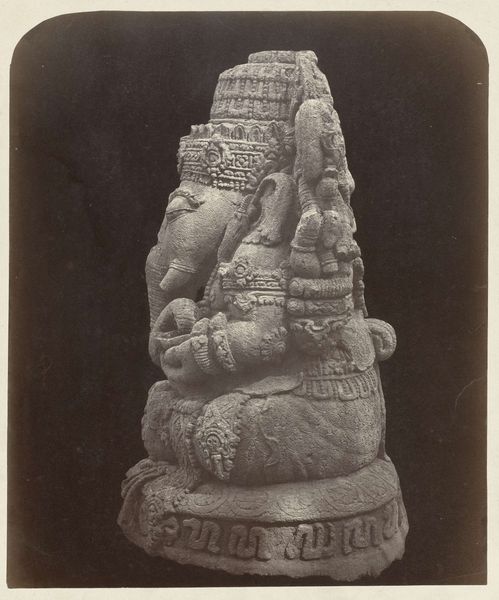
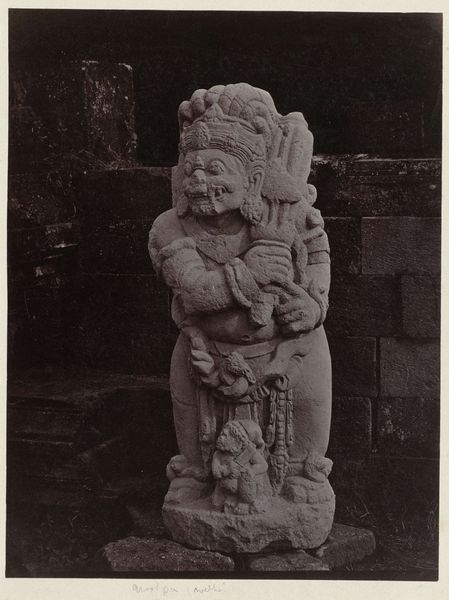
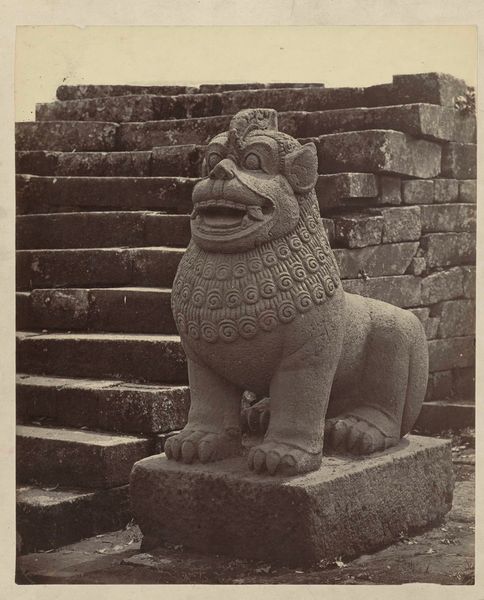
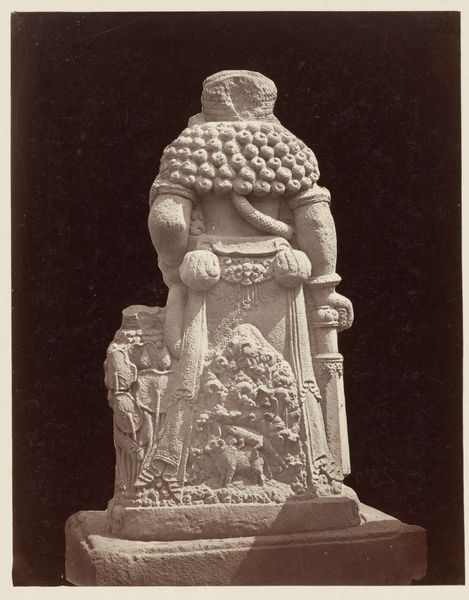
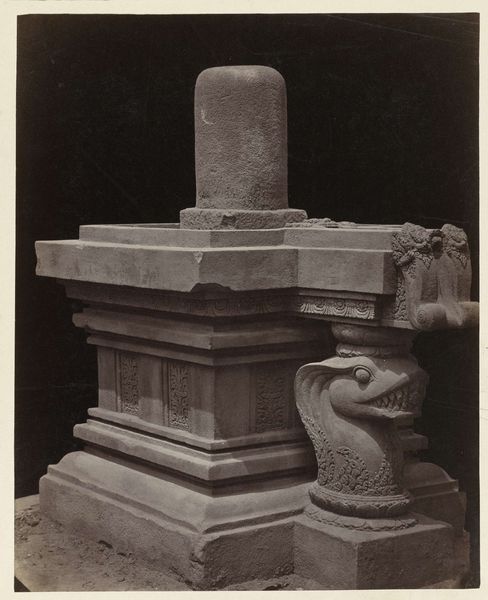
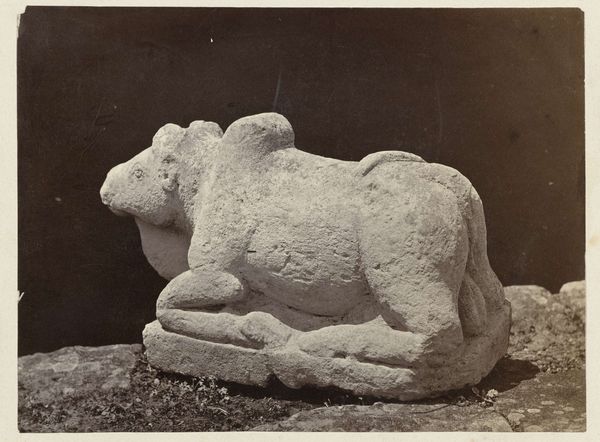
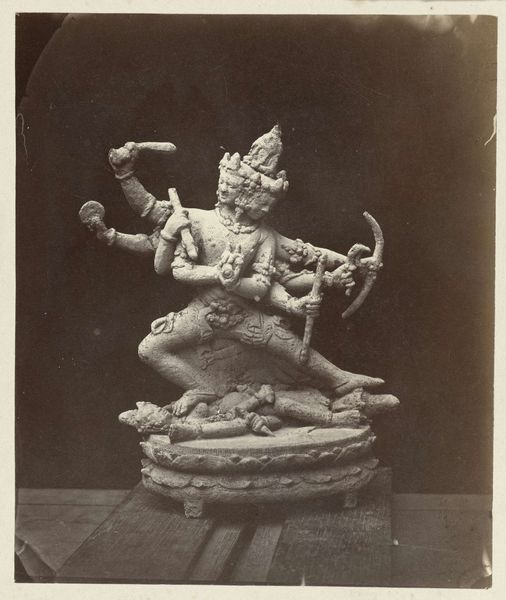
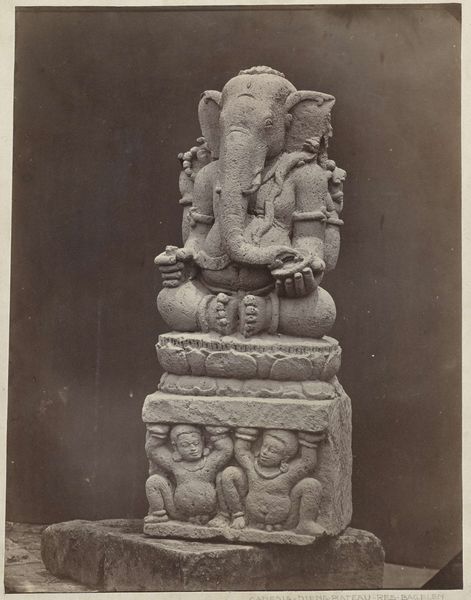
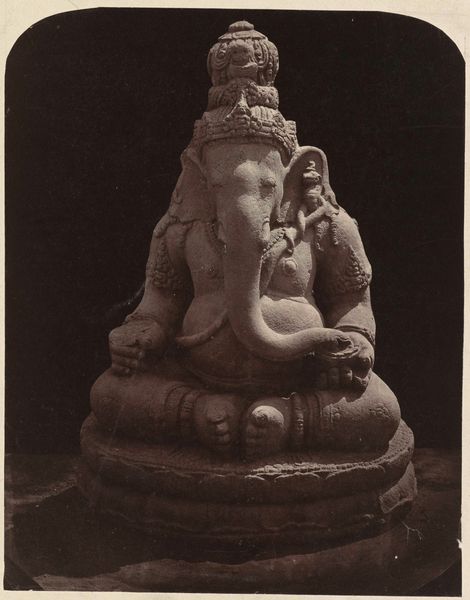
Naga head (residential house) Kediri, Kediri-district, east Java province, 14th-15th century Possibly 1866 - 1867
0:00
0:00

sculpture
#
sculpture
#
asian-art
#
figuration
#
geometric
#
ancient-mediterranean
#
sculpture
Dimensions: height 210 mm, width 170 mm
Copyright: Rijks Museum: Open Domain
This photograph captures a Naga head from a residential house in Kediri, East Java, dating back to the 14th-15th century. It was photographed by Isidore Kinsbergen. The Naga, a serpentine deity, is a powerful symbol throughout Southeast Asia, often associated with protection, fertility, and wealth. Here, its presence on a residential building speaks to the beliefs and cultural identity of the Javanese people during this period. Notice the detail in the carving, from the scales to the ornamentation, indicating the skill and artistry of the time. Kinsbergen's photograph not only documents the Naga's physical form but also hints at its social and spiritual significance within the community. Consider how the Naga, as a symbol, negotiates the relationship between the human and the divine, reflecting a worldview deeply rooted in respect for nature and ancestral spirits. Kinsbergen captured not just an object, but a cultural emblem imbued with layers of meaning.
Comments
No comments
Be the first to comment and join the conversation on the ultimate creative platform.
 Collect
 React
React Comment
More like this