1935 - 1942
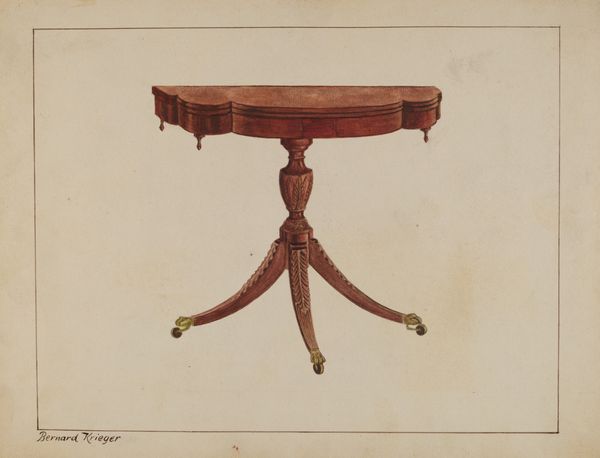
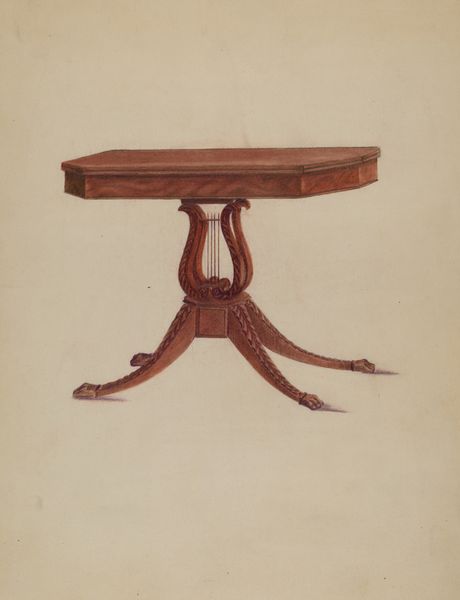
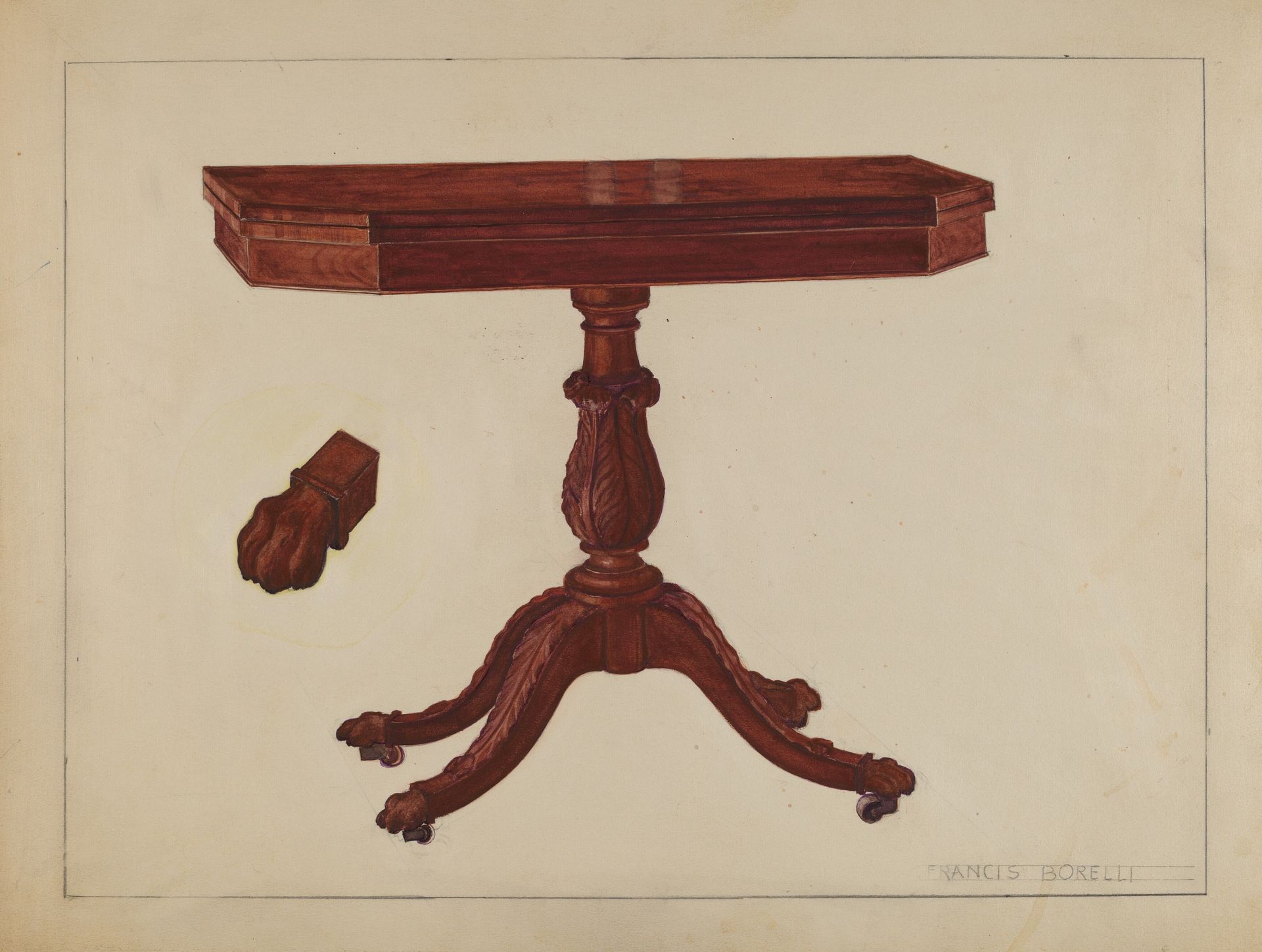
Card Table


Listen to curator's interpretation
Curatorial notes
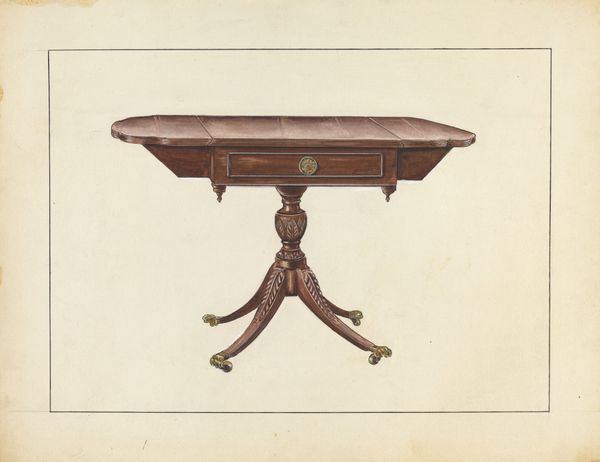
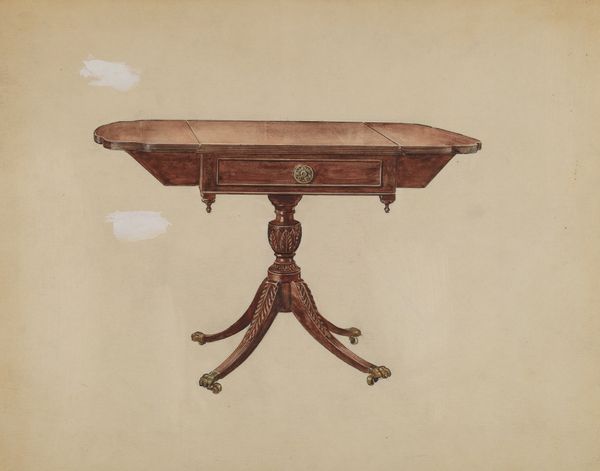
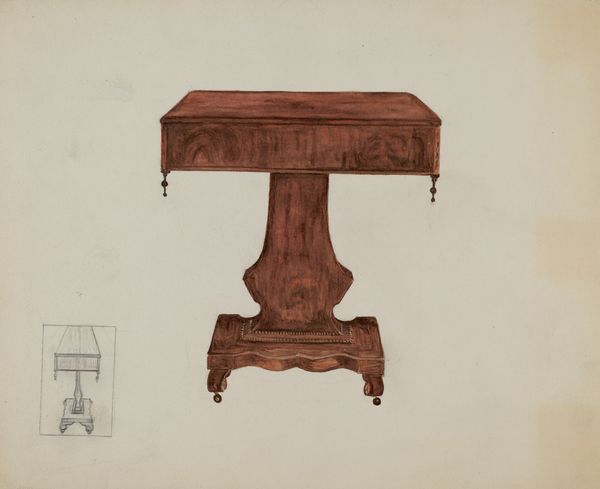
Editor: This is Francis Borelli’s "Card Table," a watercolor drawing from sometime between 1935 and 1942. I'm immediately struck by the almost diagrammatic feel. It’s clearly meant to represent the table, but also, I don’t know, present its essential form. What do you see in this piece, from your perspective? Curator: What a curious piece! A floating foot there to the side. Are we to infer a kind of disassembly? Or perhaps a latent violence inflicted upon this rather staid piece of furniture? The table itself, with its central pillar carved with acanthus leaves, evokes a specific kind of aspirational, almost neoclassical, sensibility. Editor: I see what you mean. The floating foot makes me think of deconstruction. Is there perhaps some cultural anxiety being represented here? Curator: Possibly. Remember this was made during the Depression and into the War years. Consider the table's function. A card table speaks to leisure, to social gatherings. The separated foot introduces a sense of unease and vulnerability to these symbols of middle-class stability. Is this an invocation of a disruption to domestic order? The floating foot is also a reminder of mortality, literally dismembered and objectified. Does this symbol resonate with you? Editor: Absolutely. I hadn’t considered the social context in relation to the symbolism of a card table. Seeing the broken leg makes the image very dark, reflecting on broken leisure time and a lost leg. Curator: Right! A lost limb for lost hours. Editor: This reading gives so much more insight into Borelli's work. Thanks for clarifying the complex imagery and its cultural context.