1606 - 1680
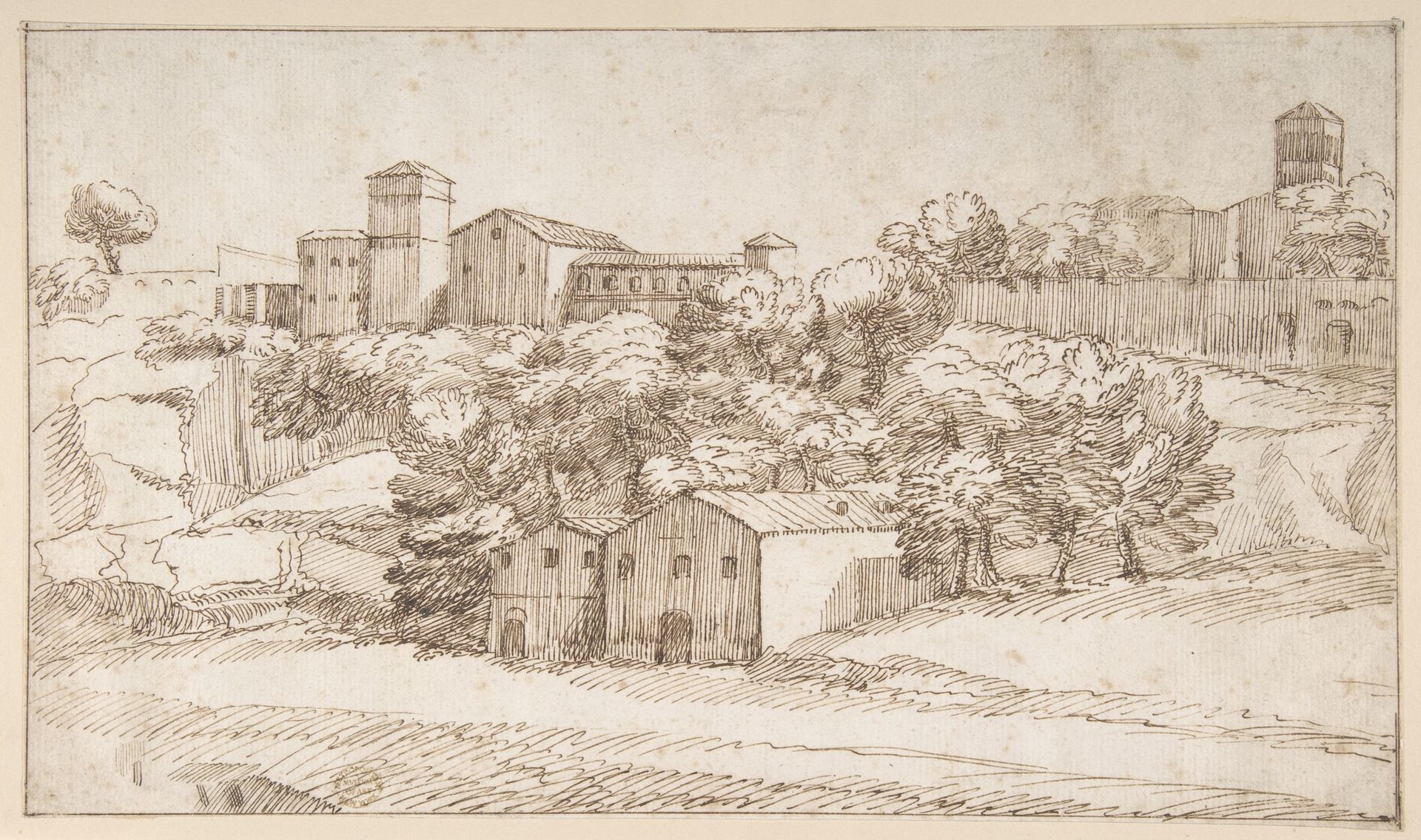
Landscape Study: Surburbs of Rome

Giovanni Francesco Grimaldi
1606 - 1680
The Metropolitan Museum of Art
Metropolitan Museum of Art, New York, NYListen to curator's interpretation
Curatorial notes
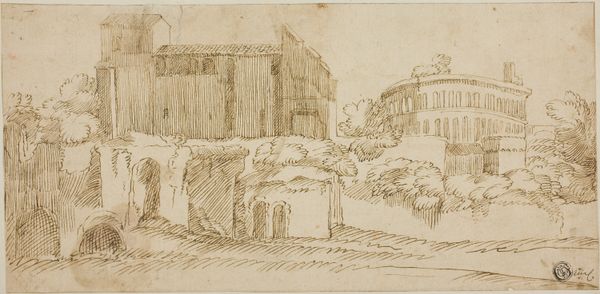
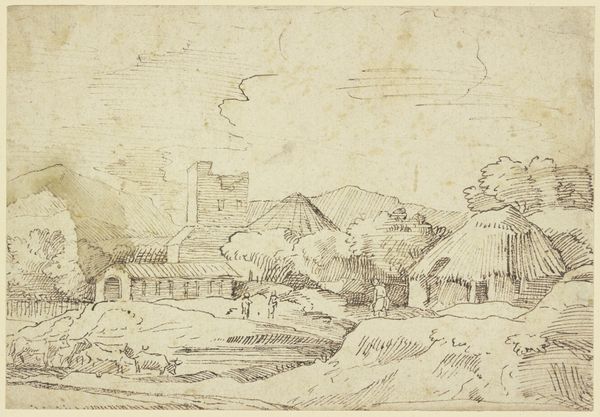
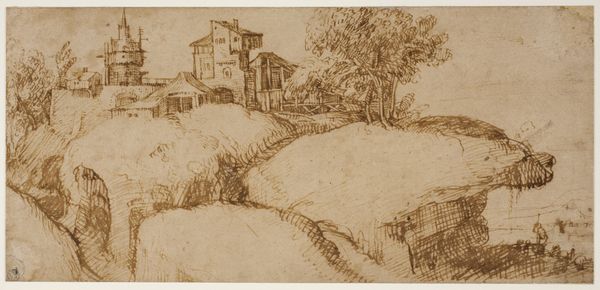
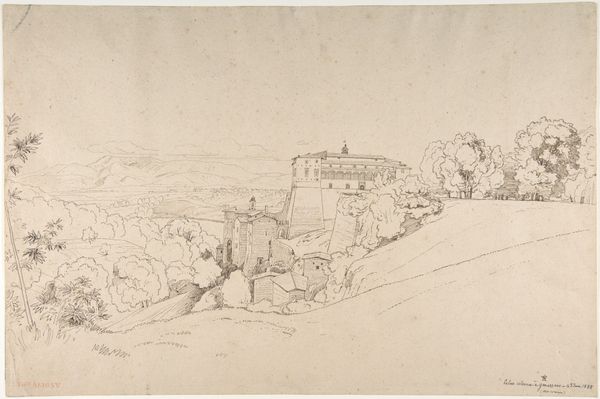
Curator: This is "Landscape Study: Suburbs of Rome," an etching by Giovanni Francesco Grimaldi, created sometime between 1606 and 1680. Editor: There’s something… delicate about it. Almost dreamlike. It's very restrained; all these soft, faded browns make the Italian countryside seem to whisper, not shout. Curator: Indeed. The tonal gradations achieved through etching, particularly in the foliage, create a very subtle depth. Notice the strategic placement of architectural forms like towers. They punctuate the scene, establishing a structural rhythm that’s quite sophisticated. Editor: Those buildings—towers and small houses—look like they’ve sprouted directly from the earth itself. Makes you wonder what stories they could tell. I picture a solitary scholar gazing out a tower window, sketching away... Curator: The landscape’s organizing principle involves distinct horizontal registers. The foreground establishing our immediate viewpoint rises to reveal the middle ground. Then, culminating in a somewhat hazily defined background plane. These planes are unified, however, by this single ink tone, a conscious manipulation of light to express spatial unity and… let's call it atmospheric perspective. Editor: Unified... and slightly melancholic, perhaps? I wouldn't call it a grandiose vision, but there is definitely something beautiful in Grimaldi's more quiet appreciation for his landscape. Almost a nostalgic note. Curator: Yes, a carefully constructed composition; yet one evoking not merely observation but reflection upon the Arcadian ideal and the Roman countryside as both reality and emblem. Editor: Well, whether ideal or real, Grimaldi offers us a snapshot outside the clamoring city; a welcome breath. Curator: A skillful testament to how visual grammar, employed strategically, can elevate even seemingly simple scenes to meditations upon space and the historical and cultural weight inherent within landscape representation.