About this artwork
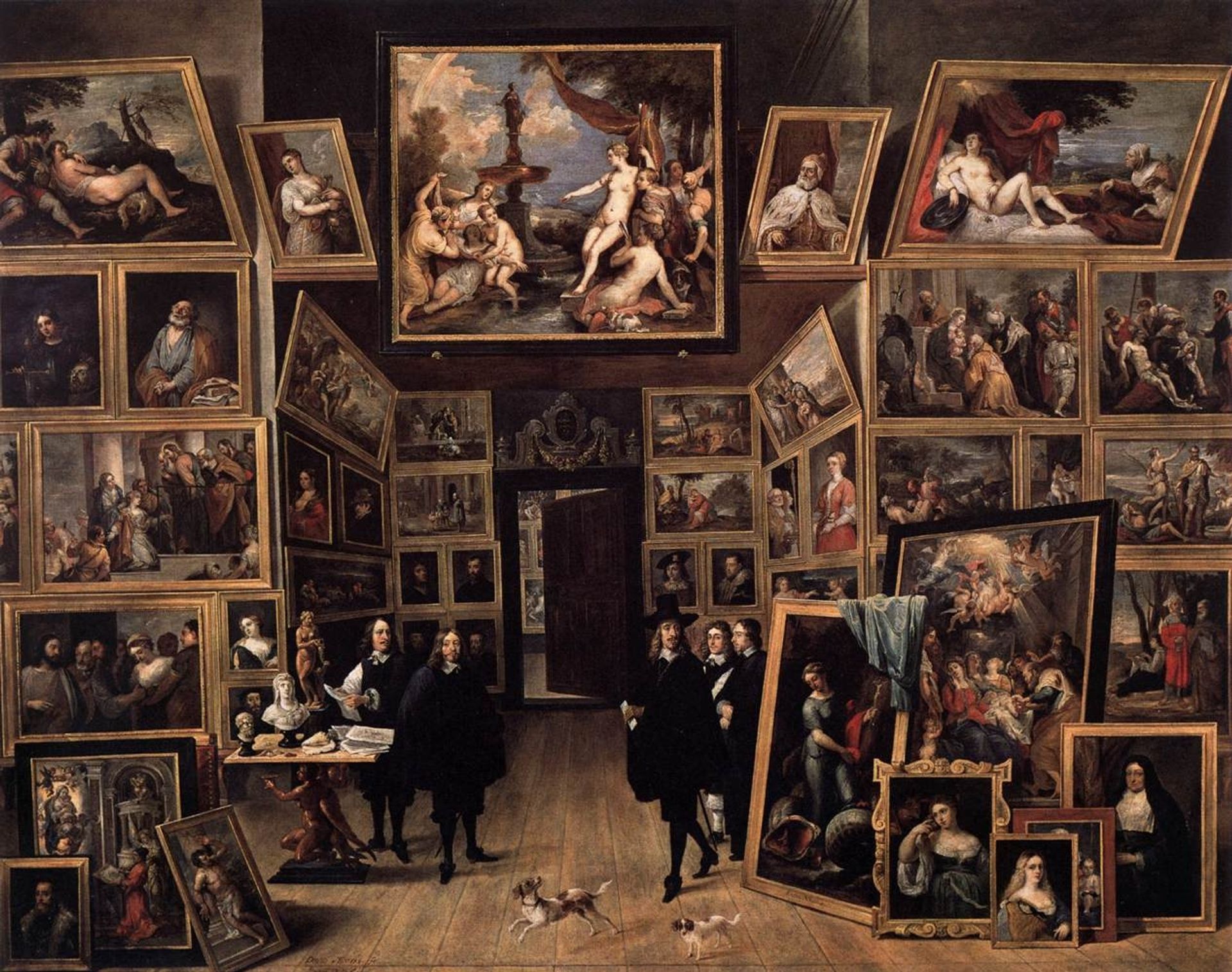
Editor: We’re looking at David Teniers the Younger's "The Archduke Leopold Wilhelm in his Picture Gallery in Brussels," created in 1647 using oil paint. It's a whirlwind of paintings within a painting! It's overwhelming but also incredibly captivating. How do you interpret this display? Curator: The painting offers a fascinating glimpse into the world of art collecting and the socio-political power it represented in 17th-century Europe. Leopold Wilhelm, the Archduke, wasn't just displaying paintings, he was showcasing his wealth, his taste, and his connections to cultural power. Consider the historical context: Art collecting during the Baroque period was deeply intertwined with dynastic ambitions and social status. Editor: So, it was more than just personal enjoyment? Curator: Precisely. The gallery itself becomes a stage. Note the carefully arranged paintings—they aren't just decorations. They were carefully selected and displayed to project a certain image of the Archduke’s refinement. Who he was as a person was shown to be in direct relation to his selection of artists and pieces displayed. The painting also subtly comments on the role of the artist, Teniers, who, through his skilled depiction, legitimized the Archduke's cultural authority. What do you think it means that he put himself *into* the work in this way? Editor: I hadn’t thought of that. By including himself, is he elevating the role of the artist too, suggesting art and its creation held status? It's really a complex statement about art, power, and the social order! Curator: Exactly! It highlights that the Baroque era wasn't simply about aesthetics. The public role of art shaped, and continues to shape, so much more than we realize at face value. Editor: This has totally changed how I see these historical paintings; they're not just pretty pictures. Curator: Right. They are potent cultural documents embedded within layers of history and social meaning. I have found that studying it helps me contextualize other works of art, allowing for broader connections in theme and time.
The Archduke Leopold Wilhelm in his Picture Gallery in Brussels
1647

David Teniers The Younger
1610 - 1690Location
Museo del Prado, Madrid, SpainArtwork details
- Medium
- painting, oil-paint
- Dimensions
- 129 x 106 cm
- Location
- Museo del Prado, Madrid, Spain
- Copyright
- Public domain
Tags
Comments
Share your thoughts
About this artwork
Editor: We’re looking at David Teniers the Younger's "The Archduke Leopold Wilhelm in his Picture Gallery in Brussels," created in 1647 using oil paint. It's a whirlwind of paintings within a painting! It's overwhelming but also incredibly captivating. How do you interpret this display? Curator: The painting offers a fascinating glimpse into the world of art collecting and the socio-political power it represented in 17th-century Europe. Leopold Wilhelm, the Archduke, wasn't just displaying paintings, he was showcasing his wealth, his taste, and his connections to cultural power. Consider the historical context: Art collecting during the Baroque period was deeply intertwined with dynastic ambitions and social status. Editor: So, it was more than just personal enjoyment? Curator: Precisely. The gallery itself becomes a stage. Note the carefully arranged paintings—they aren't just decorations. They were carefully selected and displayed to project a certain image of the Archduke’s refinement. Who he was as a person was shown to be in direct relation to his selection of artists and pieces displayed. The painting also subtly comments on the role of the artist, Teniers, who, through his skilled depiction, legitimized the Archduke's cultural authority. What do you think it means that he put himself *into* the work in this way? Editor: I hadn’t thought of that. By including himself, is he elevating the role of the artist too, suggesting art and its creation held status? It's really a complex statement about art, power, and the social order! Curator: Exactly! It highlights that the Baroque era wasn't simply about aesthetics. The public role of art shaped, and continues to shape, so much more than we realize at face value. Editor: This has totally changed how I see these historical paintings; they're not just pretty pictures. Curator: Right. They are potent cultural documents embedded within layers of history and social meaning. I have found that studying it helps me contextualize other works of art, allowing for broader connections in theme and time.
Comments
Share your thoughts