1837
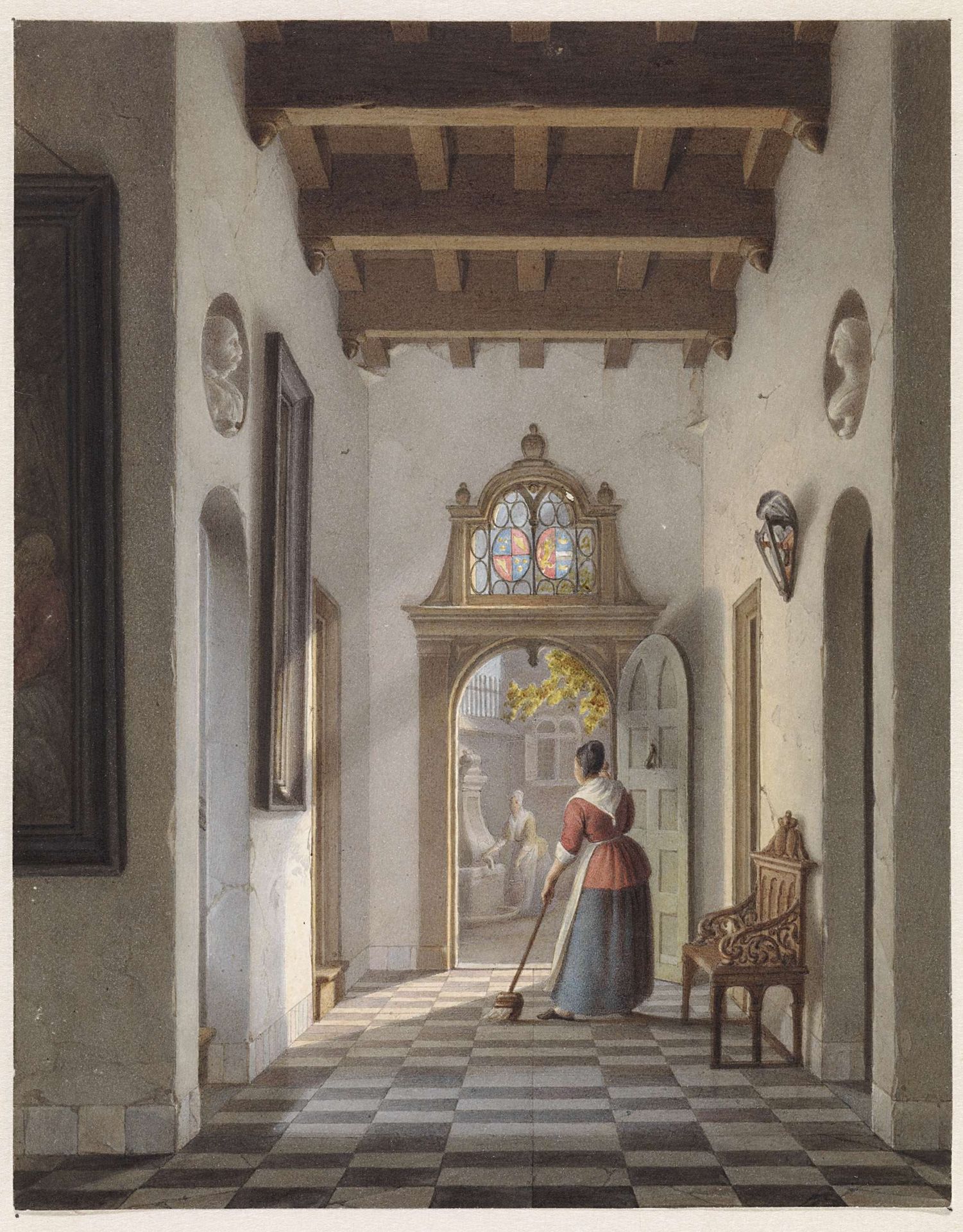
Meid die de gang van een huis veegt

Louis Henri de Fontenay
1800 - 1872Location
RijksmuseumListen to curator's interpretation
Curatorial notes
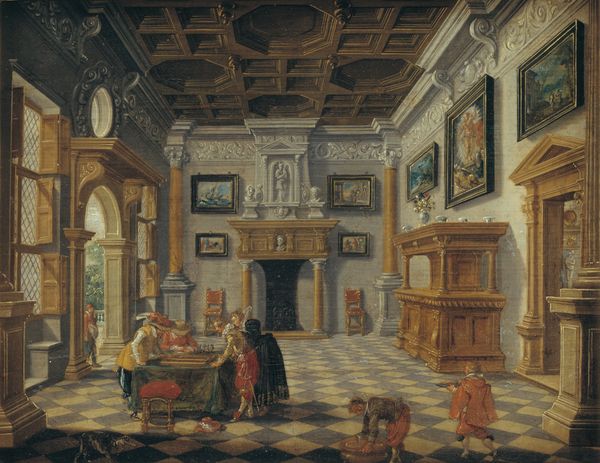
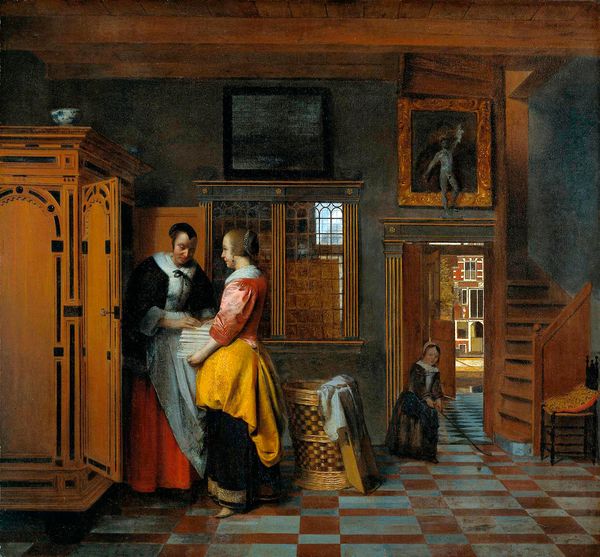
Louis Henri de Fontenay made this watercolor titled "Maid Sweeping the Hall of a House" sometime in the first half of the 19th century. The image presents a scene of domestic labor set against the backdrop of bourgeois domesticity. Made in the Netherlands, the painting displays a fascination with interiority and domestic space, a key theme in Dutch art since the Golden Age. The checkered floor recedes into the distance, drawing the viewer's eye toward the open doorway, where a fountain and figures suggest a world beyond the home. The maid, with her back turned, is caught in the act of sweeping, her labor framed by the trappings of wealth and comfort. This image creates meaning through its visual codes, referencing the strict social hierarchy of 19th-century Dutch society. To fully understand this painting, we can turn to period documents, such as household inventories and servant contracts, to uncover the hidden dynamics of labor and class that shape this seemingly simple scene.