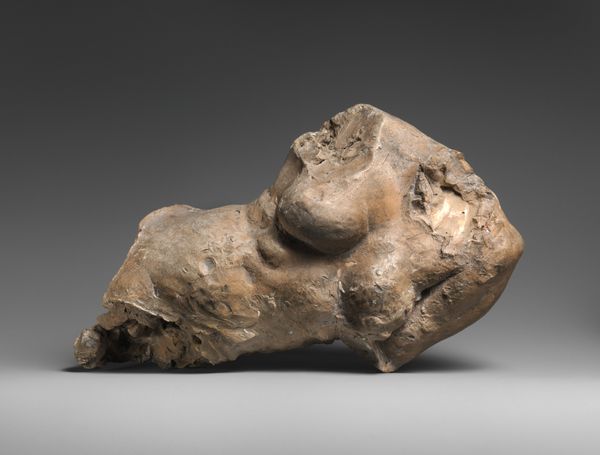
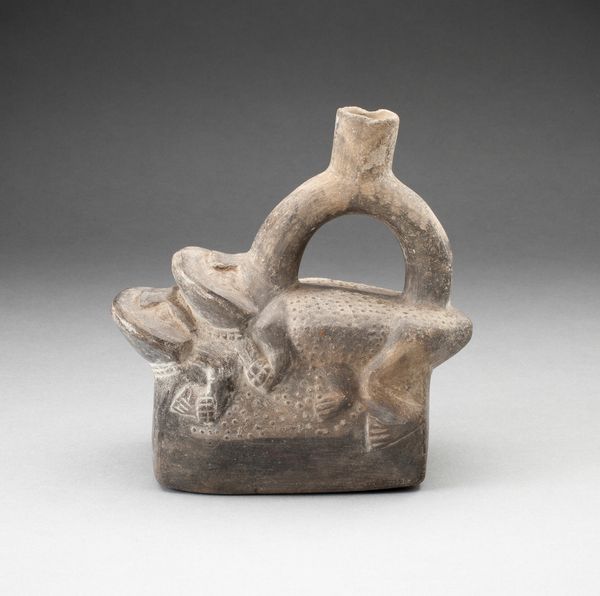
sculpture, terracotta
#
sculpture
#
sculpture
#
terracotta
#
statue
#
indigenous-americas
Dimensions: 14.6 x 5.1 cm
Copyright: Public domain
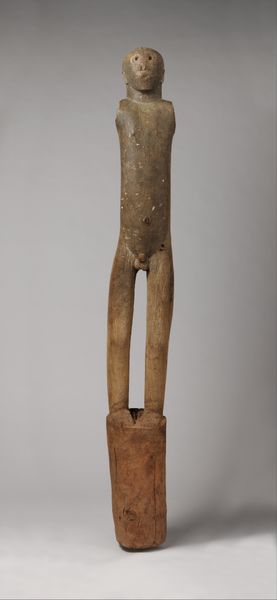
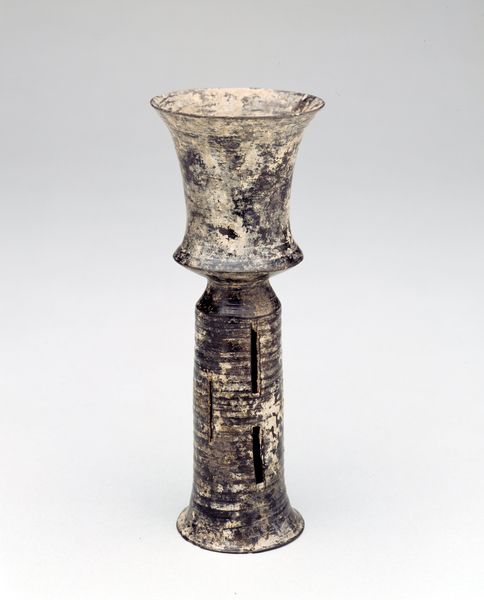
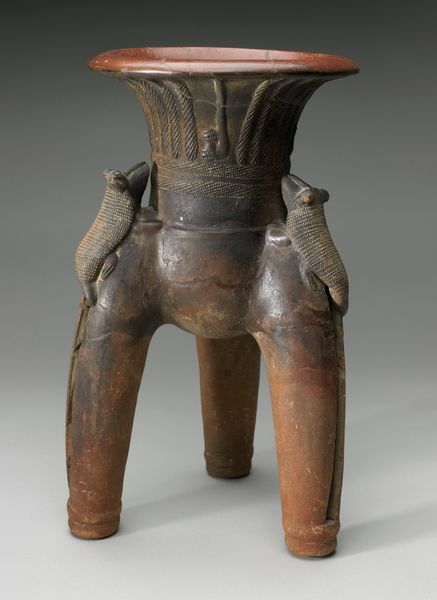
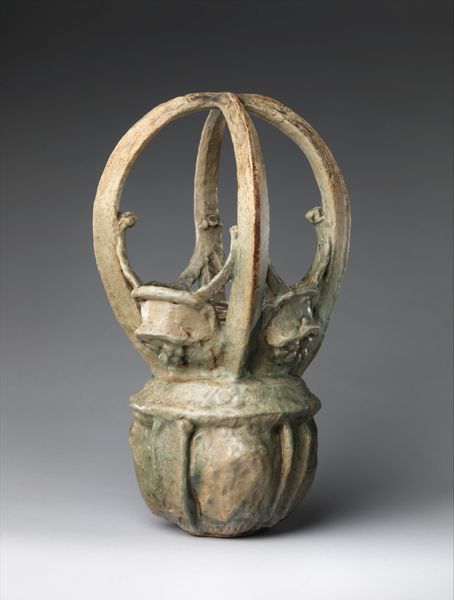
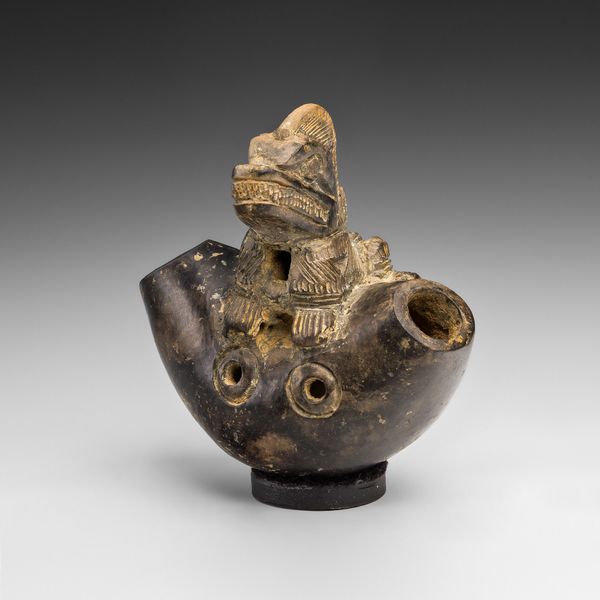
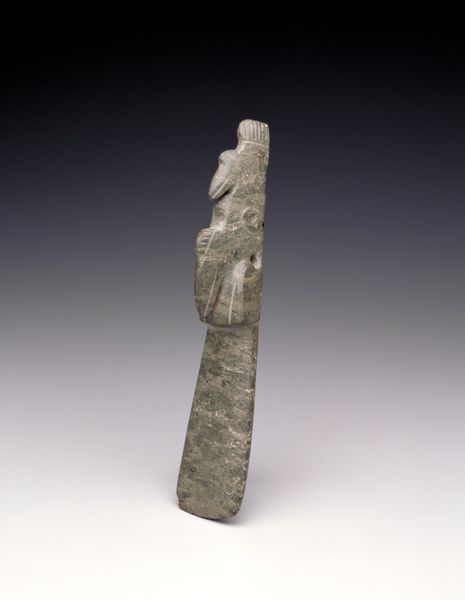
Editor: So, this is an image of the 'Temple Model,' crafted around 1521. It is currently held at The Met. It is a carving, and the subject seems architectural but abstracted... It definitely makes me wonder about the function of art and the society it came from. What strikes you most about this piece? Curator: The "Temple Model" speaks volumes about power, legitimacy, and how the Aztec state projected itself. These weren’t just religious structures; they were potent symbols of political dominance. Consider how the pyramid form, the staircase, and the placement of sculptural elements – everything was carefully orchestrated to communicate a specific message. Editor: Could you elaborate on the message? Curator: Absolutely. Think about who commissioned these works, who had access to them, and where they were situated. What kind of power dynamics are at play? Temples, particularly their models, served as visible pronouncements of authority, reminding the population of the rulers' connection to the divine. Also, how does the medium - a small carving - impact its social function, compared to say, a full-scale temple? Editor: So the choice of carving as a medium affects who could own this symbol. Makes you wonder how far the influence of the rulers spread if it could be captured in miniature and transported? Curator: Precisely. This brings into light not only the function of the piece but its movement and reach too. What do you make of its current location in a museum context, far removed from its original social environment? Editor: It definitely highlights the role of museums in preserving but also perhaps altering the significance of cultural objects. Thanks for sharing, I have a new perspective on these objects! Curator: It's been enlightening to revisit the complexities of art, power, and its place within ever-shifting social narratives.
Comments
No comments
Be the first to comment and join the conversation on the ultimate creative platform.
 Collect
 React
React Comment
More like this