About this artwork
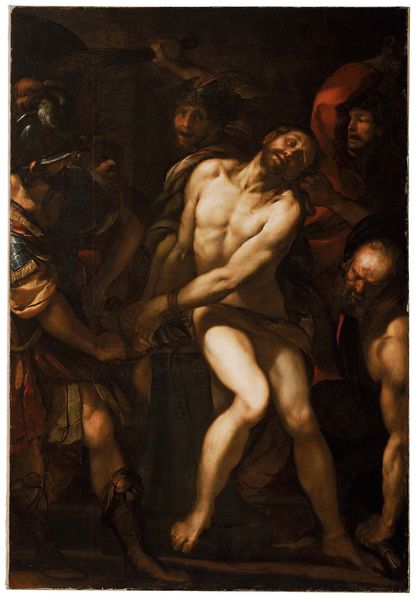
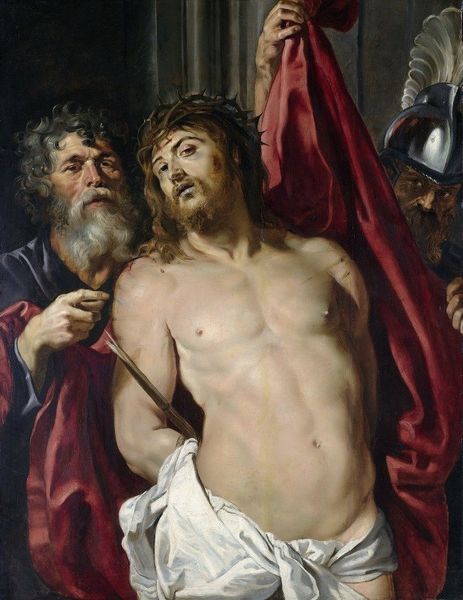
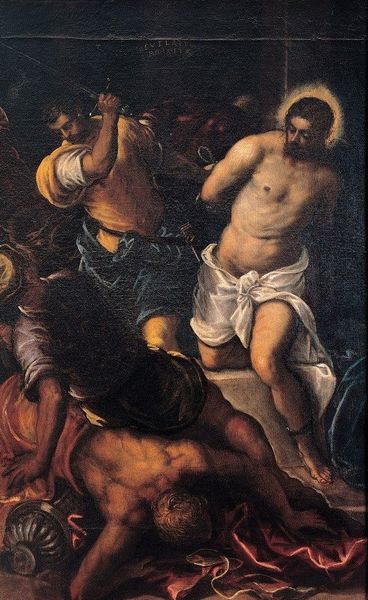
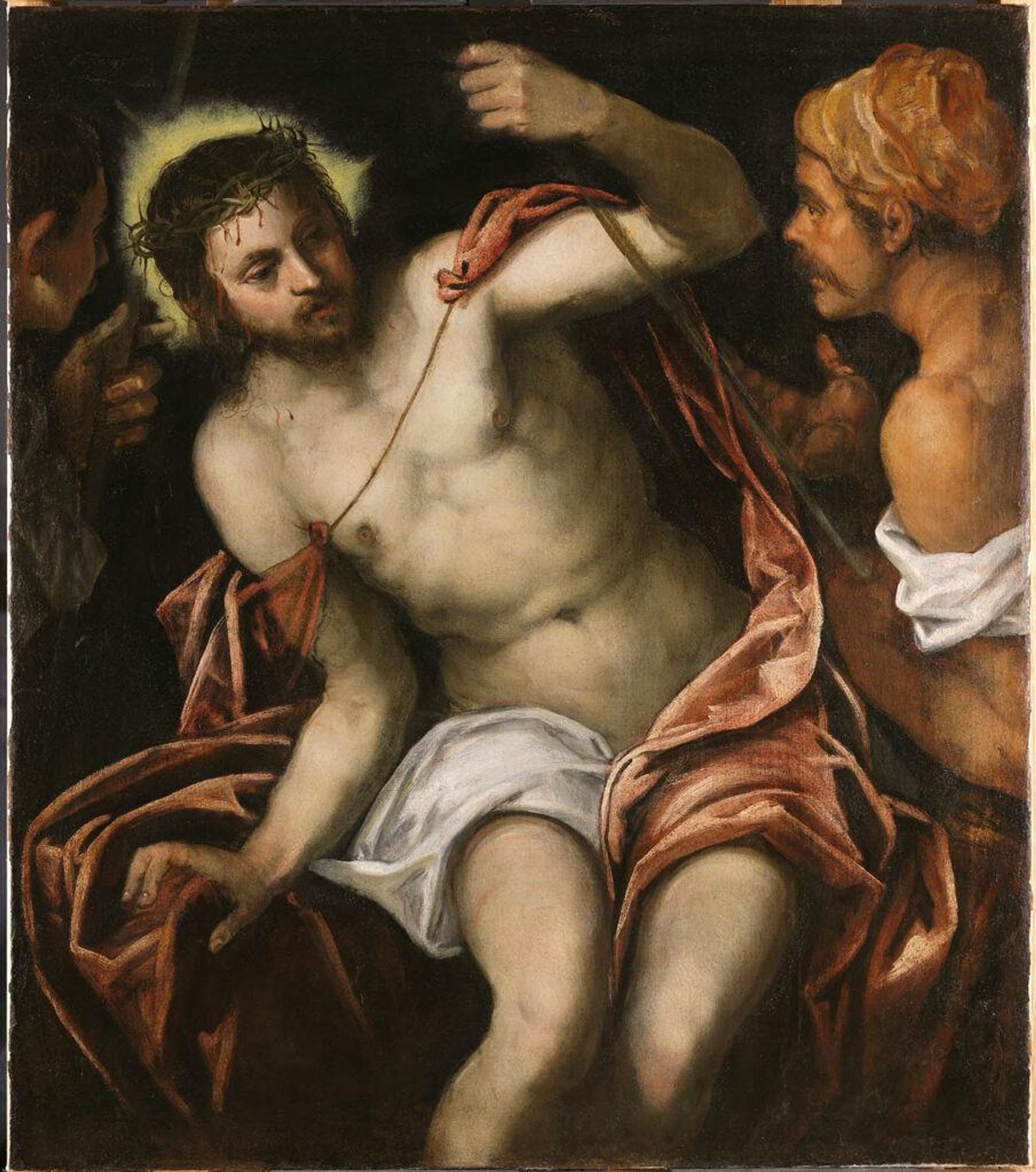
Curator: Domenico Tintoretto painted "Christ Crowned with Thorns," sometime in the late 16th or early 17th century. Editor: The immediate impact is one of stark vulnerability, heightened by the dramatic chiaroscuro. Curator: Absolutely. The composition focuses on Christ's suffering, but what is important is considering the social function of this type of imagery. It reinforced religious doctrine and legitimized power structures. Editor: I see the formal aspects serving this function. The artist uses color sparingly; the red cloth acts as a formal device that binds the composition together. What narrative sequence is implied by the figure's contorted pose? Curator: It's a representation of power, certainly, but the depiction also elicits pity and identification with Christ, a very calculated and self-serving move on the part of the Church. Editor: Still, the humanity is undeniable. And it’s compelling to see how line, light, and shadow work together to evoke such raw emotion, regardless of historical intent. Curator: A powerful intersection of art and propaganda, wouldn't you agree? Editor: Indeed, and a somber reminder of art's multifaceted nature.
Christ Crowned with Thorns
c. 15th century


Artwork details
- Dimensions
- 112.8 x 99.4 cm (44 7/16 x 39 1/8 in.)
- Location
- Harvard Art Museums
- Copyright
- CC0 1.0
Comments
Share your thoughts
About this artwork
Curator: Domenico Tintoretto painted "Christ Crowned with Thorns," sometime in the late 16th or early 17th century. Editor: The immediate impact is one of stark vulnerability, heightened by the dramatic chiaroscuro. Curator: Absolutely. The composition focuses on Christ's suffering, but what is important is considering the social function of this type of imagery. It reinforced religious doctrine and legitimized power structures. Editor: I see the formal aspects serving this function. The artist uses color sparingly; the red cloth acts as a formal device that binds the composition together. What narrative sequence is implied by the figure's contorted pose? Curator: It's a representation of power, certainly, but the depiction also elicits pity and identification with Christ, a very calculated and self-serving move on the part of the Church. Editor: Still, the humanity is undeniable. And it’s compelling to see how line, light, and shadow work together to evoke such raw emotion, regardless of historical intent. Curator: A powerful intersection of art and propaganda, wouldn't you agree? Editor: Indeed, and a somber reminder of art's multifaceted nature.
Comments
Share your thoughts